
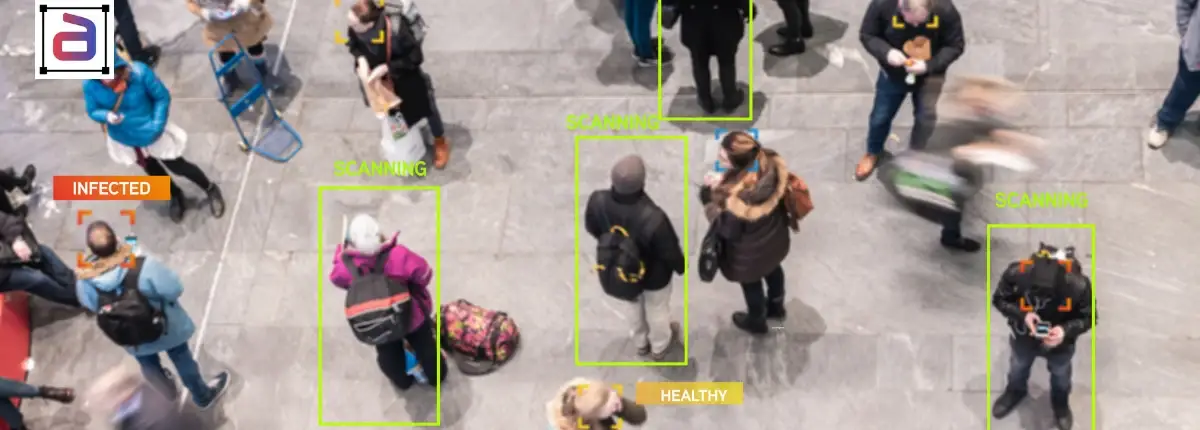
A strong object recognition model begins with high-quality labeled data, and for most computer vision teams, that journey starts with a bounding box annotation guide. Bounding boxes provide the simplest and most effective way for machines to learn how to identify objects within images, making them the foundational technique behind modern object detection systems.
For new AI teams entering computer vision, understanding how bounding boxes work and why they matter is critical before moving toward more complex annotation methods.
Table of Contents
What Is Bounding Box Annotation
Bounding box annotation is the process of drawing rectangular boxes around objects of interest in an image and assigning each box a corresponding label. These labeled images serve as training data for object detection models, enabling algorithms to recognize both the presence and location of objects.
Unlike image classification, which only identifies what exists in an image, bounding box annotation teaches models where objects appear. This spatial context is essential for most real-world applications.
Why Bounding Boxes Are the Starting Point for Object Recognition
Bounding boxes strike a balance between annotation speed and model usefulness. They are faster to produce than pixel-level annotations while still providing sufficient information for many detection tasks.
For early-stage AI projects, this balance allows teams to build functional models quickly, validate use cases, and iterate without excessive annotation costs.
How Bounding Boxes Enable Object Detection Models
Object detection models learn by comparing predicted boxes against annotated ground truth. Through repeated training cycles, models learn to identify visual patterns, distinguish object boundaries, and improve localization accuracy.
Consistent bounding box placement helps models generalize across variations in lighting, background, orientation, and scale. Poorly annotated boxes, on the other hand, introduce noise that limits model performance.
When Bounding Boxes Are the Right Choice
Bounding boxes are well-suited for scenarios where approximate object boundaries are sufficient. Common use cases include:
- Product detection in e-commerce images
- Vehicle and pedestrian detection
- Retail shelf monitoring
- Industrial part identification
When precise object contours are required, more advanced techniques such as polygon annotation or semantic segmentation may be more appropriate.
Common Mistakes New AI Teams Make
New teams often underestimate the importance of annotation guidelines. Common issues include inconsistent box tightness, overlapping labels, missed objects, and unclear class definitions.
These errors compound as datasets grow, making early process discipline essential for long-term success.
Key Quality Metrics in Bounding Box Annotation
Several metrics help evaluate annotation quality:
- Intersection over Union (IoU) to measure box alignment
- Inter-annotator agreement to ensure consistency
- Error rates across sampled datasets
Monitoring these metrics allows teams to detect drift and maintain reliable training data.
Building a Scalable Bounding Box Annotation Workflow
As projects expand, annotation workflows must scale without sacrificing accuracy. This requires documented guidelines, trained annotators, review mechanisms, and feedback loops.
Managed annotation models help new AI teams avoid operational bottlenecks while maintaining quality standards as data volumes increase.
How Annotera Supports Object Recognition Foundations
Annotera provides a structured bounding box annotation guide supported by trained annotation teams and multi-layer quality assurance processes. This approach ensures that early-stage AI teams receive consistent, production-ready datasets.
By combining human expertise with governed workflows, Annotera helps teams establish a strong foundation for object recognition before advancing to more complex annotation techniques.
Conclusion
Bounding boxes are the foundation of object recognition because they balance simplicity, speed, and effectiveness. For new AI teams, mastering bounding box annotation is a necessary step toward building reliable computer vision systems.
With the right annotation practices and quality controls in place, bounding boxes become a powerful starting point for scalable AI development.
Building your first object detection model or scaling an existing one? Partner with Annotera for expert-led bounding box annotation that sets the foundation for long-term computer vision success.


