Transcription, speaker labels, intent, sentiment and sound events labeled by native-speaker teams in 28+ languages and checked against your gold set. Start with a free 48-hour pilot on your own audio.
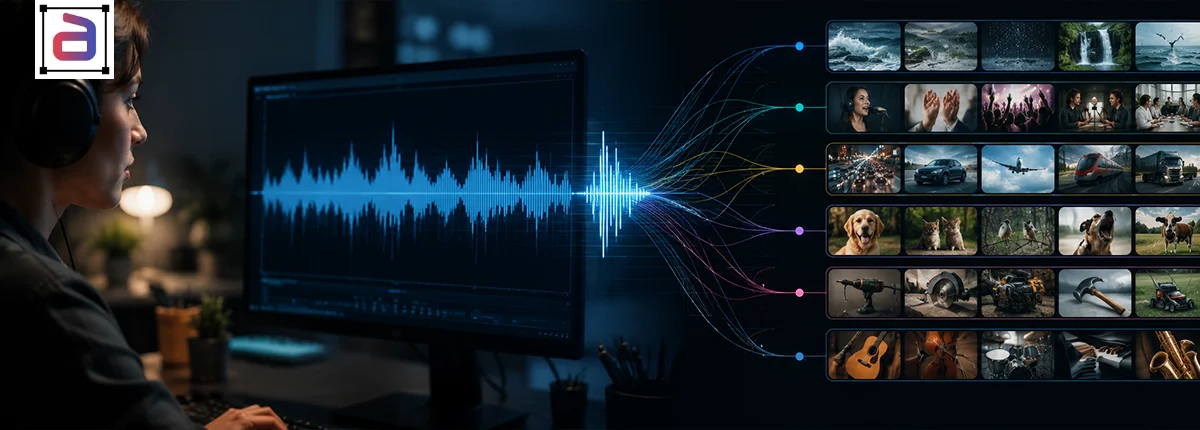
Speech and sound models learn from audio that people have listened to and labeled. Annotera’s audio annotation services turn raw recordings, calls and voice commands into consistent training data: words transcribed to your conventions, speakers separated, intents and emotions tagged and sound events marked with precise timestamps. Native-speaker annotators do the work, and every batch is scored against a gold set before it ships.
Our audio data annotation covers speech transcription (verbatim and clean), speaker identification, audio classification, sentiment and emotion, intent recognition, sound event tagging and noise labeling, in 28+ languages and regional dialects. Clinical audio runs in HIPAA-compliant workflows, and contact-center recordings benefit from Fusion CX’s customer experience operations. When you need new recordings rather than labels, our audio data collection team captures speech to your specification.
Audio annotation supports speech recognition, voice assistants, call analytics, clinical documentation and media teams. If you are new to the topic, our guide to what data annotation is covers the basics, and our guide to multilingual speech data for voice AI explains how to plan new languages.
Choose the task your model needs, or combine several in one program. Each page covers use cases, edge-case rules and how we measure quality for that task.

Verbatim or clean transcripts with timestamps, written to your conventions for speech recognition and NLP.

Recordings sorted by topic, quality, language or call outcome for routing, search and analytics models.

Who spoke when, with speaker turns and overlaps marked so models attribute every word correctly.

Tone and emotion in spoken audio labeled consistently, from frustration to satisfaction, for CX and voice AI.

Background noise, music, silence and audio quality tagged so models learn to cope with real-world sound.

Caller and user goals labeled in natural speech for voice assistants, IVR and call routing models.

Non-speech sounds such as alarms, breaking glass or machinery marked with precise start and end times.

Native-speaker transcription and labeling across 28+ languages and dialects, including mixed-language speech.

Every audio annotation service we run follows the same sequence, so quality is proven on your own recordings before volume arrives.

We label a sample of your recordings, usually within 48 hours, and score it against your gold set and acceptance criteria.

Spelling, numbers, fillers, overlapping speech and unclear words are written into the guidelines and agreed before production.

Batches ship with word error rate, label accuracy and timing reports, and the team grows with your audio volume.
Choosing between audio annotation companies comes down to native-language skill, measurable quality and secure handling of recordings. These are the commitments behind every Annotera audio program. Teams that want a fully managed operation can use our data annotation outsourcing services.

Annotator self-review, team-lead checks and independent QA, with word error rate and label accuracy reported per batch.

28+ languages and regional dialects, with annotators who hear accents and slang the way your users speak.

Operations certified to ISO/IEC 27001:2022, SOC 2 Type II, HITRUST CSF and PCI DSS 4.0.1, with HIPAA-compliant workflows.

Annotators trained for clinical, legal, contact-center and media audio, where vocabulary and context matter.

We work in your transcription or annotation platform or established tools, with model pre-transcription where it helps.

Teams scale with your audio volume, drawing on Fusion CX’s 17,000 people across 40 delivery centers in 13 countries.
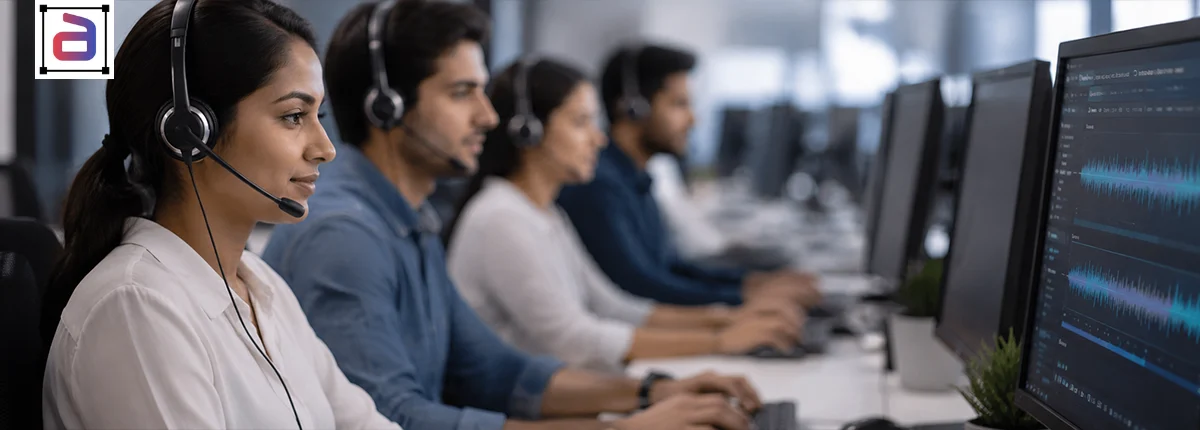
Annotators are trained on the vocabulary, accents and recording conditions of your domain before they label production audio.
Clinical dictation and consultations transcribed and labeled for medical speech and documentation AI.
Contact Centers
Customer calls labeled for intent, sentiment, outcome and compliance to power call analytics.
Call recordings reviewed and labeled for disclosures, complaints and fraud signals.
In-car voice commands transcribed across accents and cabin noise for voice assistants.
Alarms, impacts and other sound events tagged for acoustic detection systems.
Spoken requests labeled for intent and entities to train voice assistants and IVR.
Answers on tasks, transcription styles, quality, languages, pricing and security.
Audio annotation services label recordings so speech and sound models can learn from them: transcribing words, marking speakers, tagging intent and emotion, and timestamping sound events. A managed provider such as Annotera supplies trained native-speaker annotators, guidelines, quality assurance and reporting.
Speech transcription, speaker identification, audio classification, sentiment and emotion, intent recognition, sound event tagging, noise labeling and multilingual annotation. Most speech programs combine transcription with one or two labeling layers.
Verbatim keeps fillers, repetitions and false starts and suits speech recognition training; clean transcription removes them and suits NLP and summarization. Many programs need both. Our comparison of verbatim and intelligent transcription explains the trade-off.
Against a gold set reviewed by senior linguists. We report word error rate for transcription, label accuracy for classification and intent, and timing accuracy for speaker turns and sound events.
Pricing depends on audio quality, language, number of speakers, the labels required and turnaround. Programs are usually priced per audio minute or hour, or per dedicated annotator. A pilot on your own recordings gives an accurate quote.
28+ languages and regional dialects with native-speaker annotators, including mixed-language speech. Our multilingual audio annotation page lists the details.
Work runs inside Fusion CX operations certified to ISO/IEC 27001:2022, SOC 2 Type II, HITRUST CSF and PCI DSS 4.0.1, with HIPAA-compliant workflows and role-based access. Personal information can be redacted, and we never resell datasets.
Native speakers for every language you need, written transcription conventions, word error rate reporting, domain specialists, certified security and a pilot on your own audio. Our guide to choosing a data annotation company covers the full checklist.