





Start Annotation

Multilingual Data Annotation Services

Multilingual data annotation specialists labeling global text, speech, and NLP datasets with AI-powered workflows, language diversity, cultural intelligence, and Human-in-the-Loop quality assurance

Powering Global AI with Multilingual Data Annotation

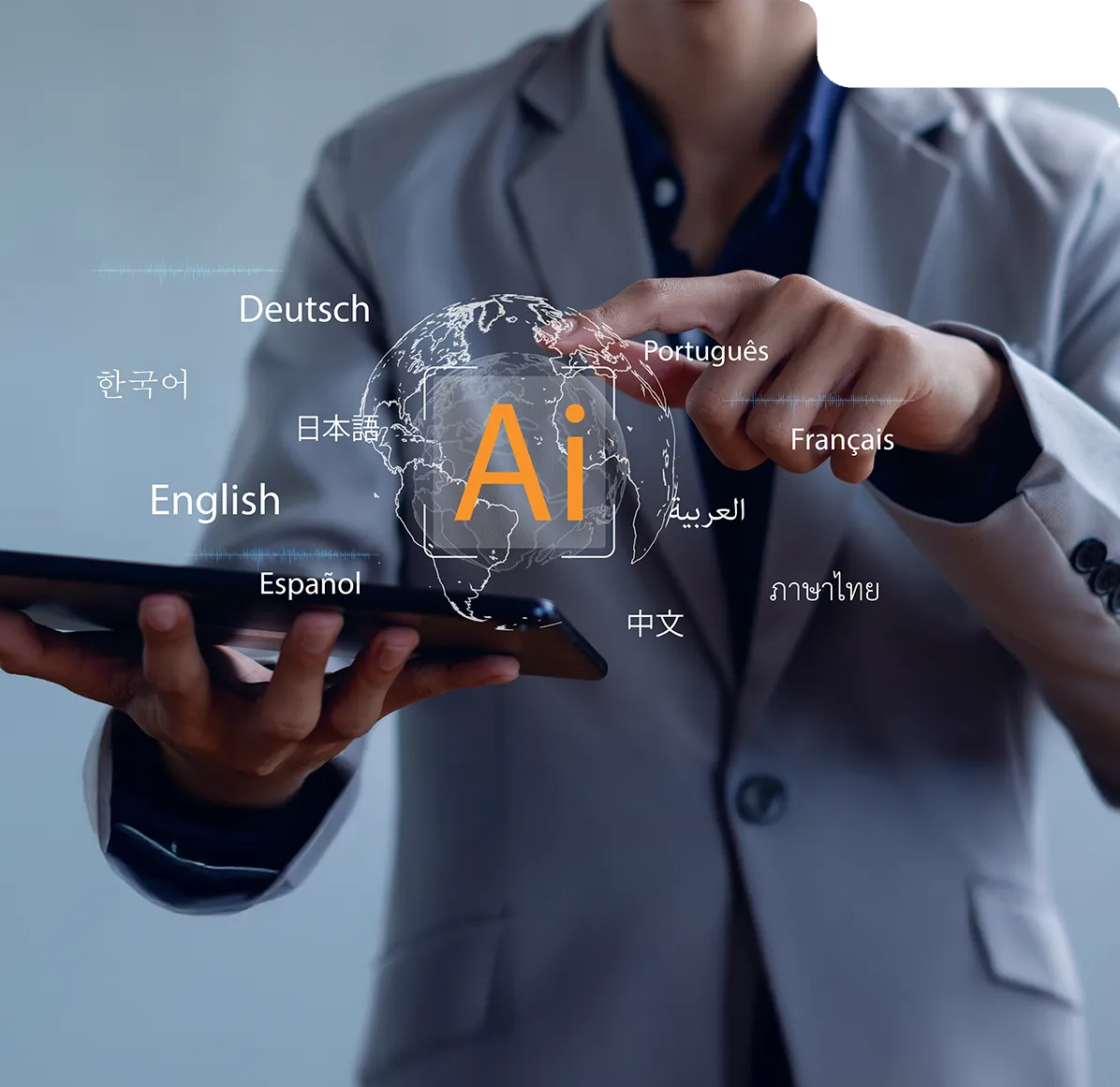
As AI systems expand across international markets, the need for high-quality multilingual training data has become more critical than ever. Language diversity, regional dialects, cultural nuances, and linguistic context all influence how effectively AI models understand and interact with users. Annotera’s multilingual data annotation services help organizations build language-aware AI solutions that perform accurately across geographies, industries, and user demographics.

From speech recognition and conversational AI to machine translation, sentiment analysis, and large language models (LLMs), multilingual datasets form the foundation of successful AI applications. Our team of native-language annotators, linguists, and quality specialists ensures that every dataset is labeled with precision, cultural relevance, and contextual understanding.

By combining human expertise with scalable annotation workflows, Annotera enables organizations to create AI systems that communicate naturally with global audiences while maintaining consistency, accuracy, and compliance across multiple languages.

Major Global LanguagesLanguages We Support

Our multilingual data annotation services cover a broad spectrum of global and regional languages to support worldwide AI deployments. We provide annotation, transcription, classification, entity recognition, sentiment labeling, and speech data processing across diverse linguistic environments.

Español

Spanish

Français

French

Deutsch

German

Italiano

Italian

Português

Portuguese

Multilingual AnnotationWhy Multilingual Data Annotation Matters

AI systems trained exclusively on a single language often struggle when deployed globally. Differences in syntax, grammar, idioms, accents, and cultural context can significantly impact model performance.

High-quality multilingual annotation helps organizations:

When annotation incorporates linguistic expertise and cultural understanding, AI systems become more inclusive, accurate, and reliable.

Industries We ServeDomain-trained teams for the use cases that matter.

Empowering Conversational AI, Speech & Voice AI, Generative AI, and E-commerce solutions with high-quality multilingual data annotation services that enhance accuracy, scalability, and user experiences worldwide.

Conversational AI

Train multilingual chatbots, voice assistants, and customer support automation systems that understand and respond naturally in multiple languages.

Speech & Voice AI

Develop robust Automatic Speech Recognition (ASR), Text-to-Speech (TTS), and voice analytics solutions using accurately annotated multilingual speech datasets.

Generative AI

Improve multilingual large language models through expertly curated and human-validated training datasets.

E-commerce

Enable intelligent product search, recommendation engines, customer support automation, and sentiment analysis across global markets.

Healthcare AI

Support multilingual clinical documentation, patient communication systems, medical transcription, and healthcare NLP applications.

Financial Services

Build AI systems that understand multilingual customer interactions, fraud detection signals, and financial documentation.

Why Choose Us? The Annotera Advantage

Building AI systems that perform accurately across languages, regions, and cultures requires more than simple translation or labeling. At Annotera, we combine deep linguistic expertise, scalable annotation operations, and rigorous quality controls to help organizations create high-performing multilingual AI models.

Human Expertise + Scalable Operations

We combine experienced linguists, domain specialists, and annotation professionals with efficient project management processes to deliver reliable results at scale.

Cultural Intelligence

Beyond language proficiency, our teams understand regional context, cultural sensitivities, and local communication patterns that influence AI performance.

Data Security & Compliance

We follow strict security protocols and confidentiality standards to protect sensitive client data throughout the annotation lifecycle.

Customized Workflows

Every AI project has unique requirements. We tailor annotation guidelines, validation procedures, and delivery frameworks to align with your objectives and model requirements.


Connect with an Expert

    Build Global AI with Confidence

    Successful AI systems must understand people in their native languages, cultural contexts, and communication styles. Annotera’s multilingual data annotation services provide the linguistic accuracy, domain expertise, and scalable operations needed to create truly global AI solutions.

    Whether you’re developing conversational AI, speech recognition systems, machine translation platforms, generative AI models, or advanced NLP applications, our multilingual annotation experts help transform raw data into high-quality training datasets that drive measurable AI performance improvements.

    Frequently Asked QuestionsGot Questions? We’ve Got Answers for You

    Organizations developing global AI solutions often have questions about multilingual data annotation and its role in building accurate, scalable machine learning models. Below are answers to some of the most common questions we receive.

    Multilingual data annotation services involve labeling, categorizing, and enriching datasets in multiple languages to train AI and machine learning models. These services help AI systems accurately understand language-specific nuances, regional dialects, cultural context, and user intent across diverse markets. Multilingual annotation is commonly used for Natural Language Processing (NLP), speech recognition, conversational AI, machine translation, and generative AI applications.

    AI models trained on data from a single language often struggle to perform consistently across global audiences. Multilingual data annotation helps create language-aware AI systems by incorporating linguistic diversity, cultural context, and regional variations into training datasets. This improves model accuracy, reduces bias, enhances user experiences, and enables organizations to deploy AI solutions confidently across multiple countries and languages.

    Annotera supports a wide range of global and regional languages, including English, Spanish, French, German, Portuguese, Arabic, Mandarin Chinese, Japanese, Korean, Hindi, Bengali, Tamil, Telugu, Urdu, Indonesian, Vietnamese, Thai, and many others. Our network of native-speaking annotators and linguistic experts enables us to deliver high-quality multilingual datasets tailored to specific geographic markets and business requirements.

    Annotera provides multilingual annotation services across various data formats, including text, audio, speech, images, videos, and multimodal datasets. Common annotation tasks include named entity recognition (NER), sentiment analysis, intent classification, speech transcription, speaker diarization, audio labeling, image tagging, object detection, prompt-response evaluation, and training data preparation for large language models (LLMs) and generative AI systems.

    Annotera follows a rigorous quality assurance process that combines native-language expertise, detailed annotation guidelines, multi-level reviews, linguistic validation, and continuous quality monitoring. Every project undergoes structured quality checks to ensure consistency, accuracy, cultural relevance, and compliance with client specifications. This approach helps organizations build reliable AI models using high-quality multilingual training data that reflects real-world language usage and context.
    Ready to Scale Your Multilingual AI Initiatives?
    Partner with Annotera to unlock high-quality multilingual data annotation services that help your AI models perform accurately across languages, regions, and markets worldwide.