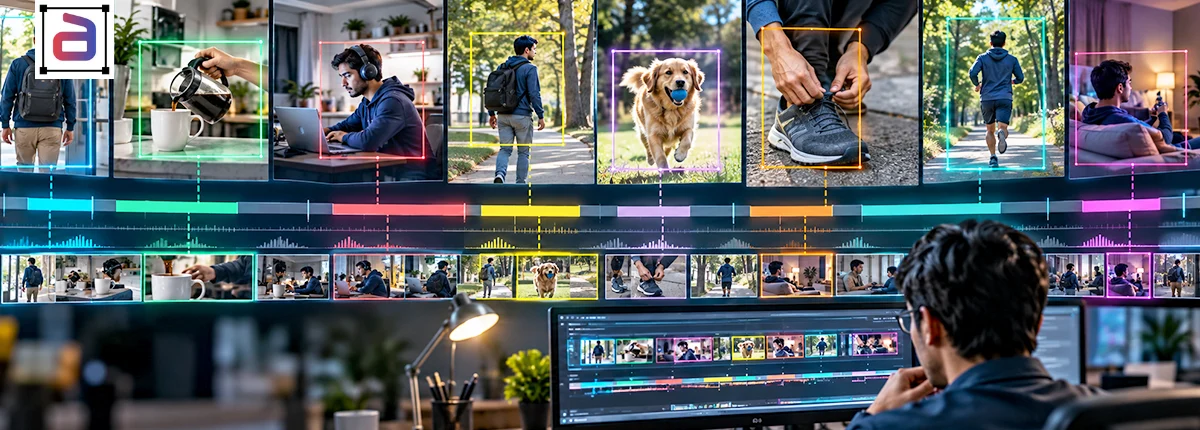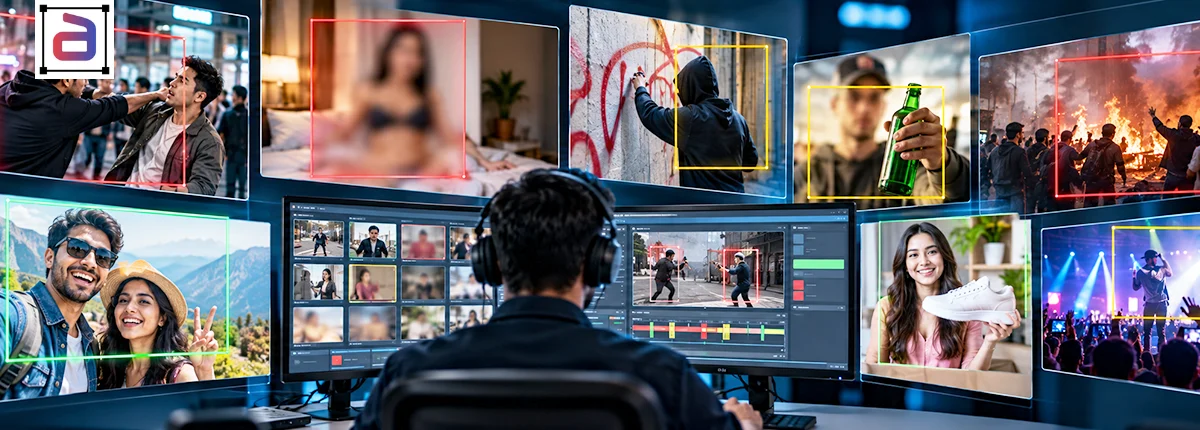
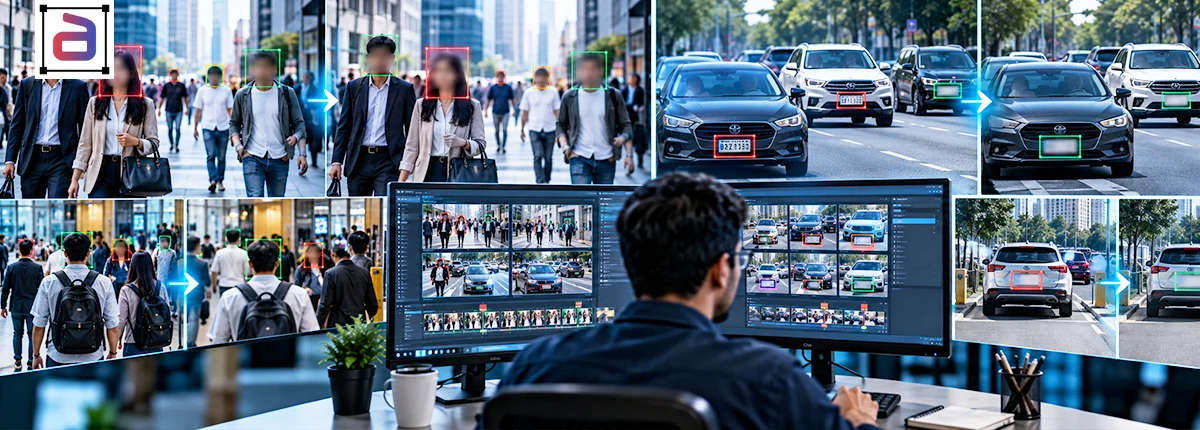
Video has become a critical data source for artificial intelligence (AI), powering applications such as autonomous driving, intelligent surveillance, retail analytics, and smart city infrastructure. Yet, behind every video frame may be sensitive personal information, including recognizable faces, vehicle license plates, and other identifying details. When this information enters AI training datasets without adequate safeguards, organizations risk exposing individuals to privacy violations and creating compliance challenges. This is where privacy-safe video annotation becomes essential. By integrating face detection, license plate redaction, secure data handling, and rigorous quality assurance into video processing workflows, businesses can prepare valuable AI training data while reducing unnecessary exposure of personal information.
At Annotera, we recognize that high-quality AI training data must balance annotation precision with responsible data practices. As organizations scale their computer vision initiatives, privacy-conscious annotation workflows are becoming an important part of building trustworthy AI systems.
Key Points
- Protect Sensitive Video Data: Face and license plate redaction help minimize exposure of personally identifiable information (PII) in AI training datasets and support privacy-conscious data processing.
- Support GDPR and CCPA Compliance: Privacy-safe video annotation workflows incorporate data minimization, access controls, secure processing, and appropriate retention practices to help address applicable privacy obligations.
- Maintain Annotation Accuracy With Multi-Object Tracking: Consistent, frame-by-frame redaction and multi-object tracking help preserve essential visual information while keeping identifying details obscured throughout video sequences.
- Scale Privacy-Conscious AI Training With Annotera: Annotera supports video annotation workflows that combine face and license plate redaction, quality assurance, and accurate labeling to help organizations prepare reliable computer vision datasets.
Why Privacy-Safe Video Annotation Matters
Video datasets frequently capture information beyond the primary subject of interest. A traffic monitoring system may record pedestrians, vehicle registration plates, and residential surroundings. Retail surveillance footage may include customers, employees, and their interactions. Although this information can help train computer vision models, it may also introduce privacy risks when collected, stored, shared, or processed without appropriate controls. Privacy-safe video annotation combines accurate labeling with measures designed to limit the exposure of personally identifiable information (PII). These measures may include face blurring, license plate masking, restricted dataset access, secure transfers, and documented quality checks. The objective is straightforward: preserve the visual information AI models need while minimizing unnecessary exposure of identifying details. For AI developers, this approach can improve dataset governance, reduce avoidable privacy risks, and support more responsible data preparation.
Understanding GDPR and CCPA Compliance
Two important privacy frameworks influencing video data processing are the General Data Protection Regulation (GDPR) in the European Union and the California Consumer Privacy Act (CCPA), as amended by the California Privacy Rights Act (CPRA). Under the GDPR, identifiable video footage may qualify as personal data when it relates to an identified or identifiable person. Facial imagery is not automatically special-category biometric data; that classification can apply when specific technical processing is used to uniquely identify an individual. The GDPR establishes principles such as data minimization, purpose limitation, storage limitation, and appropriate security. Organizations must also determine a lawful basis for processing personal data and implement safeguards appropriate to the risks. The CCPA, as amended by the CPRA, provides California residents with rights concerning their personal information, subject to applicable requirements and exceptions. Video footage may fall within its scope when information identifies, relates to, or could reasonably be linked to a consumer or household. Importantly, neither framework universally requires every face or license plate in every video to be redacted. Obligations depend on the processing context, applicable legal requirements, and intended use of the data. Redaction alone does not establish compliance. As a guiding principle:
“Privacy should be built into the data preparation process, not treated as an afterthought.”
For organizations working with large-scale video datasets, this means considering privacy requirements before annotation begins.
Key Steps in a Privacy-Safe Video Annotation Workflow
1. Identify Sensitive Information Before Processing
An effective workflow begins with a comprehensive assessment of the source footage. Teams should identify where faces, license plates, and other potentially identifying information appear and evaluate the associated privacy risks. Factors such as video resolution, camera placement, lighting, motion blur, and scene complexity can influence the effectiveness of redaction. A documented assessment should establish the dataset’s intended purpose, access permissions, retention requirements, and redaction criteria. This ensures that privacy controls are aligned with the actual needs of the AI project. For example, a vehicle detection model may require vehicle boundaries and movement trajectories but generally does not need readable license plate numbers.
2. Detect Faces and License Plates Accurately
Automated detection tools can locate faces and license plates across video frames using bounding boxes or segmentation masks. However, even advanced detection systems can miss sensitive regions in challenging conditions. Common failure scenarios include:
- Faces partially hidden by objects or captured at unusual angles.
- License plates obscured by dirt, glare, or poor lighting.
- Small objects appearing in distant or high-resolution scenes.
- Motion blur and rapid changes in camera perspective.
Human-in-the-loop quality assurance helps identify missed detections and correct annotation errors. A robust workflow should pay particular attention to false negatives because undetected sensitive information may remain exposed in the final dataset.
3. Apply Consistent Redaction Across Video Frames
Detecting a face or license plate in a single frame is not enough. Sensitive information must remain protected as subjects move through the video. Redaction techniques such as Gaussian blurring, pixelation, and opaque masking can obscure identifying details. The appropriate method depends on the dataset’s intended use and the level of protection required. Multi-object tracking adds another layer of consistency by associating detected objects across successive frames. For example, an annotation system can track a vehicle throughout a traffic sequence while ensuring its license plate remains redacted, preserving useful movement information without unnecessarily exposing registration details. However, tracking systems can experience identity switches, missed detections, and errors during occlusion. Quality checks must therefore verify redaction across complete sequences, including transitions where a subject temporarily disappears and reappears.
4. Preserve AI Training Value Without Compromising Privacy
Excessive redaction can reduce the usefulness of training data. If an autonomous driving model needs to recognize vehicle types, road markings, or pedestrian movement, removing too much visual information may compromise model performance. The solution is task-specific redaction. Annotation guidelines should clearly distinguish between sensitive information that requires protection and visual features that must remain available for training. For instance, an autonomous driving dataset can retain vehicle bounding boxes, lane markings, object trajectories, and road-scene context while obscuring faces and license plates. At Annotera, carefully defined annotation specifications can help align privacy requirements with the technical objectives of computer vision projects.
5. Validate Redaction Quality Before Dataset Delivery
Quality assurance is essential to ensure that privacy protections work consistently across the dataset. Reviewers should examine representative frames, difficult scenes, and complete video sequences where feasible. Important checks include:
- Detection completeness: Are all relevant faces and license plates identified?
- Temporal consistency: Does redaction remain effective as objects move?
- Visual effectiveness: Are identifying details adequately obscured?
- Annotation integrity: Are object labels, timestamps, and tracking associations preserved?
- Auditability: Are review outcomes, exceptions, and corrective actions documented?
Teams should also evaluate reflections, partially visible license plates, crowded scenes, and other challenging cases. Redaction thresholds should reflect the dataset’s risk profile rather than relying on a single universal accuracy target.
How Video Annotation Outsourcing Services Support Privacy
Building an internal video annotation operation requires specialized tools, trained personnel, quality assurance processes, and appropriate data security controls. For organizations managing large or continuously growing datasets, these requirements can become difficult to scale. Experienced video annotation outsourcing services can help establish repeatable workflows for sensitive video processing, including face redaction, license plate masking, object detection, and multi-object tracking. When selecting a video annotation company, organizations should evaluate encryption, access controls, workforce confidentiality, data retention and deletion procedures, incident response capabilities, and quality assurance documentation. Contracts should also clarify processing responsibilities, subprocessors, cross-border data transfers, and applicable privacy obligations. Outsourcing does not automatically remove the customer’s legal responsibilities; vendor oversight remains important. Annotera supports AI teams with structured video annotation workflows designed around project-specific labeling requirements and quality expectations. By integrating privacy-aware processing with accurate annotation, organizations can prepare scalable datasets while reducing unnecessary exposure of sensitive visual information.
Build Responsible AI Datasets With Annotera
As AI applications increasingly depend on real-world video, privacy must become an integral part of dataset preparation. Effective face and license plate redaction requires more than automated blurring: it demands accurate detection, consistent frame-by-frame processing, task-specific annotation guidelines, and rigorous quality assurance. GDPR and CCPA compliance also requires organizations to consider lawful processing, transparency, security, retention, and individual rights. Redaction is an important safeguard, but it should form part of a broader privacy and data governance strategy. Ready to make your video datasets more privacy-conscious without sacrificing annotation quality? Partner with Annotera for scalable video annotation workflows that support face and license plate redaction, multi-object tracking, and quality assurance. Our team can help you prepare high-quality computer vision training data aligned with your project’s technical and privacy requirements. Contact Annotera today to discuss your video annotation needs and build a stronger foundation for responsible AI development.