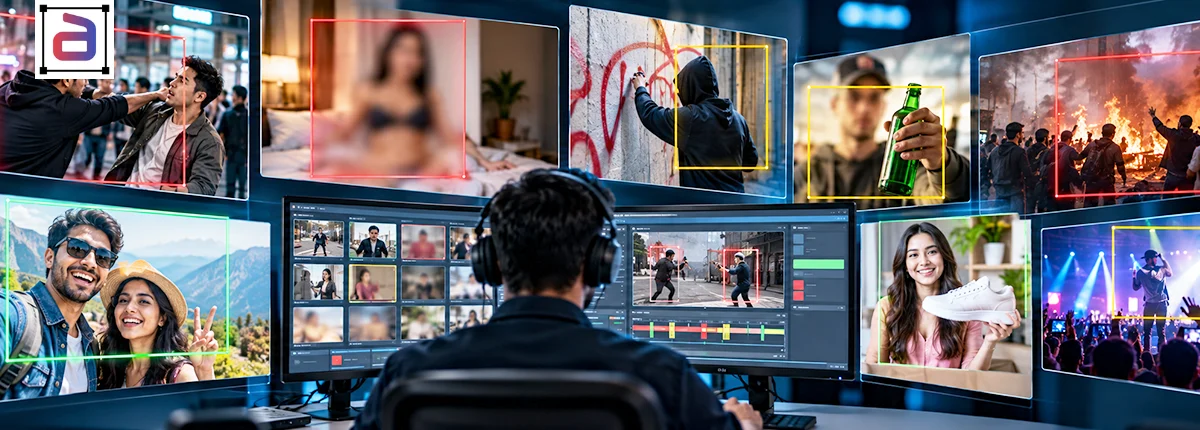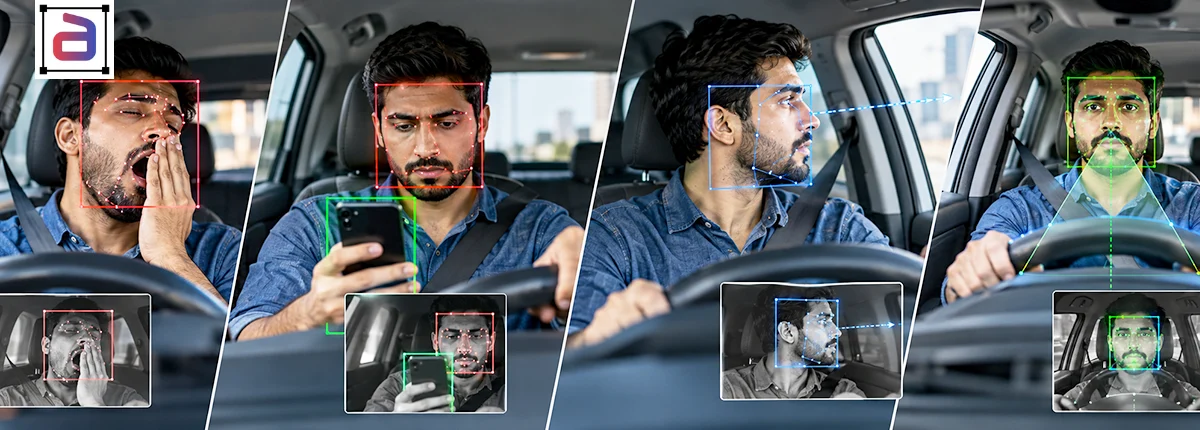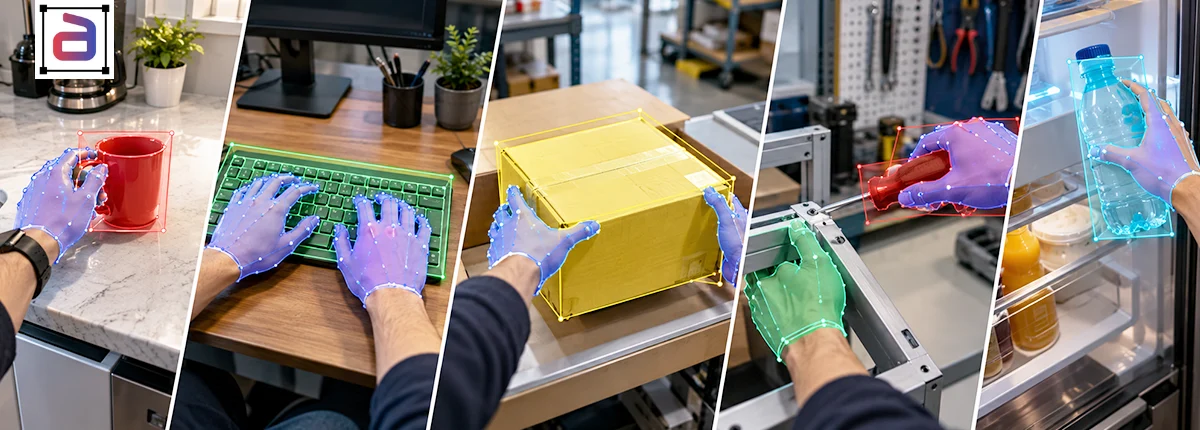
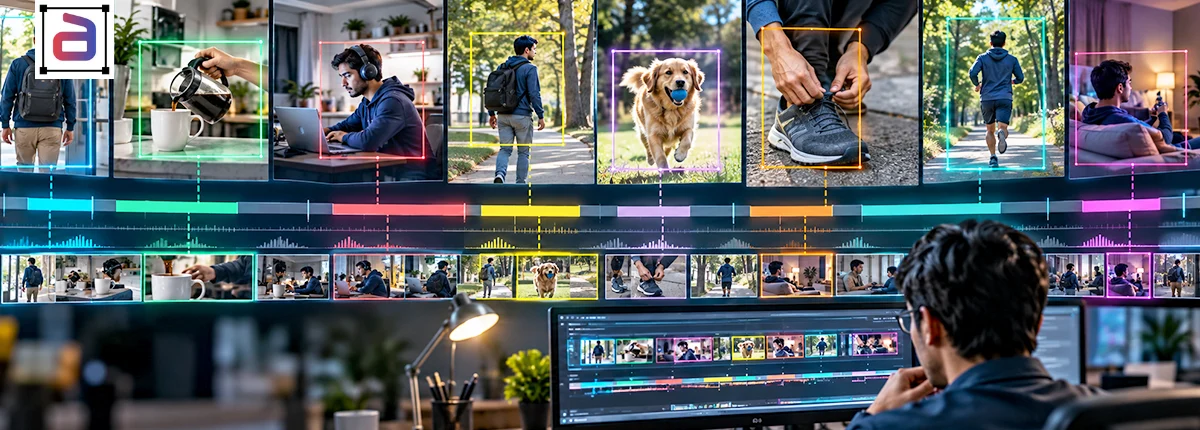
A video is more than a collection of images. It is a sequence of events, interactions, and actions that unfold over time. For AI systems to understand a person opening a door, a vehicle changing lanes, or a robot picking up an object, they must interpret not only what appears on screen but also how events develop and when they occur. This capability is central to modern video-language models, which connect visual information with natural language to support intelligent video search, automated summarization, activity recognition, and multimodal reasoning. However, these models depend on training data that accurately represents both the meaning and timing of video events. Dense video captioning and temporal grounding annotation provide this essential foundation.
Dense captioning describes multiple events within a video, while temporal grounding identifies the precise time intervals associated with those descriptions. At Annotera, we help AI teams transform complex video content into structured, high-quality training datasets. Through carefully designed annotation workflows, we support the development of video-language models that can interpret events with greater contextual and temporal accuracy.
Key Points
- Dense Video Captioning: Generates detailed descriptions of multiple events within a video, helping video-language models understand actions and context.
- Temporal Grounding Annotation: Connects natural-language descriptions to precise video timestamps, enabling accurate event localization and video search.
- Multi-Object Tracking Integration: Maintains consistent object identities across frames, improving action association and temporal consistency in complex video scenes.
- High-Quality Video Annotation with Annotera: Combines structured annotation workflows, human review, and quality assurance to support reliable training datasets for advanced video-language models
What Is Dense Video Captioning?
Traditional video captioning typically generates a single description summarizing an entire clip. Although useful for broad interpretation, this approach may overlook important actions, transitions, and interactions. Dense video captioning takes a more detailed approach by identifying multiple meaningful events and generating a separate caption for each one. Consider a warehouse video showing a worker entering an aisle, scanning a barcode, picking up a package, and placing it on a conveyor belt. A single caption might summarize the activity as “A worker handles a package.” Dense captioning, however, captures each action individually, preserving the sequence and context of the activity. High-quality dense video captioning annotation involves:
- Event identification: Recognizing distinct actions, interactions, and changes within a video.
- Contextual captioning: Describing each event accurately without introducing unsupported assumptions.
- Temporal segmentation: Assigning start and end timestamps to the relevant events.
- Event relationship mapping: Preserving meaningful relationships between actions, objects, and participants.
These annotations enable models to learn richer connections between visual scenes and language, making them valuable for applications such as video search, intelligent surveillance, sports analytics, robotics, and automated content understanding.
What Is Temporal Grounding Annotation?
Understanding what happens in a video is only part of the challenge. AI systems must also determine exactly when a particular event occurs. Temporal grounding annotation connects a natural-language description or query to its corresponding segment in a video. For example, when a user asks, “When does the employee place the package on the conveyor belt?”, the model should identify the relevant interval rather than return a general description of the entire clip. A well-structured temporal grounding dataset typically includes:
- Accurate timestamps: Identifying event start and end points.
- Action localization: Connecting a text description to the correct video segment.
- Semantic alignment: Ensuring that the caption accurately describes the selected interval.
- Boundary consistency: Applying standardized rules to actions with gradual beginnings, endings, or overlapping phases.
- Contextual validation: Checking that the selected segment provides sufficient visual evidence for the description.
Temporal grounding is particularly important for video-language models that support natural-language search, time-specific question answering, and event retrieval. An inaccurate timestamp can undermine an otherwise correct caption. If a model associates “a person exits the building” with frames showing the person entering, the resulting dataset introduces conflicting supervision.
Why Video-Language Models Need Both
Dense video captioning and temporal grounding solve complementary problems. One explains the content of an event; the other establishes its location in time. Together, they provide a structured representation of video that enables models to connect language with visual evidence across an evolving sequence. As a practical example, consider a video of a customer shopping in a supermarket. The annotation workflow may identify three events: the customer picks up a product, examines its label, and returns it to the shelf. Each event receives a descriptive caption and a corresponding time interval. This combined annotation approach supports several important applications: 1. Natural-language video search: Users can find specific actions or interactions without manually reviewing lengthy recordings. 2. Video question answering: Models can answer questions about event order, participant actions, and when specific activities occur. 3. Intelligent video analytics: Organizations can locate relevant activities in surveillance, retail, industrial, and operational footage. 4. Robotics and embodied AI: Models can learn to interpret object interactions and sequences of actions, supporting richer visual understanding. 5. Automated video summarization: Systems can generate event-based summaries that retain important information rather than relying on a single generic caption.
How Multi-Object Tracking Strengthens Temporal Annotation
Videos frequently contain multiple people, vehicles, or objects moving simultaneously. Maintaining consistent identities across frames is therefore important when annotating complex interactions. Multi-object tracking involves detecting objects and associating them across successive frames so that their identities remain consistent over time. For example, in a traffic video, tracking can help distinguish one pedestrian crossing the road from another waiting at the curb. Annotators can then associate the correct actions with the correct individuals and corresponding timestamps. When incorporated into video annotation workflows, multi-object tracking can support:
- Consistent object and person identification across frames.
- More reliable association between entities and their actions.
- Better interpretation of interactions and movement patterns.
- Improved annotation of overlapping activities.
- Stronger temporal consistency across event descriptions.
However, tracking does not independently establish the meaning of an action. A trajectory may reveal where an object moves, but semantic annotation is needed to describe what the object is doing and why the event matters within the visible context. Combining tracking information with dense captioning and temporal grounding creates more comprehensive datasets for video-language models, particularly in dynamic environments.
Key Challenges in Annotation Quality
Despite their advantages, these annotation tasks require careful planning and quality control.
- Ambiguous event boundaries: Actions often transition gradually, making it difficult to determine their exact start and end times.
- Overlapping activities: Multiple events may occur simultaneously, requiring clear rules for separate captions and overlapping timestamps.
- Visual uncertainty: Occlusion, low resolution, motion blur, and poor lighting can limit the evidence available to annotators.
- Caption inconsistency: Different annotators may describe the same event with varying levels of detail or terminology.
- Entity association errors: Incorrectly linking an action to a tracked person or object can introduce misleading training signals.
- Scaling challenges: Large video collections require efficient workflows without compromising annotation accuracy.
Addressing these issues requires clear labeling guidelines, trained annotators, appropriate tooling, and systematic quality assurance.
Best Practices for High-Quality Video Annotation
AI teams can improve dataset reliability by implementing a standardized annotation framework.
- Establish clear annotation guidelines: Define event categories, caption structure, timestamp precision, and rules for overlapping activities.
- Prioritize evidence-based descriptions: Captions should describe observable actions without adding unsupported interpretations or assumptions.
- Use automation strategically: Detection, tracking, and pre-annotation tools can accelerate repetitive tasks, while human reviewers validate complex events.
- Validate temporal alignment: Review event boundaries against the actual footage to ensure that captions correspond to the correct intervals.
- Implement multi-stage quality assurance: Use independent reviews, disagreement resolution, and targeted audits to identify systematic errors.
- Measure dataset quality: Evaluate event coverage, temporal boundary accuracy, caption relevance, identity consistency, and inter-annotator agreement.
These practices help create structured datasets that support more reliable training, evaluation, and improvement of video-language models.
How Annotera Supports Video-Language Model Development
Building advanced video AI requires more than large volumes of footage. It requires carefully annotated data that connects events, entities, language, and time. As a specialized video annotation company, Annotera supports AI teams with annotation workflows tailored to their data requirements. Our capabilities can support dense event captioning, temporal segmentation, action labeling, entity association, and quality assurance across a variety of video datasets. For organizations evaluating video annotation outsourcing services, Annotera offers a partner-oriented approach focused on annotation consistency, project-specific labeling guidelines, and scalable production workflows. These capabilities can help AI teams manage complex annotation requirements while maintaining visibility into dataset quality. Our approach recognizes that annotation quality directly affects the usefulness of training data. Clear event descriptions, reliable temporal boundaries, and consistent entity associations help reduce ambiguity in the supervision provided to video-language models. As datasets grow and use cases become more sophisticated, structured annotation workflows also help teams adapt to new event categories, specialized taxonomies, and evolving model requirements. At Annotera, our goal is to help AI models turn unstructured video into meaningful, model-ready data that supports better video understanding.
Conclusion: Build Better Video AI with Annotera
Dense video captioning and temporal grounding annotation are fundamental to developing video-language models that understand not only what happens in a scene but also when and how events unfold. Dense captions provide semantic context, temporal grounding connects descriptions to precise video segments, and multi-object tracking helps maintain consistent entity identities across frames. Together, these techniques create richer training datasets for applications ranging from intelligent video search to robotics and multimodal AI. As video-language models advance, the quality of their training data will remain a critical factor in their effectiveness. Ready to strengthen your video-language models with high-quality training data? Partner with Annotera for scalable video annotation solutions tailored to your AI development goals. Contact our team to discuss your requirements for dense video captioning, temporal grounding, and other specialized annotation workflows.