






Train intelligent AI models with accurate, culturally relevant Arabic data annotation services from Annotera. We help organizations develop high-performing artificial intelligence, machine learning, computer vision, natural language processing (NLP), speech recognition, and generative AI applications through expertly annotated Arabic datasets. Our language specialists and annotation experts ensure every dataset reflects the linguistic nuances, dialect variations, and cultural context essential for building reliable Arabic AI solutions.
Annotera delivers comprehensive Arabic data annotation services across text, image, audio, video, sentiment, intent, and generative AI datasets. Our native-language expertise and quality-driven processes help organizations build accurate, scalable, and culturally relevant AI models for Arabic-speaking markets.
Our Arabic text annotation services support NLP model training through entity recognition, sentiment analysis, intent classification, text categorization, semantic labeling, and linguistic annotation. We help AI systems understand Modern Standard Arabic and regional dialects with greater accuracy.
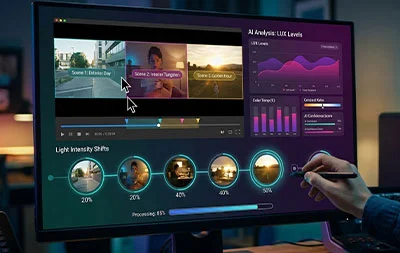
Annotera provides precise image annotation services, including bounding boxes, polygon annotation, semantic segmentation, keypoint labeling, and object tracking. Our Arabic-focused datasets support computer vision applications across industries such as retail, healthcare, automotive, and smart city technologies.
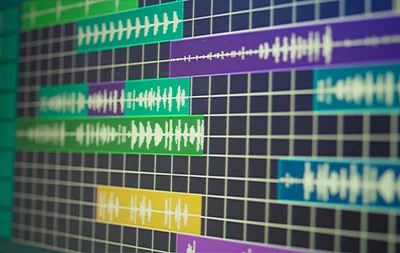
We annotate Arabic speech datasets for automatic speech recognition (ASR), voice assistants, conversational AI, and speech analytics. Our services include transcription, speaker identification, phonetic labeling, emotion detection, and acoustic event annotation.
Understanding customer intent and sentiment is critical for conversational AI and customer experience solutions. We annotate Arabic text and speech data to identify emotions, opinions, intents, and contextual meaning with high precision.
We prepare, classify, validate, and annotate Arabic datasets for large language models (LLMs), generative AI systems, chatbots, virtual assistants, and multilingual AI applications requiring high-quality Arabic language understanding.
Train AI systems to identify harmful, inappropriate, or policy-violating content through detailed French-language moderation datasets.
Build multilingual AI applications by combining French data annotation with other language datasets while maintaining consistency and quality standards.
Annotera supports organizations across healthcare, banking, financial services, retail, e-commerce, automotive, telecommunications, and technology sectors with high-quality Arabic data annotation services that enable accurate, scalable, and industry-specific AI and machine learning solutions.
Annotera combines native Arabic linguistic expertise, multi-dialect coverage, rigorous quality assurance, scalable annotation capabilities, secure data handling practices, and customized workflows to deliver accurate, culturally relevant, and AI-ready Arabic datasets for diverse machine learning applications.

Our annotation teams include native Arabic speakers and linguistic specialists who understand regional dialects, cultural context, and language variations to ensure exceptional annotation quality.

We support Modern Standard Arabic (MSA) as well as major regional dialects, including Gulf Arabic, Egyptian Arabic, Levantine Arabic, and Maghrebi Arabic, helping organizations build more inclusive AI models.

Every dataset undergoes multi-level quality validation, review workflows, and accuracy checks to ensure consistency, reliability, and model-ready data outputs.

Whether you require thousands or millions of data points, our scalable annotation teams can rapidly expand project capacity while maintaining quality standards and delivery timelines.

We follow strict security protocols, controlled access environments, and compliance-driven processes to protect sensitive data throughout the annotation lifecycle.
Accurately labeled Arabic datasets enable machine learning models to achieve higher accuracy, better language understanding, and improved prediction capabilities.

AI systems trained on high-quality Arabic data deliver more natural, personalized, and culturally relevant interactions for Arabic-speaking users.

Support expansion into Arabic-speaking markets with AI solutions that effectively understand local language nuances and customer expectations.

Diverse and representative Arabic datasets help minimize bias and improve fairness across AI applications serving different demographics and dialect groups.

Building successful AI solutions for Arabic-speaking audiences requires high-quality training data created by experienced language and annotation specialists. Annotera delivers accurate, scalable, and secure Arabic data annotation services that help organizations develop smarter AI models, improve performance, and accelerate innovation.
Whether you need Arabic text annotation, image labeling, speech transcription, video annotation, or generative AI training datasets, our experts are ready to support your next AI initiative with reliable, production-ready data annotation solutions.
Explore answers to common questions about Arabic data annotation services, supported dialects, data types, annotation capabilities, and how Annotera helps organizations build high-quality AI training datasets.
Annotera supports Modern Standard Arabic (MSA) and major regional dialects, including Gulf Arabic, Egyptian Arabic, Levantine Arabic, and Maghrebi Arabic. We can also accommodate custom dialect requirements based on project needs.
We annotate text, audio, image, video, document, and multimodal datasets. Our services support NLP, speech recognition, computer vision, conversational AI, generative AI, and machine learning applications.
We implement multi-stage quality assurance processes, including expert reviews, validation checks, consensus scoring, and project-specific quality benchmarks to maintain high annotation accuracy and consistency.
Yes. Our scalable workforce and proven project management methodologies enable us to process large-volume Arabic datasets while maintaining quality, security, and turnaround commitments.