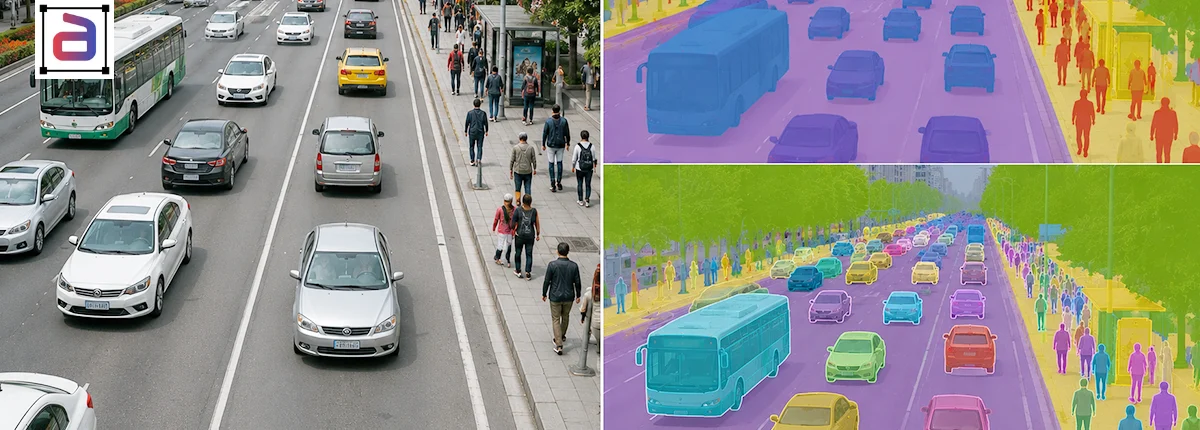
Bounding boxes, polygons, segmentation, keypoints and classification, labeled by dedicated annotators to your guidelines and checked against your gold set. Start with a free 48-hour pilot on your own images.
Every computer vision model learns from labeled images. Annotera provides image annotation services that turn raw images and photos into consistent, machine-readable training data: objects located, outlined and classified exactly the way your model needs them. Dedicated annotators work to your guidelines, and every batch is scored against a gold set before it ships, so your team spends its time improving models rather than fixing labels.
We support every major image labeling method: bounding boxes for object detection, polygons for irregular shapes, semantic and instance segmentation at pixel level, keypoints and landmarks for pose and faces, polylines for lanes and boundaries, 3D cuboids for depth, and whole-image classification. For sensor data, our LiDAR annotation teams label 3D point clouds alongside camera images. Photo annotation for product catalogs, insurance claims and visual search runs on the same QA framework.
Our image annotation services support teams in autonomous vehicles, retail, healthcare, agriculture, security and robotics, from a first pilot dataset to millions of annotated images. If you are new to the topic, our guide to what data annotation is explains the main types and how labeling quality is measured, and our image annotation guide goes deeper on techniques.
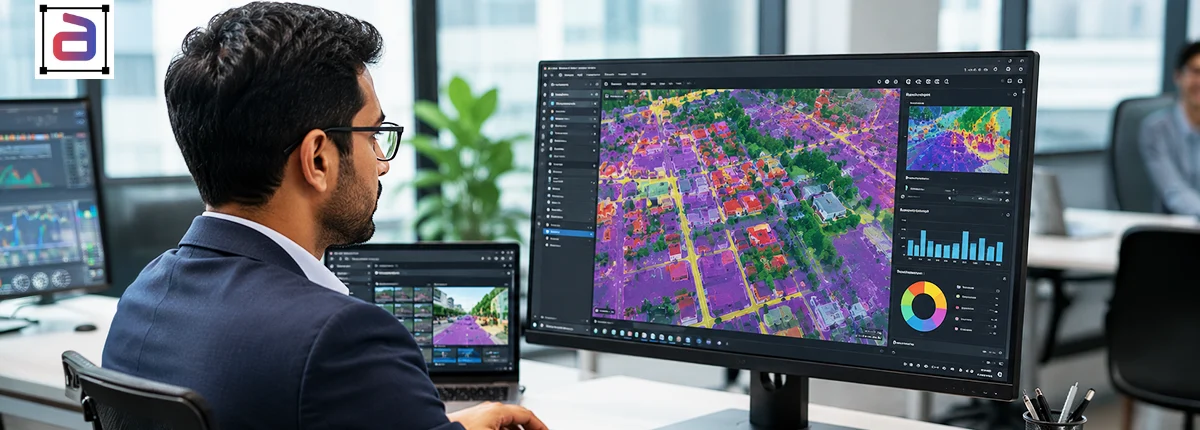
Choose the technique that matches your model, or combine several in one program. Each page covers use cases, edge-case rules and how we measure quality for that method. For 3D and overhead imagery, see our LiDAR annotation and geospatial annotation services.
Tight rectangular boxes around every object of interest, the fastest route to accurate object detection models.
Cuboids that capture each object’s depth, size and orientation for robotics, warehouse and driving models.
Point-by-point outlines for irregular shapes, from damaged car panels to tumors and products on crowded shelves.
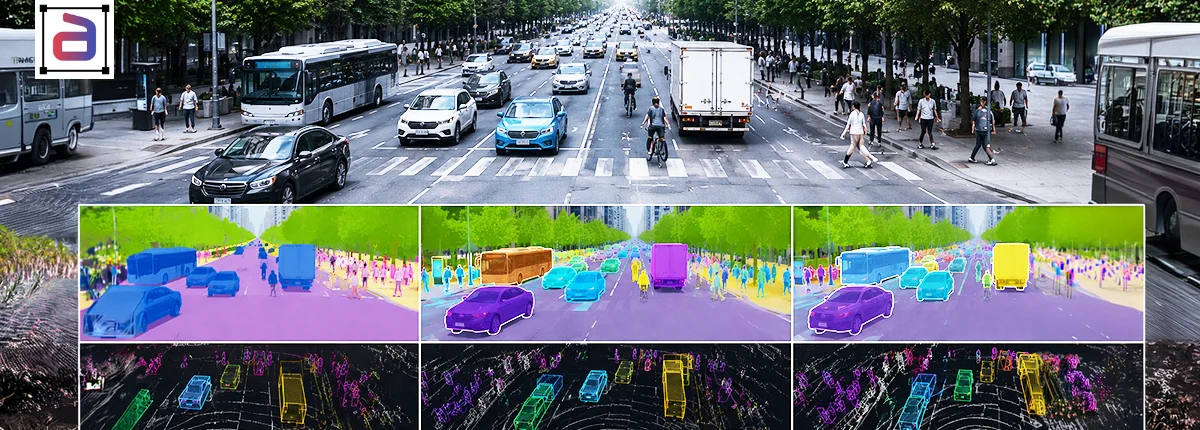
Every pixel assigned to a class for full scene understanding, with instance masks where objects must be separated.
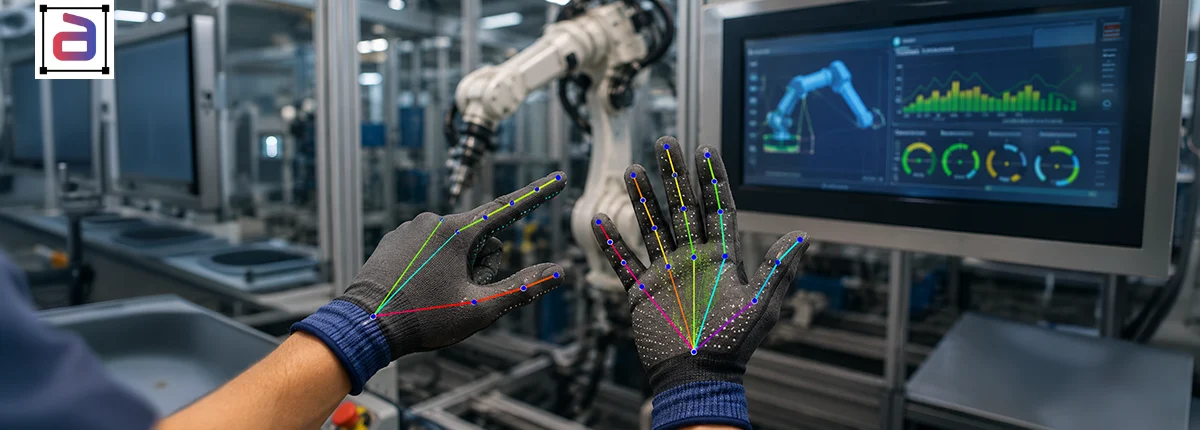
Precise points on faces, hands and objects for recognition, expression analysis and augmented reality models.
Connected lines and splines for lanes, road edges, cables and boundaries that need continuous labels.
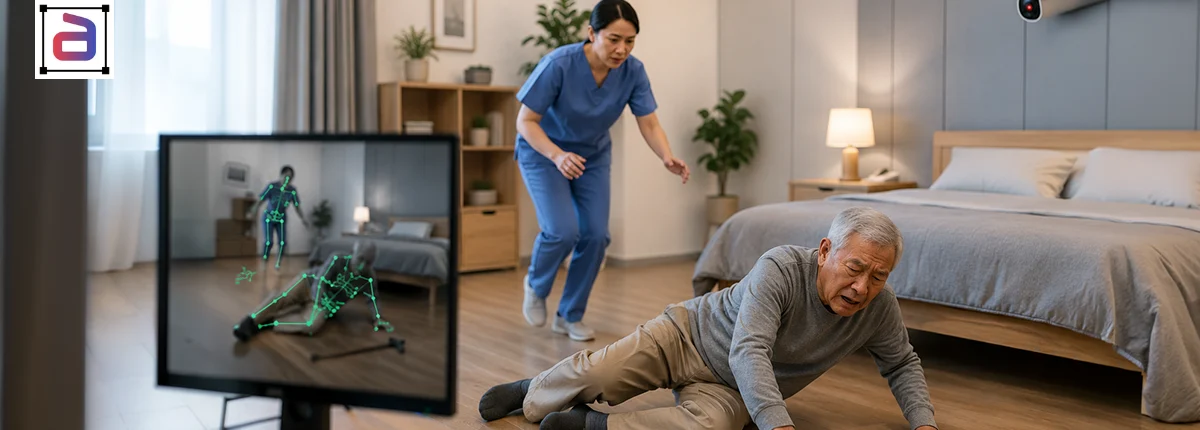
Joint-by-joint body keypoints for pose estimation in sports, ergonomics, healthcare and robotics models.
Whole-image tags and attributes for content filtering, product catalogs, quality inspection and visual search.

Every image annotation project follows the same sequence, so quality is proven on your own images before volume arrives.

We label a sample of your images, usually within 48 hours, and score it against your gold set and acceptance criteria.

Edge cases such as occlusion, truncation and look-alike classes are written into the guidelines and agreed before production.

Batches ship with per-class accuracy and IoU reports, and the team grows with your volume without losing consistency.
Accurate labels at scale depend on process, people and security. These are the commitments behind every Annotera image annotation program. Teams that want a fully managed operation can use our data annotation outsourcing services.

Annotator self-review, team-lead checks and independent QA, scored against gold sets with per-class accuracy and IoU reporting.

Dedicated teams trained on your classes and domain, from medical scans to retail shelves, so expertise builds over time.

Operations certified to ISO/IEC 27001:2022, SOC 2 Type II, HITRUST CSF and PCI DSS 4.0.1, with HIPAA-compliant workflows.

Written rules for occlusion, truncation, reflections and look-alike classes keep labels consistent where models usually fail.

We work in your annotation platform or established commercial tools, with model-assisted pre-labeling where it helps.

Teams scale with your volume, drawing on Fusion CX’s 17,000 people across 40 delivery centers in 13 countries.
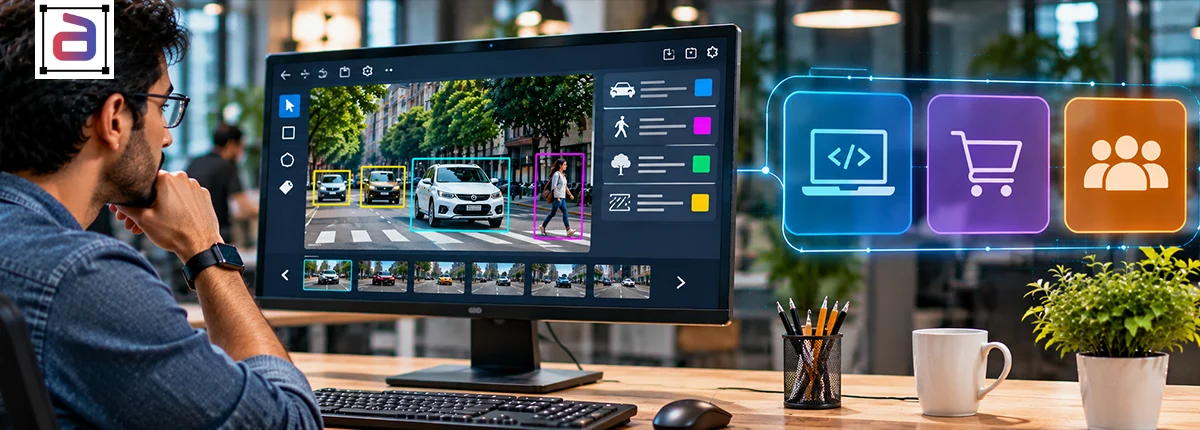
Annotators are trained on the imagery and edge cases of your domain before they label production data.
Vehicles, pedestrians, lanes and signs labeled for perception and ADAS, with LiDAR and camera data aligned.
SKU-level product recognition, shelf monitoring and cashierless checkout imagery, including look-alike products.
Medical images outlined and segmented by trained annotators in HIPAA-compliant workflows.
Crops, weeds, pests and livestock labeled in field, greenhouse and aerial imagery.
People, vehicles and events labeled in camera footage for monitoring and alert verification.
Objects, grasp points and scenes labeled for picking, navigation and manipulation models.
Image-based programs running today for retail and public safety clients.
Autonomous retail
Annotation partner since 2020 to a global cashierless-store technology company, delivered from India, the Philippines and Albania for stores and live-event venues across the U.S. and Europe.
Wildfire monitoring
A 100+ person human-in-the-loop team went live on April 10, 2025, met every KPI by week four and reached 100% certification on real wildfire scenario simulations.
Answers on techniques, accuracy, pricing, tools, security and how to get started.
Image annotation services label images and photos so computer vision models can learn from them: drawing boxes, polygons or masks around objects, placing keypoints and assigning classes. A managed provider such as Annotera supplies trained annotators, guidelines, quality assurance and reporting.
Bounding boxes, polygons, semantic and instance segmentation, keypoints and landmarks, skeletal pose, polylines, 3D cuboids and image classification, plus LiDAR and camera fusion for sensor data. Most programs combine two or three techniques.
Against a gold set labeled by senior annotators. We report accuracy per class, boundary overlap (IoU) for boxes, polygons and masks, and errors by type, so problems in rare or look-alike classes are visible rather than hidden in an average.
Pricing depends on the technique, the number of objects per image, the expertise required, quality targets and volume. Most programs are priced per image, per object or per dedicated annotator. A pilot on your own images gives an accurate quote before you commit.
Yes. We work in your in-house or commercial annotation platform, or provide established tools if you do not have one, and deliver labels in the formats your training pipeline expects.
Work runs inside Fusion CX operations certified to ISO/IEC 27001:2022, SOC 2 Type II, HITRUST CSF and PCI DSS 4.0.1, with HIPAA-compliant workflows and role-based access. We work only with the images you provide and never resell datasets.
Per-class QA reporting, written rules for edge cases, annotators trained on your domain, certified security and a willingness to prove quality with a pilot on your own images before you sign.
A pilot on a sample of your images is usually delivered within 48 hours of receiving the data and guidelines. Production ramp time depends on volume and complexity and is agreed during the pilot.