

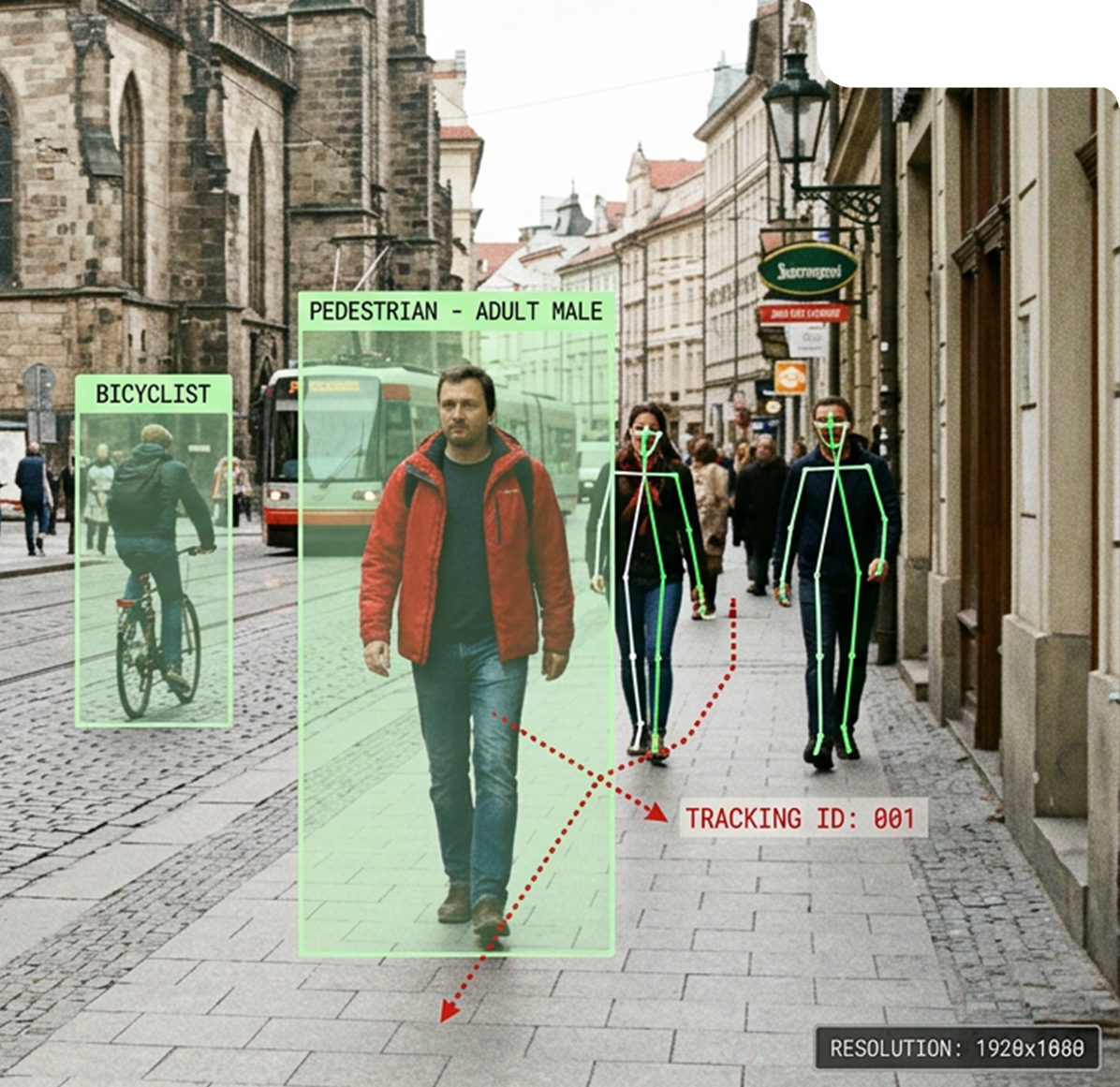
Sensor data collection sources the physical environment streams LiDAR point clouds, GPS and location data, IMU motion readings, radar returns, environmental measurements, and industrial IoT telemetry that AI systems need to perceive, navigate, and act in the real world. Unlike visual data, sensor data captures physical properties such as distance, velocity, acceleration, position, temperature, and pressure. Autonomous vehicles, robotic systems, smart city platforms, and industrial AI depend on these inputs for spatial awareness and decision-making.
Every Annotera sensor collection engagement is scoped against your model’s processing pipeline and annotation taxonomy before deployment, ensuring data arrives time-stamped, synchronized across sensor types, and formatted for the labeling and fusion task. With 20-plus years of BPO experience and a 350-plus-person delivery team, Annotera provides compliant, scalable, annotation-ready sensor datasets for autonomous vehicles, robotics, smart infrastructure, healthcare wearables, agriculture, and industrial AI programs.
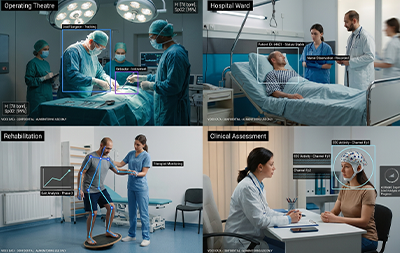
From de-identified radiology DICOM files and whole-slide pathology images to clinical notes, biosignal recordings, and consultation audio — every healthcare data category your diagnostic AI, clinical NLP, or medical imaging model needs, collected under rigorous compliance frameworks.
3D point cloud data from rotating and solid-state LiDAR sensors across urban, warehouse, and construction environments for autonomous perception now.
High precision GPS, GNSS, and RTK position streams in urban, suburban and GNSS denied environments for fleet tracking and location aware AI systems now.
6 DoF inertial measurement unit and accelerometer streams from vehicle and robotic platforms for motion estimation, and activity recognition models.
Short, medium, and long-range radar returns and ultrasonic proximity data from automotive deployments for ADAS, collision avoidance, and parking now.
Temperature, humidity, air quality, and CO₂ readings from fixed and mobile sensor networks for climate monitoring AI and EU environmental compliance.
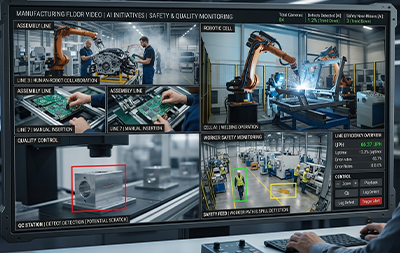
Vibration, torque, flow rate, and current telemetry streams from manufacturing equipment and production lines for predictive maintenance AI models.
Heart rate, SpO₂, galvanic skin response, and motion data from medical grade and consumer wearables under HIPAA aware rules for health monitoring work.
Power consumption, voltage, frequency, and grid event streams from smart meter networks for demand forecasting AI and grid optimization models today.
Sensor data frequently carries location information, biometric readings, and proprietary operational telemetry. Every Annotera sensor collection engagement includes data handling protocols, access controls, and the regulatory compliance framework your program and industry require.


Physical AI requires physical data. Annotera delivers sensor datasets tailored to the sensor types, sample rates, synchronization requirements, and compliance framework of each industry from single-sensor pilots to continuous multi-site fusion programs.
Every Annotera sensor data collection engagement follows a structured four-stage workflow ensuring sensor streams arrive at the annotation team time-stamped, synchronized across sensor types, and formatted for the fusion or labeling task.
We define sensor types, sample rates, synchronization standards, deployment environments, location and biometric privacy terms, and the annotation taxonomy before collection.
Our specialists deploy calibrated sensor rigs across the environments and conditions your model needs, recording every stream against a shared clock for precise alignment.
Every sensor stream is reviewed for sample rate consistency, calibration accuracy, timestamp alignment, and signal quality, with dropouts and drift flagged before handoff.
Time-stamped, synchronized sensor data is delivered in the format your pipeline requires, with the option to add sensor types, environments, or volume as your program grows.
Sensor collection demands precision in hardware, timing, and synchronization that visual or text sourcing does not. A miscalibrated sensor or timestamp drift degrades model performance. Annotera’s features prevent these failures.

All sensor streams are captured with shared timestamps, synchronized to sub-millisecond accuracy so LiDAR, camera, radar, GPS, and IMU data arrive pre-aligned, ready for fusion so.

GPS and location data are anonymized where required, biometric data is handled under HIPAA-aware protocols, and telemetry is protected under ISO 27001-aligned access controls now.

Sensor data routes directly into Annotera's annotation team for point cloud labeling, event flagging, anomaly tagging, and fusion QA, one partner, with no handoff gap at all clearly.
We deliver secure, scalable, and cost-effective sensor data collection. Autonomous vehicle, robotics, and industrial AI teams trust us to source the physical environment data their models need at the right fidelity and compliance level.

20+ years of BPO delivery experience applied to sensor-intensive programs, backed by a global operation with domain-specific hardware and collection protocols consistently.

Cost-effective sensor collection maintains signal quality and sync accuracy, so teams build robust training pipelines without overextending proprietary sensing budgets always.

ISO 27001-aligned and SOC-compliant processes protect sensor streams at every stage, with GPS anonymization, HIPAA-aware biometric handling, and encrypted transfer built in now.

Sensor types, sample rates, deployment environments, and data formats tailored to your fusion taxonomy, not a generic sensor package applied to every autonomous AI project clearly.

350-plus trained specialists and a global delivery network support sensor collection across single-site pilots and large-scale multi-sensor production programs today directly.
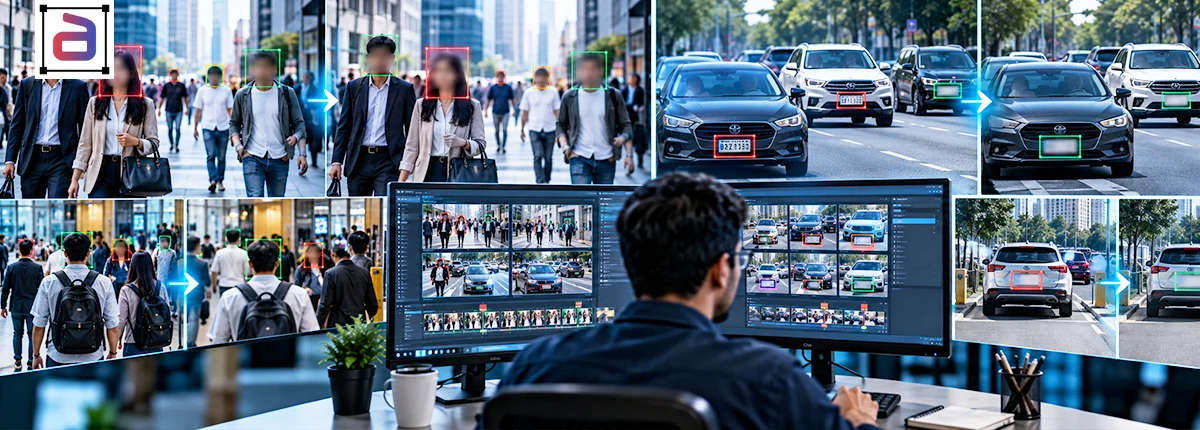
Here are answers to common questions about sensor data collection, hardware types, synchronization, compliance, and how physical environment data fits into AI training pipelines.
AI sensor data collection is the process of capturing physical environment streams LiDAR point clouds, GPS location data, IMU motion readings, radar returns, environmental measurements, and IoT telemetry that AI systems use to perceive and act in the physical world. It provides the spatial and positional context that visual data alone cannot capture, and is the primary input for autonomous vehicles, robotics, smart cities, and industrial AI.
Video and image data capture what a scene looks like visually. Sensor data captures the physical properties of a scene exact distances via LiDAR, precise position via GPS, acceleration and rotation via IMU, material reflectivity via radar, and environmental conditions via temperature and gas sensors. Many AI programs use both together: visual data for scene understanding and sensor data for physical environment awareness. Annotera provides both under the same pipeline.
Annotera collects LiDAR point clouds, GPS and GNSS position streams, IMU and accelerometer data, radar and ultrasonic returns, environmental sensor readings (temperature, humidity, air quality, pressure), industrial IoT telemetry, wearable biometric streams, and smart grid and energy sensor data. Sensor selection is matched to the use case, deployment environment, and annotation task.
Synchronization is designed at the hardware level before collection begins. All sensors in a multi-sensor setup share a common hardware timestamp reference, and every delivery is validated for cross-sensor time alignment accuracy before handoff. Streams with timestamp drift, sample rate inconsistency, or synchronization gaps are flagged and re-collected not delivered and left for the processing team to repair.
Data is delivered in the format your pipeline requires ROS bags for robotics and AV programs, PCD or PLY for LiDAR point clouds, CSV or HDF5 for tabular sensor streams, binary for embedded system data, or platform-specific formats where the deployment hardware is known. Format requirements are defined in the collection brief before capture begins.
Yes. Sensor streams are formatted, time-stamped, and organized for your annotation taxonomy before delivery, then routed directly into Annotera’s annotation team for point cloud labeling, event flagging, anomaly tagging, and sensor fusion QA. One partner handle both collection and annotation with no handoff gap.
GPS and location data is anonymized where personal location tracking is a concern. Wearable biometric data heart rate, SpO₂, galvanic skin response is handled under HIPAA-aware protocols including consent management and de-identification. Industrial telemetry is protected under ISO 27001-aligned access controls. GDPR-compliant handling applies to any EU data subjects whose location or behavioral patterns are captured.