


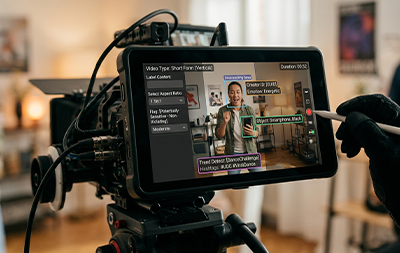





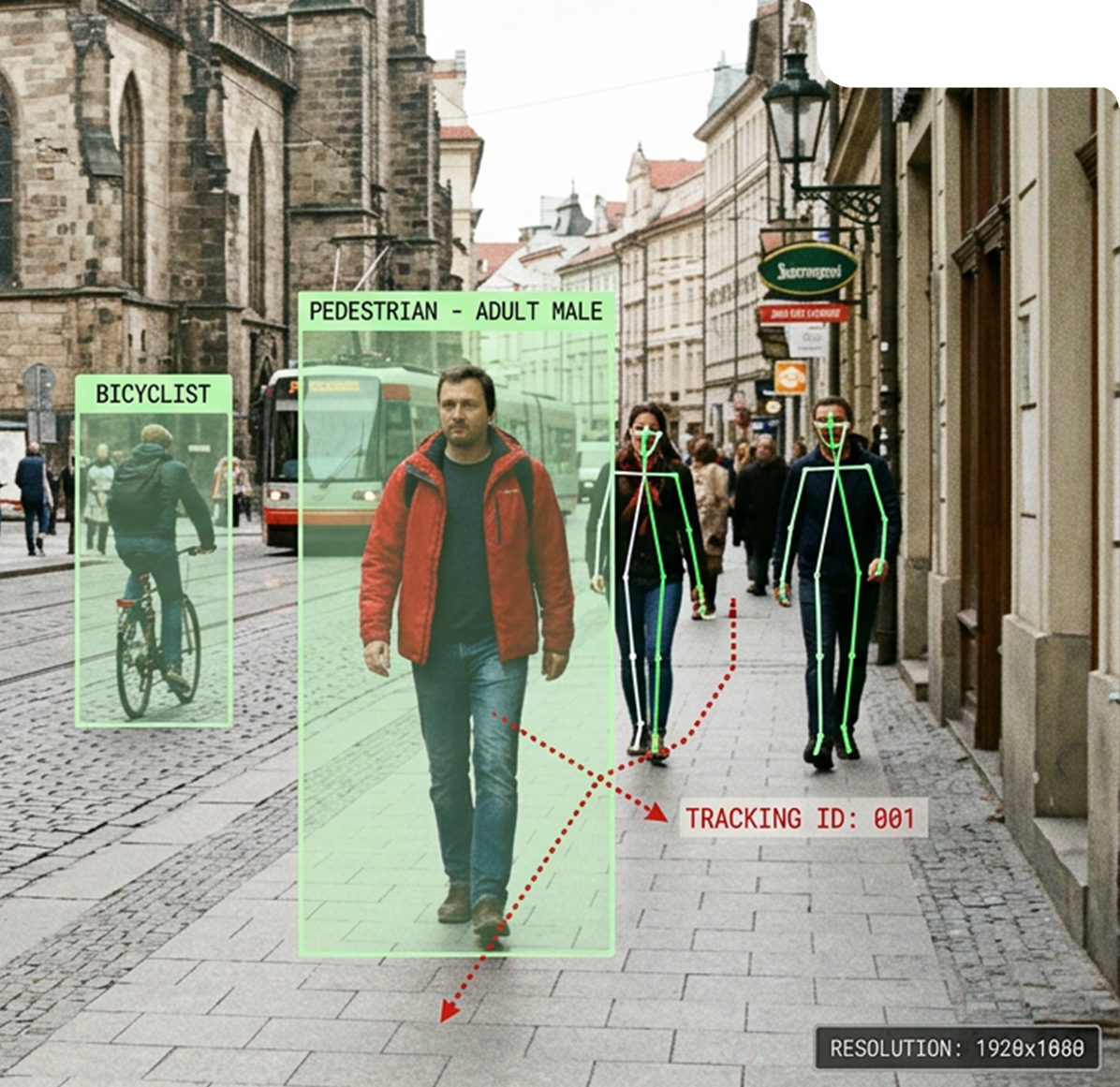
AI-generated imagery, simulated scenarios, and synthetic datasets for rare events, edge cases, privacy-constrained domains, and training gaps that real-world collection can’t reliably fill.
Synthetic data collection generates AI-ready training data computationally computer-generated imagery, simulated driving and physical scenarios, digital twin environments, synthetic clinical records, generated text, and artificial sensor streams for programs where real-world collection is too slow, costly, rare, or privacy-sensitive to deliver the coverage training requires. Autonomous vehicle programs can’t wait for real accidents. Medical AI can’t collect enough rare-disease images. Robotics programs need failure scenarios physical capture can’t produce at scale.
Synthetic data is not a substitute for real-world data, it is the complement that fills the coverage gaps, edge cases, and class imbalances that even the best real-world collection leaves behind. Every Annotera synthetic data engagement is designed around your real-world data gaps, annotation taxonomy, and domain-realism requirements, producing datasets that expand coverage without replacing the data your program already has. With 20-plus years of BPO experience, Annotera delivers annotation-ready synthetic datasets validated against real-world counterparts.
Annotera’s synthetic data generation services cover every AI-generated data type that computer vision, NLP, robotics, and healthcare AI programs need, each generated with domain realism and validated against real-world data.
Photorealistic and stylized synthetic images generated in 3D rendering environments for object detection using rare or privacy safe subjects, today.
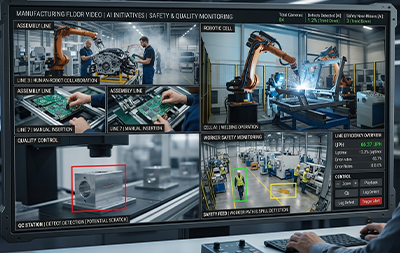
Simulated factory floor, warehouse, and infrastructure environments generated from real facility data for industrial AI and robotic task trainings.
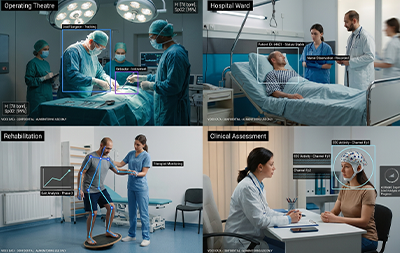
AI generated radiology images, pathology slides, and biosignal recordings for rare conditions and underrepresented patients in medical AI trainings.
LLM generated text across domains, languages, and styles, for NLP pretraining augmentation, low resource expansion, and rare intent coverage quickly.
Text to speech and voice cloning outputs across demographics, accents, and acoustic environments for ASR augmentation and rare accent coverage today.
Simulated LiDAR point clouds, GPS tracks, and IMU streams for sensor fusion programs and edge cases, where real world sensor failure data is unavailable.
Synthetic data removes many real-world compliance risks, with no real patient data, identifiable individuals, or proprietary operational records. Every Annotera synthetic engagement still runs under our full security framework, so generated data is domain-realistic, licensed, and access-controlled.


Every AI program has data gaps that real-world collection alone cannot fill. Annotera delivers synthetic datasets that target the specific coverage gaps, edge cases, and class imbalances of each industry validated against real-world counterparts so generated data improves, not inflates, model performance.
Every Annotera synthetic data engagement follows a structured four-stage workflow ensuring generated data is domain-realistic, covers the specific gaps in your real-world training set, and is validated against real counterparts.
We map your existing real-world training data to identify coverage gaps, rare events, edge cases, and class imbalances, then define generation targets and the annotation taxonomy.
Our specialists generate synthetic data with domain-realistic parameters for lighting, weather, sensor noise, and physical properties calibrated to your real-world conditions.
Every synthetic dataset is validated against held-out real-world samples for feature distribution, realism, and label accuracy, with divergent data flagged and regenerated.
Synthetic data is delivered annotation-ready with guidance on real-to-synthetic mixing ratios, with the option to expand scenarios or volume as new coverage gaps emerge.
Synthetic data that isn’t domain-realistic, properly labeled, and validated against real-world counterparts inflates training set size while degrading generalization. Annotera’s features are built to produce synthetic data that works.

Synthetic data is generated against the specific coverage gaps and edge cases in your existing training set, not generic volume that ignores your model's class needs across the board.

Generation parameters lighting, weather, sensor noise, and driving physics are calibrated to real-world conditions so synthetic data is indistinguishable in feature space today.

Synthetic data integrates directly into Annotera's real-world annotation pipeline so programs running both collection types have a single partner managing composition directly.
We deliver secure, scalable, and cost-effective video data collection services. AI and computer vision teams trust us to source the continuous footage their models need — at the right temporal structure, resolution, and compliance standard.

Annotera designs synthetic generation programs around your specific training gaps, not what's easiest to generate, improving class distribution and model robustness overall now.

Cost-effective synthetic generation scales with your coverage needs, producing edge case and rare event data at volume real-world collection can't match without extra overhead so.

ISO 27001-aligned and SOC-compliant processes protect generation parameters, simulation environments, and synthetic output with controlled access and transfer built in always.

Every synthetic dataset is benchmarked against real-world counterparts before delivery, so you receive data that transfers to real conditions, not just plausible data completely.

Annotera manages both real-world and synthetic data collection under one program, so your training dataset composition and coverage gap analysis are handled by one partner clearly.

Here are answers to common questions about synthetic data collection, generation methods, domain realism, validation, and how generated data fits into AI training pipelines.
Synthetic data collection is the computational generation of AI-ready training data, including computer-generated imagery, simulated scenarios, generated text, synthetic audio, and artificial sensor streams. AI programs need it because real-world collection cannot always produce enough rare events, edge cases, or privacy-sensitive data. Autonomous vehicle programs can’t wait for real accidents, and synthetic data fills those gaps.
No, and any vendor that claims otherwise is overstating it. Synthetic data complements real-world data rather than replacing it. Models trained only on synthetic data typically underperform on real inputs because generation cannot perfectly replicate real-world distributions. The most effective approach combines real-world data for core training with synthetic data targeted at gaps, rare events, and edge cases. Annotera designs every engagement around those gaps.
Annotera generates computer-generated imagery for computer vision, simulated driving and AV scenarios, digital twin and industrial simulations, synthetic medical images and biosignals, LLM-generated text for NLP and LLM programs, synthetic audio and voice, simulated sensor and telemetry streams, and adversarial and edge case datasets. Each type is generated with domain-realistic parameters and validated against real-world counterparts.
Domain realism is built into the generation parameters lighting, weather, sensor noise, imaging artifacts, acoustic conditions, and physical simulation properties are calibrated to match real-world conditions. Every synthetic dataset is then benchmarked against held-out real-world samples to verify that it matches real feature distributions. Generated data that diverges from real-world characteristics is flagged and regenerated.
Yes. Synthetic data is generated with ground-truth labels included at creation time by the rendering or simulation engine pixel-perfect bounding boxes, semantic masks, depth maps, keypoints, and signal class labels produced automatically without manual annotation. This is one of the primary cost and speed advantages of synthetic data over real-world collection for edge cases and rare events.
Optimal mixing ratios depend on the model architecture, the specific domain, and the gap between synthetic and real-world feature distributions in your use case. Annotera provides mixing ratio guidance based on real-world validation benchmarks for each synthetic dataset delivered and manages both real-world and synthetic collection under one program, so the full dataset composition is handled by one partner.
Yes. This is one of the most compelling use cases for synthetic generation. Synthetic medical images, simulated patient records, and generated financial transactions expand training coverage where real data is hard to source under privacy constraints. Synthetic clinical data can represent rare conditions and underrepresented demographics without privacy risk. Annotera validates all synthetic medical data against real clinical counterparts before delivery.