

Segmentation, detection and classification for X-ray, CT, MRI, ultrasound, pathology and surgical video, in HIPAA-compliant workflows. Start with a free 48-hour pilot on your own studies.
Medical imaging models learn from the boundaries, findings and measurements that people draw on scans. Annotera’s medical image annotation services provide those labels from annotators trained in anatomy and imaging modalities, with reviewers who have clinical backgrounds where the task needs it, and quality you can document for regulatory review.
We work on X-ray, CT, MRI, ultrasound, digital pathology, dermatology, ophthalmology, and surgical and endoscopy video, with HIPAA-compliant workflows and ISO/IEC 27001:2022, SOC 2 Type II and HITRUST CSF certified security. This page covers imaging. For clinical text, EHR and device data, see our medical data annotation services, and for the method behind reliable labels, read our guide to ground truth.
Every project starts from a written labeling protocol agreed with your clinical team, covering structures, findings, edge cases and measurements.
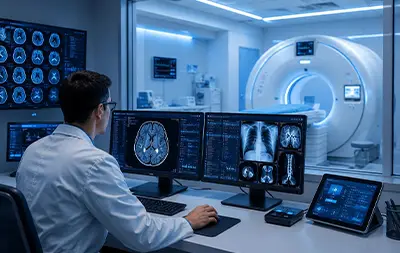
Organs, lesions and findings on X-ray, CT and MRI, labeled with boxes, masks and classes.
Pixel-level masks for tumors, nodules and lesions, slice by slice across 3D volumes.
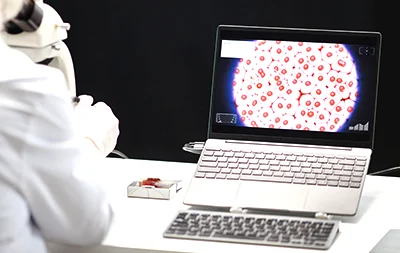
Cell, nuclei and tissue segmentation on whole-slide images for detection and grading.
Frame and clip labels for ultrasound and echo, including structures, views and measurements.
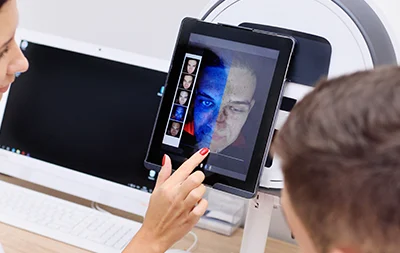
Lesion classes for skin images and retinal findings for eye disease screening models.
Instruments, anatomy and phases labeled across surgical, endoscopy and bronchoscopy video.

Anatomical landmarks, keypoints and measurements for alignment, sizing and progression.
Study-level and image-level labels for modality, view, quality and normal or abnormal.

Medical image annotation needs people who know what they are looking at. Each program is staffed and reviewed to match the modality and the finding.

Annotators trained in anatomy, imaging modalities and your protocol before they label live studies.

Where the task needs it, reviewers with clinical backgrounds check difficult findings and settle disagreements.

Independent QA scores every batch against the gold set and reports per-class accuracy and agreement.

A structured start makes sure labels match your clinical definitions before volume arrives.

We turn your clinical definitions into a written labeling protocol with worked examples and a gold set.

Annotators label a pilot set, usually within 48 hours, which your team reviews before the protocol is final.

Batches ship with QA scores and issue logs, and the team grows with your study volume.
Teams use Annotera when they need medical image annotation that is accurate, documented and secure, from a partner that can scale with clinical programs.

Workflows built for protected health information, with de-identified data preferred and strict access controls.

Three-layer QA, gold sets and agreement scores, kept on file for audits and regulatory submissions.

Labels delivered in the schema your pipeline expects, with metadata for filtering and versioning.

ISO/IEC 27001:2022, SOC 2 Type II and HITRUST CSF certified operations, with annotator NDAs.

Test us on your own de-identified studies, scored against your acceptance criteria.

Teams scale with your program, drawing on Fusion CX’s 17,000 people across 40 delivery centers in 13 countries.

Answers on modalities, quality, security and getting started.
They label medical images and video so AI models learn to detect, segment, measure and classify findings. Work covers X-ray, CT, MRI, ultrasound, pathology slides, dermatology and retinal images, and surgical and endoscopy video, all done to a protocol agreed with your clinical team.
Radiology annotation marks organs, lesions and findings on X-ray, CT and MRI so models can detect and measure them. It includes bounding boxes, pixel-level segmentation across slices, landmarks and study-level classification, and it depends on clear clinical definitions for each finding.
Annotators are trained in anatomy, modalities and your protocol before production. Where a task needs it, we bring in reviewers with clinical backgrounds to check difficult findings and settle disagreements, and we can work with your own radiologists or pathologists as final reviewers.
We agree a gold set with your clinical team, score every batch against it through three-layer QA and report per-class accuracy and inter-annotator agreement. For segmentation, overlap metrics such as the Dice score can be agreed during the pilot.
Yes. Workflows are HIPAA-compliant, and Fusion CX is certified to ISO/IEC 27001:2022, SOC 2 Type II and HITRUST CSF. We prefer de-identified data and can work within your de-identification pipeline.
We keep versioned protocols, gold sets, annotator qualifications and agreement scores on file, which supports the reference-dataset expectations in the Good Machine Learning Practice principles from the FDA, Health Canada and the MHRA.
We usually work in the annotation platform you choose, and deliver labels in the format your pipeline expects. Tool choice is agreed during the pilot.
A pilot set is usually delivered within 48 hours of agreeing the protocol. Production ramp time depends on modality, volume and review requirements and is agreed during the pilot.