
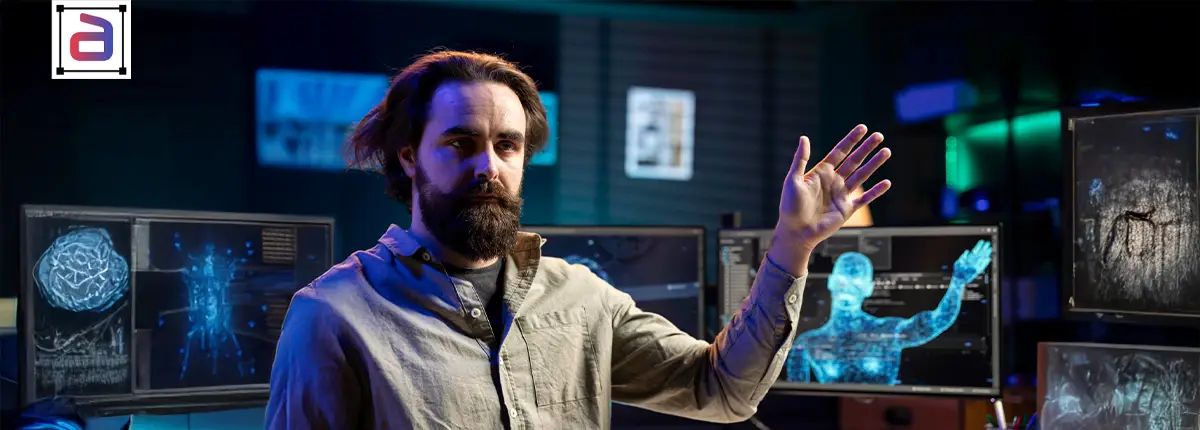
Why Motion Accuracy Defines Modern Gaming Experiences
Gaming has evolved far beyond button-based input. Motion-controlled gameplay, AR/VR experiences, fitness gaming, and camera-based interaction systems now depend on a player’s physical movement as a core input signal. In these environments, responsiveness and accuracy are not optional—they define immersion. For AI-driven gaming systems to interpret player movement correctly, they must be trained on precise motion data captured from video. This is where keypoint video annotation becomes critical. By labeling joints, limbs, and gesture-defining landmarks across video frames, annotation teams provide the structured data needed to train reliable, real-time gesture recognition models.
Table of Contents
What is Keypoint Video Annotation for Gaming?
Keypoint video annotation involves labeling specific human landmarks—such as hands, arms, torso, and head—across video sequences to accurately capture motion patterns. Unlike motion capture suits or hardware sensors, video-based keypoint annotation enables scalable, device-agnostic training data for gaming AI.
As a service, keypoint video annotation for gaming typically includes:
- Frame-by-frame or keyframe-based landmark labeling
- High-frequency annotation for fast gestures
- Multi-player and multi-camera handling
- Temporal consistency validation
- Dataset-agnostic outputs compatible with gaming AI pipelines
This approach allows game developers to train models that generalize across players, environments, and play styles.
Gaming Use Cases Powered by Keypoint Video Annotation
Motion-Controlled Gameplay
Keypoint annotation enables AI systems to recognize body movements as game commands, supporting dance games, sports simulations, and fitness titles.
AR/VR and Immersive Interaction
Accurate gesture recognition improves hand tracking, object manipulation, and spatial interaction in immersive environments.
Fitness and Exergaming Platforms
Pose and gesture tracking allows games to provide real-time feedback on form, repetition accuracy, and performance.
Camera-Based Multiplayer Experiences
Keypoint annotation supports fair and consistent gesture recognition across multiple players in shared spaces.
Annotation Challenges Unique to Gaming Video
Gaming video presents distinct challenges for annotation and model training:
- Fast Motion: Rapid gestures and transitions
- Occlusion: Hands and limbs crossing or leaving the frame
- Player Diversity: Variations in body type, height, and movement style
- Environmental Noise: Lighting changes and background clutter
High-quality annotation strategies are essential to overcome these challenges.
How Keypoint Video Annotation Improves Gameplay AI
Keypoint video annotation enhances gaming AI by:
- Reducing gesture recognition latency
- Improving accuracy across diverse players
- Enabling smoother motion interpretation
- Supporting consistent performance across devices
The result is gameplay that feels responsive, fair, and intuitive.
Why Gaming Teams Outsource Keypoint Annotation Services
Game studios and interactive media teams often outsource keypoint video annotation to:
- Scale annotation for large player datasets
- Meet tight development and release timelines
- Maintain consistent quality across iterations
- Avoid building in-house labeling teams
A specialized annotation partner provides the throughput and precision required for live and evolving titles.
Annotera’s Services for Gaming
Annotera supports gaming and interactive AI systems with service-led keypoint video annotation:
- Annotators trained on high-motion gaming video
- Custom gesture and landmark schemas
- Multi-stage QA for spatial and temporal accuracy
- Scalable delivery for production and live-service games
- Dataset-agnostic services with full client data ownership
Conclusion: Scaling Gesture Recognition Without Compromising Gameplay
Gesture-driven gaming experiences depend on AI models that can instantly and accurately understand human motion. Without precise training data, gesture recognition becomes inconsistent and frustrating for players.
By leveraging professional annotation services, gaming developers can scale motion-based AI systems while maintaining responsiveness and immersion. With the right annotation strategy and partner, gesture recognition becomes a competitive advantage—not a bottleneck.
Building motion-controlled or gesture-driven games?
Annotera’s annotation services help gaming teams train high-performance AI models that scale across players and platforms.
Talk to Annotera to design gesture schemas, run pilots, and scale keypoint annotation for next-generation gaming experiences.


