
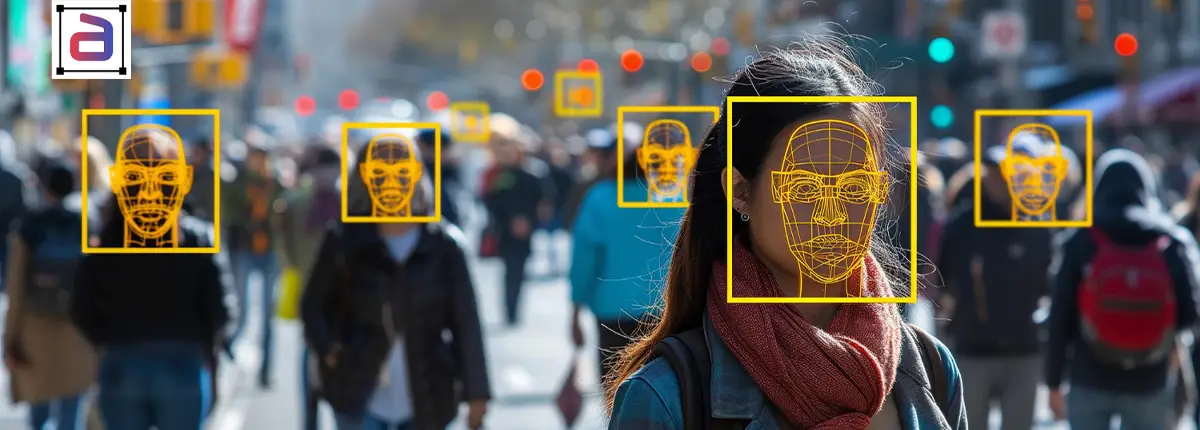
Facial recognition systems operate at the intersection of security, trust, and accuracy. Whether a system controls physical access, verifies digital identity, or supports surveillance workflows, it must distinguish individuals reliably across lighting conditions, camera angles, and expressions. However, facial recognition does not succeed solely by detecting faces. Instead, it succeeds by understanding facial structure.
Table of Contents
Introduction: Why Facial Recognition Demands Precision
Therefore, modern biometric systems rely on landmark annotation services to capture precise facial geometry. By identifying consistent reference points—such as the eyes, nose, mouth, and jawline—landmark annotation allows AI models to align, normalize, and compare faces accurately across video frames. As a result, facial recognition becomes more resilient to real-world variation.
As one biometric engineer explained, “Recognition accuracy improves when models understand faces as structures, not snapshots.”
What Are Landmark Annotation Services?
Landmark annotation services focus on labeling specific, anatomically meaningful points on the human face across images and video. Unlike bounding boxes, which simply locate a face, landmarks describe its internal geometry. Consequently, models gain a deeper understanding of facial proportions and relationships. Landmark labeling for images focuses on annotating critical feature points, helping AI systems achieve better spatial understanding and enhanced performance in vision-based applications.
In practice, landmark annotation services include:
- Defining standardized facial landmark schemas
- Annotating key facial points across video frames
- Maintaining temporal consistency for moving faces
- Validating positional accuracy through multi-stage QA
Because facial recognition systems demand consistency and precision, trained human annotators play a critical role in producing reliable landmark data.
Core Facial Landmarks Used in Recognition Systems
Facial recognition models rely on a consistent set of landmarks to compare identities. These landmarks anchor the face spatially and support normalization.
Commonly annotated landmarks include:
- Inner and outer eye corners
- Nose bridge and tip
- Mouth corners and lip contours
- Jawline and chin points
- Eyebrow peaks and endpoints
By capturing these points accurately, landmark annotation services enable models to analyze symmetry, proportion, and relative positioning across individuals.
How Landmark Annotation Improves Facial Recognition Accuracy
Landmark annotation directly strengthens facial recognition performance in several ways.
Feature Alignment and Normalization
First, landmarks allow systems to align faces consistently, even when subjects tilt their heads or appear at an angle. Consequently, models compare like-for-like features instead of distorted images.
Pose and Expression Invariance
Next, landmarks help separate identity-related structure from transient expressions. As a result, models recognize the same person whether they smile, frown, or speak.
Robust Video-Based Tracking
Finally, temporal landmark consistency stabilizes recognition across video frames. Therefore, systems maintain identity continuity even during motion.
Biometric Security Use Cases Enabled by Landmark Annotation
Landmark annotation services support a wide range of biometric security applications. By annotating individuals, vehicles, motion patterns, and anomaly events, security and surveillance annotation enhances computer vision models, supporting automated surveillance, perimeter protection, and proactive risk management in enterprise and smart city environments.
Access Control and Authentication
Organizations use facial recognition to manage secure entry. Accurate landmarks reduce false acceptances and rejections.
Surveillance and Watchlist Matching
Landmark-based alignment improves matching accuracy across varied camera feeds and environmental conditions.
Border Control and KYC Verification
Government and financial institutions rely on landmarks to verify identity reliably during onboarding and compliance checks.
Challenges in Facial Landmark Annotation
Despite its value, facial landmark annotation presents technical and operational challenges.
- Pose Variation: Faces rotate, tilt, and partially leave frame
- Occlusion: Glasses, masks, hair, or hands obscure features
- Lighting Differences: Shadows and glare distort appearance
- Demographic Diversity: Facial structure varies across populations
Therefore, successful landmark annotation services require experienced annotators and rigorous quality controls.
Why Biometric Firms Outsource Landmark Annotation Services
Biometric firms often outsource landmark annotation to meet accuracy and scale requirements.
Specifically, outsourcing helps teams:
- Scale annotation across large video datasets
- Maintain consistent landmark definitions
- Reduce internal labeling overhead
- Address bias through diverse annotation teams
As one security program lead noted, “Outsourcing annotation lets us focus on model performance instead of labeling logistics.”
Annotera’s Landmark Annotation Services for Biometric Systems
Annotera delivers service-led landmark annotation services designed for facial recognition and biometric security:
- Annotators trained in facial geometry and biometric standards
- Custom landmark schemas aligned with client requirements
- Multi-stage QA for positional and temporal accuracy
- Secure workflows suitable for sensitive identity data
- Dataset-agnostic delivery with full client data ownership
Key Quality Metrics for Facial Landmark Annotation
Quality metrics for facial landmark annotation evaluate point placement accuracy, inter-annotator agreement, pixel-level deviation, and consistency across poses and lighting conditions. These metrics ensure precise keypoint localization, reduce model bias, and strengthen training data reliability for facial recognition and expression analysis systems.
| Metric | Why It Matters |
|---|---|
| Positional Accuracy | Ensures precise facial geometry |
| Temporal Consistency | Stabilizes video-based recognition |
| Inter-Annotator Agreement | Reduces subjective variation |
| Bias Monitoring | Supports fair and reliable systems |
Because recognition errors carry a high risk, these metrics directly influence system trustworthiness.
Conclusion: Precision Landmarks Build Reliable Facial Recognition
Facial recognition succeeds when systems understand faces as structured, consistent geometries rather than isolated images. Landmark annotation provides that structure by anchoring identity to precise facial reference points.
By using professional landmark annotation services, biometric firms improve recognition accuracy, reduce bias, and strengthen system reliability. Ultimately, precise landmarks form the foundation of secure and trustworthy facial recognition.
Building or scaling facial recognition systems? Annotera’s landmark annotation services help biometric teams train accurate, resilient, and fair AI models.
Talk to Annotera to define facial landmark schemas, run pilot projects, and scale landmark annotation across your video datasets.


