
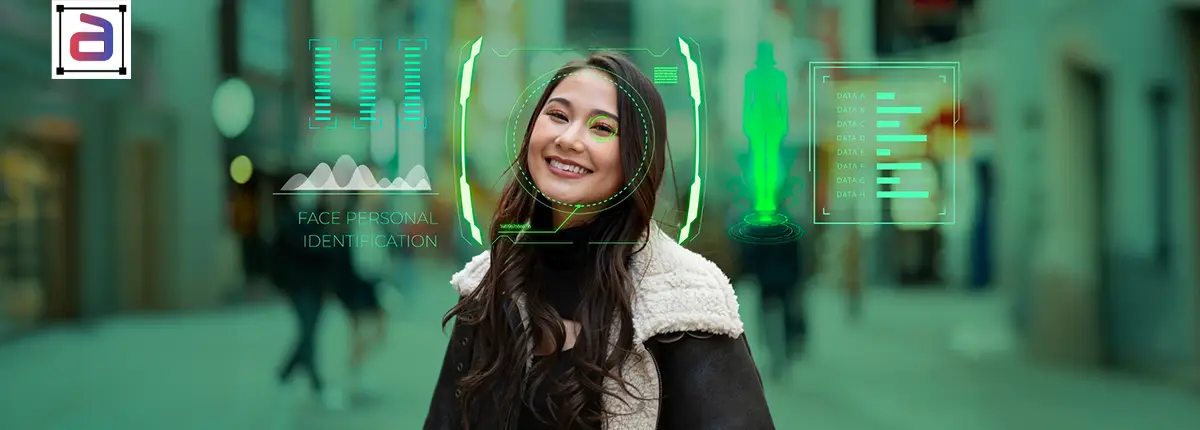
Introduction: Why Emotions Reveal Themselves in Motion
Human emotions rarely appear as static expressions. Instead, they emerge through subtle facial movements—an eyebrow lift, a tightening of the lips, or a fleeting change around the eyes. Therefore, emotion detection systems must analyze facial dynamics over time rather than isolated frames.
Because of this complexity, affective computing increasingly depends on landmark labeling for video. By tracking precise facial landmarks frame by frame, AI models learn how expressions evolve, intensify, and resolve. As a result, emotion recognition systems move beyond basic expression classification toward deeper emotional understanding.
As one affective computing researcher explained, “Emotion lives in transitions, not snapshots.”
What Is Landmark Labeling for Video?
Landmark labeling for video involves annotating specific facial reference points consistently across consecutive frames. Unlike static image labeling, video-based landmark annotation captures motion, timing, and micro-variations in facial geometry.
In practice, landmark labeling for video includes:
- Identifying facial landmarks across every relevant frame
- Preserving spatial consistency during movement
- Capturing subtle landmark shifts over time
- Validating temporal stability through quality checks
Consequently, models trained on video-based landmarks learn how facial features move in relation to emotional change.
Facial Landmarks That Matter Most for Emotion Detection
Emotion detection focuses on landmarks associated with expressive facial regions. These landmarks provide insight into muscle activation and emotional intensity.
Commonly tracked facial landmarks include:
- Eyebrow inner and outer points
- Upper and lower eyelids
- Mouth corners and lip contours
- Nasolabial folds and cheek regions
- Chin and jaw movement points
By monitoring how these landmarks shift together, AI systems infer emotional states with greater nuance.
Why Emotion AI Requires Video-Based Landmark Labeling
Static facial images capture only a single moment. However, emotions unfold across sequences.
Landmark labeling for video enables emotion AI because it:
- Captures micro-expressions that appear briefly
- Preserves the temporal order of expression changes
- Differentiates similar expressions through motion patterns
- Reduces misclassification caused by neutral frames
Therefore, video-based landmark annotation provides the temporal context that emotion detection models require.
Challenges in Emotion Detection Annotation
Annotating emotions introduces unique challenges that require careful handling.
- Expression Ambiguity: Different emotions share similar facial movements
- Cultural Variation: Expressions differ across populations
- Subtle Transitions: Emotional shifts occur gradually
- Occlusion: Hair, glasses, or hands obscure facial regions
As a result, high-quality landmark labeling for video demands experienced annotators and strict guidelines.
Landmark Annotation Strategies for Affective Computing
To address these challenges, annotation teams apply specialized strategies.
Dense Landmark Placement
Annotators use higher landmark density around expressive regions. Consequently, models capture subtle muscular changes more accurately.
Temporal Smoothing
Reviewers ensure landmark stability across frames. Therefore, models avoid learning jitter instead of emotion.
Context-Aware Labeling
Annotators consider facial context and motion patterns. As a result, labels reflect emotional progression rather than isolated cues.
The Role of Human-in-the-Loop in Emotion AI
Automated landmark detection accelerates processing. However, it often fails to interpret subtle emotional cues correctly.
Therefore, affective computing teams rely on human-in-the-loop annotation to:
- Resolve ambiguous expressions
- Validate emotional transitions
- Reduce cultural and demographic bias
- Improve ground-truth reliability
As one research lead noted, “Humans understand emotion; models learn patterns.”
Research Use Cases Enabled by Video-Based Landmark Labeling
Affective Computing Research
Researchers analyze emotional response patterns in controlled and real-world environments.
Mental Health and Wellbeing Studies
Emotion detection supports research into stress, engagement, and affective disorders.
Human–Computer Interaction
Systems adapt responses based on detected emotional states, improving user experience.
Social Signal Processing
AI models study group emotions and interpersonal dynamics over time.
Annotera’s Support for Emotion Detection Research
Annotera supports affective computing labs with service-led landmark labeling for video:
- Annotators trained on facial dynamics and expression analysis
- Custom landmark schemas for emotion research
- Multi-stage QA focused on temporal accuracy
- Bias-aware workflows for diverse populations
- Dataset-agnostic services with full data ownership
Key Quality Metrics for Landmark Labeling in Emotion AI
| Metric | Why It Matters |
|---|---|
| Temporal Stability | Prevents motion noise |
| Landmark Precision | Captures subtle expressions |
| Inter-Annotator Agreement | Improves label reliability |
| Demographic Balance | Reduces bias in emotion models |
Because emotion detection depends on subtle change, these metrics directly influence model validity.
Conclusion: Teaching AI to Understand Emotional Expression
Emotion detection requires more than recognizing facial shapes. It requires understanding how faces move over time.
By using professional landmark labeling for video, affective computing teams train AI systems that detect emotion with greater accuracy, sensitivity, and responsibility. Ultimately, time-aware landmark annotation transforms facial analysis into emotional intelligence.
Advancing emotion detection or affective computing research? Annotera’s landmark labeling services for video help research teams build reliable, bias-aware emotion AI systems.
Talk to Annotera to design facial landmark schemas, run pilot studies, and scale video-based landmark annotation for emotion research.


