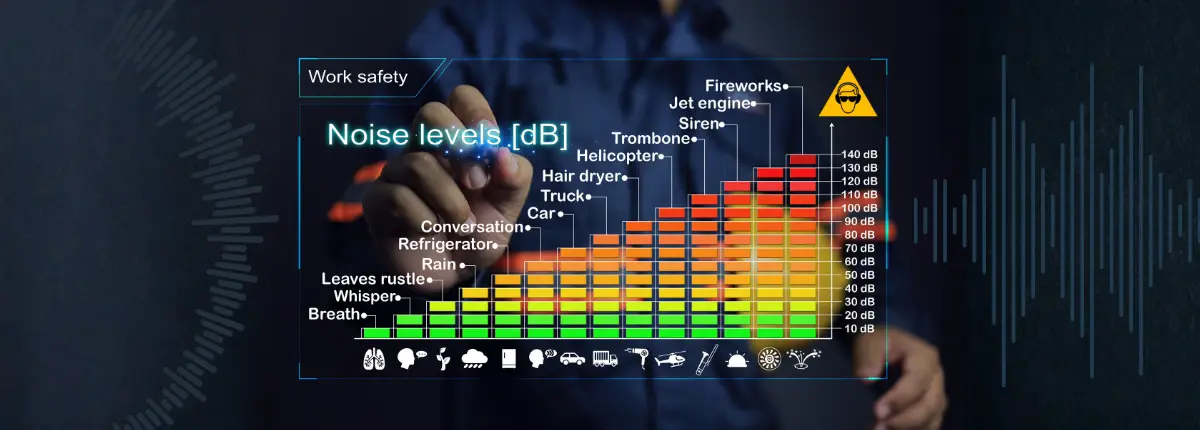
A model that performs brilliantly in a quiet lab can fall apart in a windy park, a crowded restaurant, or a moving car. This is the core challenge in modern audio AI research: model generalization. Real environments introduce shifting acoustic conditions—wind bursts, clattering dishes, overlapping speakers, impulsive noises, reverberation, and device artifacts. When training data doesn’t represent these variables explicitly, models often learn brittle patterns that don’t hold up outside controlled settings. Noise annotation techniques enable AI systems to distinguish signal from background interference by systematically labeling environmental, mechanical, and human-generated sounds. These structured acoustic tags improve model resilience, ensuring reliable performance across real-world conditions where uncontrolled noise would otherwise degrade audio perception accuracy.
The fastest path to closing this gap is not always a new architecture. Often, it’s a better training design—where noise becomes a known, labeled variable.
This article explores practical, research-friendly noise annotation techniques that improve robustness and reduce the “deployment gap.”
“Robustness isn’t a model feature. It’s a property of the training conditions you control.”
The Challenge: Model Generalization and the Deployment Gap
Researchers regularly observe strong benchmark results that don’t translate into real-world use. This phenomenon is often caused by a training/evaluation mismatch:
- The training audio is too clean
- Noise types are underrepresented or unlabeled
- Overlap and rare noise events are ignored
- Evaluation conditions don’t reflect deployment conditions
The Deployment Gap In Audio AI (What It Looks Like)
| Stage | Typical Condition | Common Outcome |
|---|---|---|
| Research / lab validation | Quiet or lightly noisy audio | High accuracy, stable metrics |
| Field deployment | Real-world interference + overlap | Accuracy drops, unstable performance |
Reducing this gap requires treating noise as a controllable variable in dataset design—meaning it needs to be systematically labeled.
The Solution: Robustness Training With Labeled Noise Variables
Robustness training uses structured annotation to ensure noise is not treated as “random background,” but as a measurable input factor that researchers can model, weight, and stress-test.
When noise is labeled well, researchers can:
- Train models for worst-case conditions
- Compare architectures under consistent noise conditions
- Fine-tune models for specific environments
- Make evaluation more realistic and reproducible
“If noise is unlabeled, it becomes invisible in training—and unpredictable in deployment.”
The Robustness Playbook: Noise Annotation Techniques That Improve Generalization
Below are three high-impact noise annotation techniques you can build into research workflows. Each is especially useful when your goal is real-world deployment or production transfer.
1) SNR-Weighted Tagging (Train For Worst-Case Conditions)
What it is: Labeling audio clips with their approximate Signal-to-Noise Ratio (SNR) (e.g., 0–5 dB, 5–10 dB, 10–20 dB).
Instead of assuming a “noisy” clip is uniformly noisy, SNR tagging quantifies how difficult the clip is.
Why Does It Improve Robustness
- Allows curriculum learning (clean → noisy progression)
- Enables stress-testing on low-SNR subsets
- Helps compare models under matched difficulty
| SNR Band | What It Means | Typical Model Risk |
|---|---|---|
| High SNR (clear speech) | Speech dominates | Minimal risk |
| Medium SNR | Speech and noise compete | Increasing errors |
| Low SNR (worst-case) | Noise dominates | Severe accuracy drop |
“SNR labels turn noise into an experimental variable, not an uncontrolled nuisance.”
Research use case: Train models explicitly on low-SNR segments to improve performance where users struggle most (crowds, wind, traffic).
2) Adversarial Noise Selection (Include “Hard” Sounds on Purpose)
What it is: Purposely labeling and including difficult, high-impact noise events that are known to break models—then training against them.
Examples of adversarial sounds:
- Baby crying
- Jackhammers
- Sirens
- Sudden applause
- Loud clattering or impulsive bangs
These sounds are acoustically dominant, unpredictable, and often overlap speech.
Why It Works
Adversarial noise pushes models to learn more stable speech representations instead of shortcuts.
| Annotation Strategy | Benefit |
|---|---|
| Tag “hard” noise events explicitly | Enables targeted robustness training |
| Include overlap-heavy clips | Improves generalization |
| Weight adversarial samples | Improves worst-case performance |
“If your dataset avoids hard sounds, your model will fail the first time it meets them.”
Research use case: Build adversarial subsets for evaluation (and training) to measure robustness beyond average-case performance.
3) Domain Adaptation With Labeled Noise (Fine-Tune for Specific Environments)
What it is: Using labeled noise to adapt a general model to a specific setting—like restaurants, cars, factories, parks, or outdoor kiosks.
Domain adaptation becomes far more efficient when noise is labeled because researchers can:
- Isolate environment-specific noise signatures
- Fine-tune using smaller, targeted samples
- Maintain general performance while boosting domain performance
Example Domain Adaptation Flow (research-friendly)
| Step | Action | Output |
|---|---|---|
| 1 | Start with a general model | Baseline performance |
| 2 | Label domain-specific noise | Noise becomes measurable |
| 3 | Fine-tune on that labeled subset | Domain-optimized model |
| 4 | Evaluate on matched domain noise | Realistic metrics |
“Labeled noise gives you a clean lever for adaptation—without rebuilding the dataset from scratch.”
Supporting Techniques That Strengthen Robustness Studies
Audio researchers commonly use these methods, and they complement the playbook above.
Multi-label Overlap Annotation
Label multiple noise classes at once (speech + traffic + music). Real environments are overlap-heavy, and models must learn that.
Event-based Labeling
Label specific noise events (siren, horn, alarm) so models can treat them differently from the noise floor.
Stationary vs Non-stationary Tagging
This distinction helps models learn when to apply steady suppression vs reactive handling.
How To Measure Annotation Quality Without Heavy Overhead
You don’t need a massive QA program to improve research reliability. A few lightweight checks go a long way:
| Quality Check | Why It Helps |
|---|---|
| Inter-annotator agreement spot checks | Reduces subjectivity drift |
| Gold-standard clips | Detects systematic errors |
| Guideline calibration sessions | Improves reproducibility |
| QA focus on overlap-heavy samples | Captures real-world difficulty |
Business Impact: Reducing the Deployment Gap
Even for researchers, the downstream impact is highly practical. Robustness training reduces the drop in real-world accuracy when transitioning from research to deployment.
What changes when robustness is trained correctly
| Before Robustness Training | After Robustness Training |
|---|---|
| Strong lab metrics, weak field performance | More stable real-world accuracy |
| Unpredictable failures in noisy environments | Controlled, measurable degradation |
| High retraining cost after deployment | Faster deployment iteration cycles |
“The goal isn’t perfect accuracy in perfect conditions—it’s reliable accuracy in imperfect ones.”
This is the core business value: fewer post-deployment failures, less retraining churn, and faster transfer from research to real-world impact.
Where Annotation Partners Fit in Research Workflows and How They Bring Noise Annotation Techniques Best PRactices
Research teams often collaborate with annotation service providers when:
- Noise labeling volume exceeds internal capacity
- Overlap and multi-label complexity become time-intensive
- Experiments require consistent, reproducible annotation protocols
- Multi-channel or specialized audio annotation is needed
Annotera supports research workflows through:
- Custom noise taxonomies aligned to research goals
- Multi-label, overlap-aware annotation
- SNR-weighted tagging and adversarial subset labeling
- QA processes dare esigned for consistency and repeatability
Annotera works on client-provided audio only and does not sell datasets. We bring the best practices and noise labeling techniques to improve the quality of Voice AI.
Noise Annotation Is Robustness Engineering. Techniques Matter.
For researchers, real-world performance is not just a test-time problem. It’s a training-time design choice.
When engineers treat noise as a known variable through SNR tagging, adversarial noise selection, and domain adaptation, they build models that stop being fragile and become truly deployable.
If your model fails outside the lab, your next breakthrough may not be architectural. It may be an annotation design. Contact Annotera for Noise Annotation and Voice AI training.