
Key Points
- Moving object classification requires models to maintain object identity across frames even as appearance changes with motion, rotation, and partial occlusion.
- Static image classifiers fail on video because they evaluate each frame independently without learning how object appearance evolves across motion sequences.
- Training data for motion classification must include varied speeds, trajectories, and occlusion patterns to prevent models from learning only the easiest motion scenarios.
- Temporal annotation of moving objects requires inter-frame consistency standards as stringent as per-frame accuracy standards.
Table of Contents
Introduction: Why Motion Changes How AI Understands Objects
Traditional computer vision models learned to classify objects from static images. However, real-world video rarely stays still. Objects move, rotate, disappear behind obstacles, and reappear in new contexts. Therefore, classification in video introduces complexity that static image models cannot handle alone.
Because of this, modern AI systems must learn not only what an object is, but also how that object behaves over time. This is where object classification in video becomes critical. By observing objects across sequences instead of single frames, models gain temporal awareness and classification stability.
What Is Object Classification in Video?
Object classification in video refers to assigning a consistent class label to a moving object across multiple frames or entire video segments. Instead of classifying each frame independently, annotators and models evaluate object behavior, appearance changes, and persistence over time.
Consequently, object classification in video focuses on:
- Class persistence across frames
- Handling partial visibility and occlusion
- Maintaining labels despite scale or angle changes
- Resolving ambiguity between visually similar classes
As a result, video labelling reduces class flicker and improves model reliability.
As one computer vision researcher explained, “Motion reveals identity just as much as appearance.”
Why Categorizing Moving Objects Is Technically Challenging
Motion introduces several challenges that complicate classification.
- Occlusion: Objects become partially or fully hidden
- Motion Blur: Fast movement degrades visual clarity
- Viewpoint Changes: Angles and scale vary continuously
- Class Similarity: Different classes may appear visually similar in motion
Therefore, high-quality object classification in video requires temporal reasoning rather than frame-by-frame decisions.
Annotation Strategies for Video Object Classification
To address these challenges, annotation teams apply structured strategies that prioritize consistency.
Majority-Frame Classification
Annotators assign a class based on the object’s dominant appearance across frames. Consequently, brief distortions do not change labels.
Confidence-Based Class Assignment
Annotators use confidence thresholds to resolve ambiguous cases. As a result, uncertain classifications trigger review rather than incorrect labeling.
Temporal Smoothing
Reviewers validate labels across sequences. Therefore, class flicker and inconsistency decrease significantly.
Context-Aware Classification
Annotators consider environment and behavior alongside appearance. Consequently, models learn context-driven categorization.
Research and Applied Use Cases for Video Object Classification
Autonomous and Robotic Systems
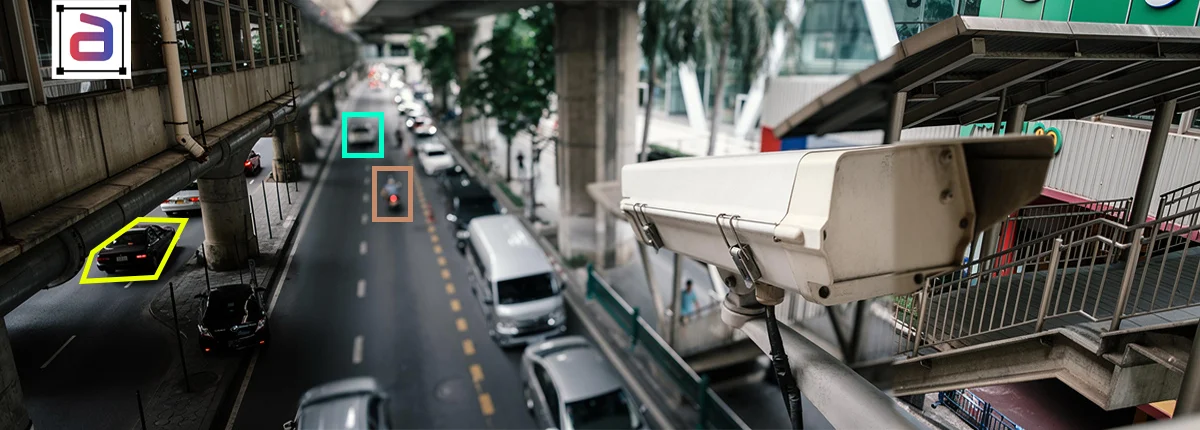
Robots and vehicles rely on object classification in video to distinguish between pedestrians, vehicles, animals, and obstacles consistently.
Wildlife and Environmental Monitoring
Researchers classify animal species across long video sequences despite motion, lighting, and distance variation.
Industrial and Manufacturing Video
Video classification helps distinguish tools, components, and machinery during operation.
Medical and Scientific Imaging
Moving anatomical structures require stable classification across video frames.
Why Human-in-the-Loop Classification Remains Essential
Automated classifiers accelerate processing. However, motion amplifies edge cases and ambiguity.
Therefore, human-in-the-loop annotation ensures:
- Correct resolution of visually similar classes
- Consistent interpretation across datasets
- Validation of rare or complex cases
- Reduced bias in training data
As one lab lead noted, “Automation scales classification. Humans protect accuracy.”
Evaluating Object Classification Quality in Video
Teams assess video classification quality using metrics such as:
| Metric | Why It Matters |
|---|---|
| Class Stability | Prevents label flicker |
| Temporal Consistency | Ensures persistence across frames |
| Inter-Annotator Agreement | Confirms shared interpretation |
| Ambiguity Resolution Rate | Measures decision clarity |
Because classification errors compound over time, these metrics directly affect downstream model performance.
Annotera’s Support for Video Object Classification Research
Annotera supports computer vision labs with:
- Flexible class schemas for research and experimentation
- Annotators trained on motion-heavy datasets
- Iterative workflows aligned with model development
- Multi-stage QA focused on temporal consistency
- Dataset-agnostic services with full data ownership
Conclusion: Teaching AI to Classify Through Motion
Classifying moving objects requires more than sharp images. Instead, it requires temporal understanding, contextual awareness, and consistent interpretation.
By applying robust object classification, research teams train AI systems that maintain accuracy even as objects move and environments change. Ultimately, time-aware classification turns motion into meaningful identity.
Building AI systems that must classify moving objects reliably? Annotera’s video object classification services help research teams create stable, high-quality training data.
Talk to Annotera to define class schemas, run pilot studies, and scale video object classification across motion-rich datasets.
A closely related read: Accuracy vs. Inference: The Trade-offs in Video Sorting.
A closely related read: Video Object Classification Services for Media Teams.