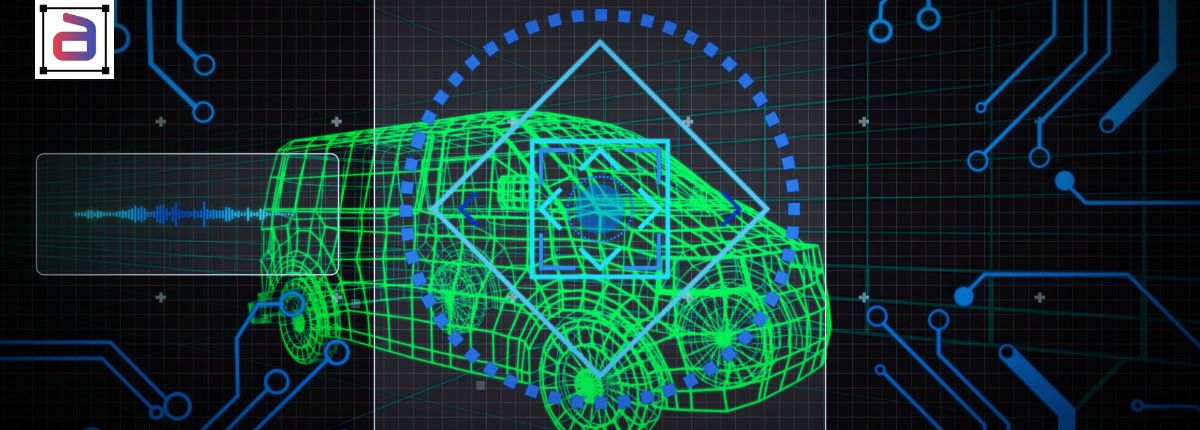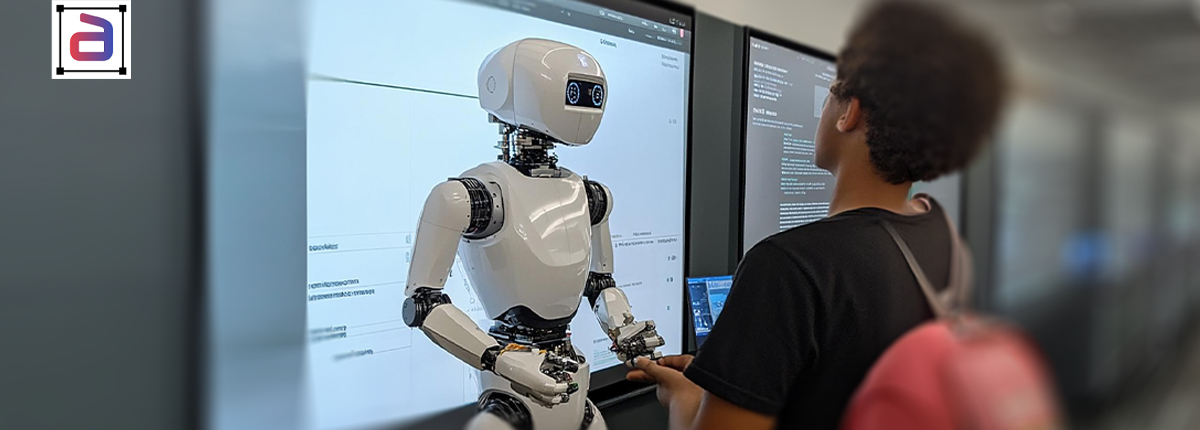
3D cuboid annotation services play a central role in helping AI systems understand depth, distance, and spatial orientation in visual environments. As robotics and intelligent machines move beyond flat image interpretation, the ability to perceive the Z-axis becomes essential. 3D cuboids provide this depth-aware context by extending traditional bounding boxes into three-dimensional space.
For robotics researchers and applied AI teams, 3D cuboid annotation is a foundational capability for building systems that interact reliably with the physical world.
What Are 3D Cuboid Annotation Services
3D cuboid annotation services involve labeling objects in images using rectangular boxes that include height, width, depth, and orientation. Unlike 2D bounding boxes, cuboids capture an object’s real-world position and spatial footprint.
These annotations allow AI models to estimate distance, volume, and orientation, which are critical for robotics, autonomous systems, and advanced perception models.
Why Depth Perception Matters in AI Systems
Depth perception enables machines to understand how far objects are, how they relate spatially to one another, and how they occupy real-world environments. Without depth information, AI systems struggle with collision avoidance, object interaction, and path planning.
3D cuboid annotation services provide the structured training data required for models to learn depth cues from monocular or multi-camera image inputs.
Core Robotics and AI Use Cases for 3D Cuboids
Core robotics and AI use cases for 3D cuboids extend across autonomous driving, warehouse automation, and smart surveillance. Moreover, by enabling precise object localization and spatial depth estimation, 3D cuboids improve model accuracy. As a result, teams achieve better tracking, collision avoidance, and real-time decision-making in dynamic environments.
Robotic Manipulation and Interaction
Cuboid annotations help robots estimate object dimensions and orientation, enabling accurate grasping, placement, and manipulation.
Autonomous Navigation and Obstacle Awareness
Depth-aware cuboids allow AI systems to detect obstacles, estimate clearance, and navigate safely through complex environments.
Scene Understanding and Spatial Reasoning
By learning object volumes and spatial relationships, AI models can interpret scenes more holistically rather than as flat images.
Challenges in 3D Cuboid Annotation
Annotating depth introduces complexity beyond standard image labeling. Annotators must interpret perspective, occlusion, and scale using limited visual cues.
Inconsistent orientation labeling or inaccurate depth estimation can negatively impact model training, underscoring the importance of expertise and clear guidelines.
Quality Requirements for 3D Cuboid Annotation Services
Quality requirements for 3D cuboid annotation services demand geometric precision, consistent edge alignment, and accurate depth estimation. Furthermore, annotators must follow strict labeling guidelines to ensure spatial consistency. Consequently, rigorous QA audits, inter-annotator agreement checks, and continuous feedback loops become essential for scalable, high-reliability datasets. High-quality cuboid annotation demands precision in:
- Object edge alignment across all dimensions
- Accurate yaw, pitch, and roll estimation
- Consistent depth scaling across images
Small inaccuracies can significantly affect downstream model performance, particularly in robotics applications.
Scaling 3D Cuboid Annotation for Research and Production
As AI projects move from research to deployment, annotation volumes increase rapidly. Scalable cuboid annotation services provide trained annotators, standardized workflows, and quality assurance processes that support growth without sacrificing accuracy. Scaling 3D cuboid annotation for research and production requires standardized workflows, tool-assisted labeling, and model-in-the-loop validation. Additionally, structured QA protocols ensure geometric consistency across large datasets. As demand grows, distributed teams and automation frameworks accelerate throughput while maintaining accuracy, enabling seamless transition from experimentation to deployment.
This scalability is critical for robotics programs that evolve continuously through testing and iteration.
How Annotera Supports Depth-Aware AI Models
Annotera delivers 3D cuboid annotation services through trained teams experienced in spatial labeling and robotics use cases. Annotation workflows are governed by clear orientation rules, depth consistency checks, and multi-layer quality reviews.
This structured approach ensures reliable depth perception data for both experimental and production-grade AI systems.
Conclusion
Depth perception is a defining capability of advanced AI systems, and 3D cuboids are the mechanism that enables it. By extending object annotation into three dimensions, AI models gain the spatial awareness required for real-world interaction.
For robotics researchers and AI teams, investing in high-quality 3D cuboid annotation services is essential to building systems that see, understand, and act within physical environments.
Looking to strengthen depth perception in your AI or robotics models? Partner with Annotera for expert-led 3D cuboid annotation services designed for accuracy, scale, and real-world performance.