
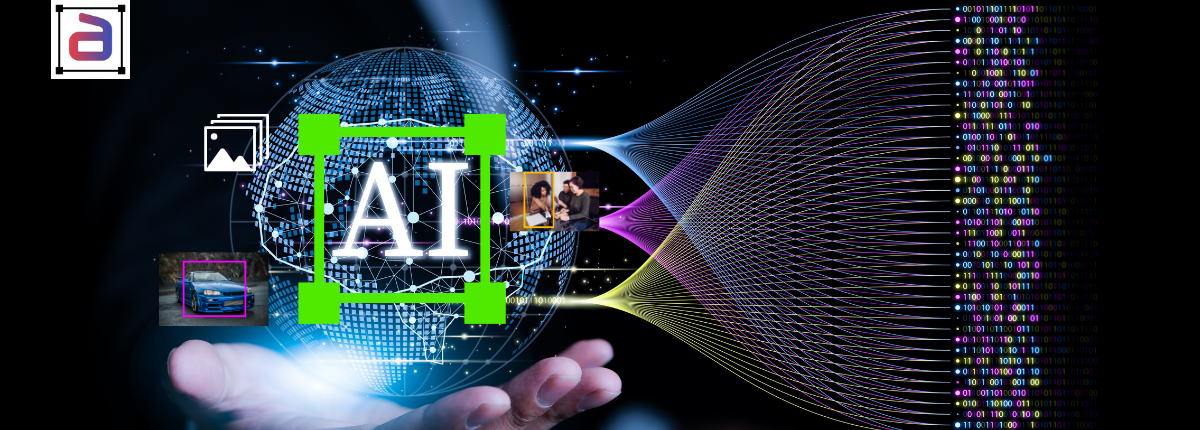
High-accuracy AI models are not built by algorithms alone—they are built on disciplined, high-quality data foundations. In computer vision, image annotation is the single most influential factor determining whether models perform reliably in real-world environments or fail under edge cases. Image annotation best practices form the foundation of high-accuracy AI models, ensuring training data is consistent, precise, and aligned with real-world conditions. From clear labeling guidelines to rigorous quality control, disciplined annotation directly determines how reliably computer vision systems perform at scale.
“The quality of your training data determines the ceiling of your model’s performance — no architecture can compensate for poor labels.” — Andrew Ng, Co-Founder of Google Brain
At Annotera, this principle guides every engagement. As a specialized data annotation company, we help AI teams transform raw visual data into dependable training datasets that drive consistent, production-grade model performance. Further, this blog outlines image annotation best practices organizations should follow to build high-accuracy AI systems at scale.
Table of Contents
Key Points
- Image annotation quality standards must be defined at the project outset, not after annotation is underway: retrospective quality assessment cannot recover from guidelines that were ambiguous during production.
- Annotation best practices differ by object class: small objects require tighter labeling conventions and higher inter-annotator agreement thresholds than large, visually distinct objects.
- Annotation program consistency is more important than individual annotation precision: a program where every annotator applies the same consistent standard produces better models than one where some annotators are excellent and others are inconsistent.
- Image annotation best practices must include provisions for ongoing calibration as annotators and guidelines drift over the lifetime of large annotation programs.
Table of Contents
Why Image Annotation Best Practices Matter More Than Ever
The rapid adoption of AI across industries has exposed a common failure point: poor labeling practices. Industry research shows that annotation noise and inconsistency can significantly degrade the accuracy of supervised models, adversely affecting classification performance and introducing bias in predictions when training data contains incorrect labels.
More data does not fix bad data. Precision, consistency, and governance distinguish high-performing models from brittle ones—making annotation quality a strategic concern rather than an operational afterthought.
1. Establish Precise and Unambiguous Annotation Guidelines
Annotation accuracy begins with clarity. High-performing annotation programs define guidelines that leave no room for interpretation:
- Clear object definitions and class boundaries
- Explicit handling of occlusions, truncation, and partial visibility
- Visual examples for edge cases and ambiguous scenarios
- Quantifiable thresholds such as minimum visible area or overlap rules
At Annotera, annotation guidelines are treated as living documents. They evolve through continuous error analysis and model feedback, ensuring consistency even as projects scale through image annotation outsourcing.
2. Choose Image Annotation Best Practices Aligned With Model Objectives
The annotation format selection directly affects how models learn. Best practice is to match annotation primitives to the task:
- Bounding boxes for object detection and localization
- Polygons and pixel masks for segmentation and spatial precision
- Key points for pose estimation and fine-grained structure
- Polylines for lanes, contours, and infrastructure mapping
An experienced image annotation company ensures the right balance between annotation detail, accuracy, and efficiency.
3. Implement Multi-Layered Quality Control Workflows
Single-pass review processes do not scale. High-accuracy annotation programs rely on layered quality control:
- Automated validation checks during labeling
- Consensus labeling for complex or high-risk data
- Expert adjudication for ambiguous samples
Consensus-based annotation has been shown to reduce labeling error rates by up to 30%, making it a core practice for any serious data annotation company.
4. Train Annotators as Domain Specialists
Vision models in healthcare, autonomous systems, robotics, and industrial inspection require domain-aware annotators. Industrial noise labeling categorizes operational sounds within factories and plants, enabling AI models to distinguish critical alerts from background machinery noise. Accurate acoustic tagging strengthens equipment diagnostics, worker safety systems, and real-time industrial monitoring applications. Best-in-class data annotation outsourcing partners invest in:
- Domain-specific training and certification
- Continuous calibration using gold-standard datasets
- Performance feedback tied to measurable quality metrics
Annotera structures annotation teams by industry and use case, ensuring complex edge cases are handled by trained specialists.
5. Adopt Model-in-the-Loop For Image Annotation Best Practices
Static annotation pipelines are inefficient and costly. Modern programs integrate active learning workflows where models pre-label data and annotators correct predictions. Also, this approach is now a standard expectation for image bounding-box annotation in scalable image-annotation outsourcing engagements.
6. Measure Annotation Performance With the Right KPIs
To ensure continuous improvement, AI teams must measure annotation performance using the right KPIs, including inter-annotator agreement, error rates, rework frequency, and turnaround time. As a result, quality issues are identified early and corrected before impacting model accuracy. Mature annotation programs track:
- Inter-annotator agreement (IoU, Cohen’s kappa)
- Error rates by class and scenario
- Rework and adjudication frequency
- Turnaround time and throughput
Annotera provides full KPI visibility, ensuring annotation quality remains measurable and improvable.
7. Address Class Imbalance and Rare Scenarios
High-accuracy models often fail on rare but critical events. Best practices include oversampling underrepresented classes, targeted annotation of edge cases, and expert review for safety-critical scenarios. Equally important, AI teams must address class imbalance and rare scenarios by prioritizing underrepresented data, oversampling critical classes, and applying expert review. Consequently, models become more robust and reliable when deployed in real-world, high-risk environments.
8. Ensure Governance, Security, and Auditability
As datasets grow, governance becomes essential. A reliable data annotation company ensures secure data handling, full audit trails, and compliance-ready workflows. Therefore at Annotera, data integrity and confidentiality are built into every engagement. At the same time, AI teams must ensure governance, security, image classification and auditability by enforcing controlled data access, secure annotation workflows, and complete audit trails. As a result, annotation quality, compliance, and trust are maintained across large-scale AI deployments.
9. Use Continuous Error Analysis to Refine Labels
Annotation is not a one-time task. Continuous error analysis reveals systematic gaps that can be corrected through guideline updates and retraining—turning annotation into a performance optimization loop.
Conclusion: High-Accuracy AI Starts With Image Annotation Best Practices
Clear standards, trained specialists, layered quality control, and iterative workflows engineer high-performing AI systems. Further, annotation excellence is no longer optional—it is a competitive advantage.
As a trusted image annotation company, Annotera helps organizations operationalize best practices at scale. Whether you explore data annotation outsourcing or optimize an existing pipeline, Annotera trains your models on data you can trust.
Ready to improve AI model accuracy through better image annotation? Annotera delivers secure, scalable, and quality-driven annotation solutions tailored to your domain. Contact our team today to assess your annotation pipeline and build AI models with confidence.