2D bounding boxes for product detection form the backbone of modern e-commerce intelligence. From visual search and automated cataloging to shelf monitoring and recommendation engines, computer vision models depend on accurately labeled image data to identify and classify products at scale. Among all annotation techniques, bounding box labeling remains the most widely adopted method for building reliable detection systems.
For e-commerce developers building or scaling AI-driven applications, bounding boxes provide the structured visual ground truth needed to move models from experimentation to production. When executed with precision and consistency, bounding box annotation accelerates training cycles, improves detection accuracy, and reduces downstream rework.
Table of Contents
What Are 2D Bounding Boxes for Product Detection?
2D bounding box annotation involves drawing rectangular boxes around objects of interest within an image and assigning each box a predefined class label. In e-commerce contexts, these objects typically include products, SKUs, packaging variations, accessories, or grouped items.
Unlike simple image classification, bounding boxes allow models to learn both what a product is and where it appears within an image. This spatial understanding is critical for applications involving multi-product images, shelf photos, lifestyle imagery, and user-generated content.
The Role of 2D Bounding Boxes in Product Detection Pipelines
In a typical computer vision pipeline, bounding box annotation serves as the bridge between raw visual data and deployable object detection models. Annotated images feed supervised learning algorithms that learn to localize products, distinguish between visually similar SKUs, and handle partial occlusions.
As datasets grow, consistent bounding box placement enables models to generalize across lighting conditions, backgrounds, and camera angles. Without high-quality annotation data, even advanced architectures struggle to maintain precision in real-world e-commerce environments.
Key E-Commerce Use Cases for Bounding Box Annotation
Bounding box annotation powers a wide range of e-commerce applications. Here are the most impactful use cases where product detection drives measurable business value.
Product Catalog Automation
Bounding boxes help automate product tagging, reduce manual catalog errors, and accelerate the onboarding of new SKUs. By training detection models on annotated product images, teams can auto-classify incoming inventory with minimal human intervention. Image categorization services help enterprises efficiently classify and manage visual assets at scale. Through accurate annotation and metadata tagging, organizations can enhance searchability, automate workflows, and unlock actionable insights from image datasets for AI-driven applications.
Visual Search and Recommendations
Object detection models trained with bounding boxes enable customers to search using images and receive visually similar product recommendations. This capability transforms the shopping experience by removing friction from the discovery process.
Shelf and Inventory Recognition
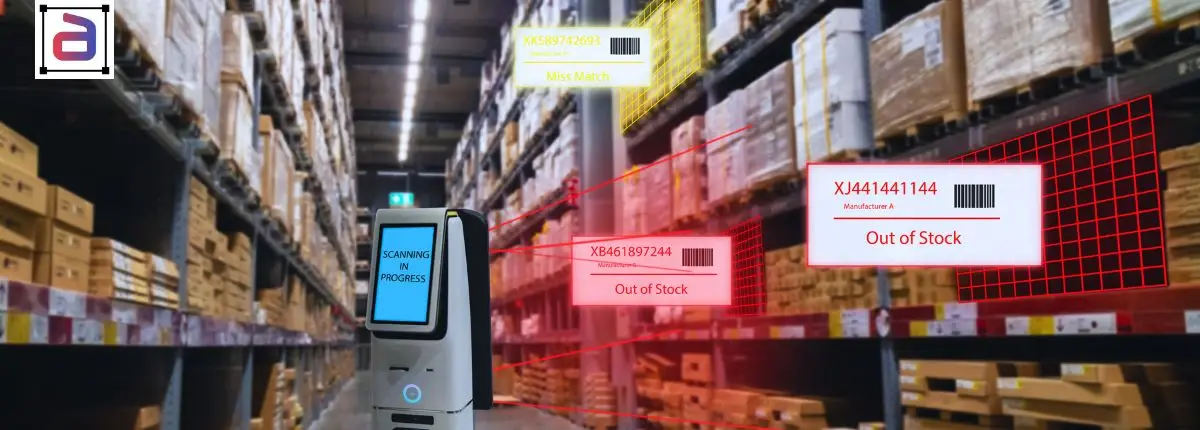
Retailers use bounding box data to identify products on shelves, detect out-of-stock items, and monitor planogram compliance. Accurate product detection in retail environments requires annotation that accounts for overlapping products, variable lighting, and diverse packaging.
Duplicate and Counterfeit Detection
Accurate localization supports visual comparison models that flag duplicate listings or counterfeit products. Well-annotated training data ensures these models can distinguish between genuine products and near-identical imitations.
Key E-commerce Use Cases for 2D Bounding Box Services
2D bounding box services power product detection, visual search, and automated categorization in e-commerce. Additionally, they support inventory monitoring, counterfeit detection, and personalized recommendations. Consequently, retailers enhance catalog accuracy, streamline operations, and improve customer experience through structured visual intelligence.
Product Catalog Automation
Bounding boxes help automate product tagging, reduce manual catalog errors, and accelerate onboarding of new SKUs.
Visual Search and Recommendations
Object detection models trained with bounding boxes enable customers to search using images and receive visually similar product recommendations.
Shelf and Inventory Recognition
Retailers use bounding box data to identify products on shelves, detect out-of-stock items, and monitor planogram compliance.
Duplicate and Counterfeit Detection
Accurate localization supports visual comparison models that flag duplicate listings or counterfeit products.
Challenges in High-Volume Product Annotation
E-commerce datasets present unique annotation challenges that directly impact model performance. High SKU variability across brands and seasons means annotators must handle thousands of distinct product classes. Visually similar products with minor design differences demand careful attention to detail during labeling.
Occlusions caused by packaging, stacking, or human interaction further complicate bounding box placement. Reflections and glare in studio and in-store photography introduce visual noise, while rapid catalog refresh cycles require frequent re-annotation to keep training data current.
Addressing these challenges requires more than annotation tools — it requires process discipline, trained human judgment, and scalable quality assurance frameworks.
Why Managed Bounding Box Services Scale Better
In-house annotation teams often struggle to maintain speed and consistency as data volumes increase. Managed 2D bounding box services provide structured workforce management, standardized guidelines, and scalable capacity that internal teams rarely match.
By leveraging trained annotators and repeatable workflows, managed services reduce annotation variance and allow engineering teams to focus on model development rather than operational overhead. This becomes especially valuable during seasonal spikes or rapid catalog expansion, when annotation demand can surge unpredictably.
Quality Standards That Impact Detection Accuracy
Bounding box accuracy directly influences how well object detection models perform in production. Several quality dimensions determine whether annotated data will strengthen or weaken a model.
Tightness of boxes around product edges ensures models learn precise boundaries rather than excess background. Consistent labeling across similar SKUs prevents class confusion during training. Complete coverage of all relevant objects in each image avoids missed detections, while alignment with predefined class taxonomies keeps datasets organized and usable.
Even small deviations in annotation quality can introduce noise into training data, leading to false positives or missed detections in production environments.
How Annotera Supports Scalable Product Detection
Annotera delivers 2D bounding-box annotation services via a managed, human-in-the-loop model designed for high-volume e-commerce programs. Annotation workflows are governed by documented guidelines, multi-layer quality checks, and continuous performance calibration.
Dedicated teams ensure consistent labeling across datasets, while scalable delivery models support seasonal spikes and rapid catalog expansion. This approach enables faster model iteration without compromising data integrity — giving e-commerce teams the reliable training data they need to deploy product detection at scale.
Conclusion
2D bounding boxes for product detection remain the foundation of effective e-commerce AI. When executed with precision, they unlock faster training cycles, higher detection accuracy, and more reliable real-world performance. For e-commerce developers seeking to move beyond pilots and build production-grade vision systems, investing in scalable, quality-driven bounding box annotation is a critical first step.
Looking to accelerate product detection with reliable 2D bounding box services? Connect with Annotera to build high-quality training datasets that scale with your e-commerce vision.