
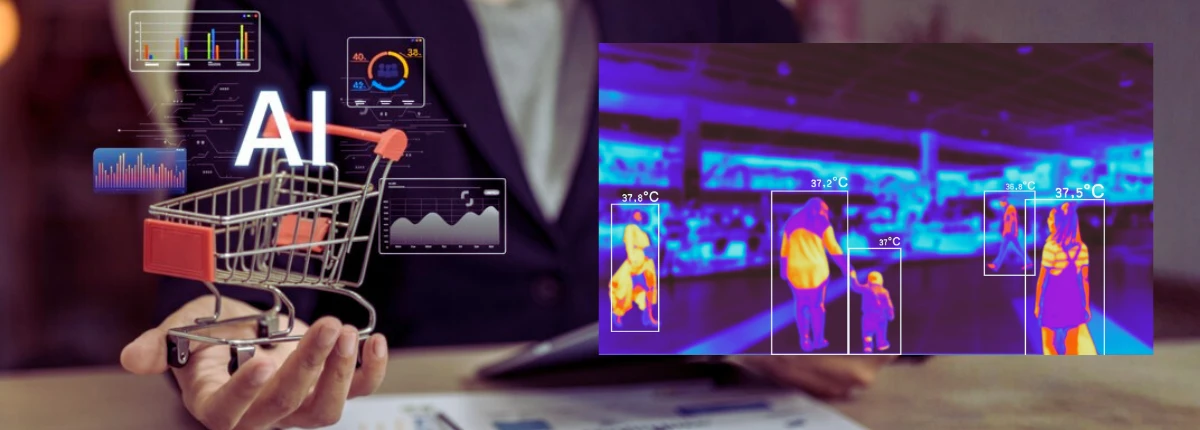
In artificial intelligence, models do not fail silently—they fail publicly. An autonomous vehicle that misinterprets a pedestrian or a retail system that miscounts shelf inventory does not expose weak algorithms first; it exposes weak data. More specifically, it exposes poor image annotation quality.
At Annotera, we consistently observe a clear pattern across industries: when AI models underperform in production, the root cause is rarely compute or model architecture. It is almost always inconsistent, ambiguous, or low-fidelity annotations. This is why enterprises increasingly partner with specialized data annotation companies and invest in structured data annotation outsourcing—not just to label faster, but to build AI systems they can trust.
Why Annotation Quality Matters More Than Model Complexity
Modern AI models are remarkably tolerant of architectural imperfections but unforgiving of flawed ground truth. According to a Forbes article and industry commentary, data scientists spend up to 80% of their time on data management tasks, including cleaning, labeling, and annotation, before model training even begins.
As Andrew Ng famously stated, “AI systems are only as good as the data used to train them.” In large-scale computer vision programs, even a small labeling error rate compounds rapidly. A 2% error rate across millions of images becomes a systemic liability rather than a statistical anomaly.
This is where professional image annotation outsourcing separates itself from ad hoc labeling approaches.
How Poor Image Annotation Breaks Autonomous AI Models
Autonomous driving systems depend on perception accuracy under extreme variability—changing lighting conditions, weather, occlusion, and rare edge cases. Annotation defects in these datasets do not simply lower benchmark scores; they change how vehicles behave in the real world.
- Inaccurate bounding boxes that clip pedestrians, cyclists, or vehicles train models to ignore critical visual cues.
- Ambiguity in classifying trucks, buses, trailers, and construction objects degrades downstream planning and control.
- Temporal inconsistency in video annotation breaks object tracking and motion prediction.
- Unclear occlusion and truncation rules cause models to fail in dense, urban traffic scenarios.
In safety-critical environments, even marginal annotation errors can propagate into delayed braking, false positives, or missed detections. This is why autonomous teams rely on an experienced image annotation company with domain-trained annotators and rigorous quality assurance frameworks. Image and video annotation are redefining the future of retail by enabling accurate visual search, real-time shelf intelligence, and personalized in-store experiences—helping retailers turn visual data into actionable insights that improve customer engagement and operational efficiency.
How Poor Annotation Undermines Retail Computer Vision
Retail AI systems operate in less regulated but equally demanding environments. Shelf analytics, visual search, and planogram compliance models rely on fine-grained visual distinctions across thousands of SKUs. Video bounding box annotation labels and tracks objects across consecutive frames, enabling motion-aware computer vision training. This process supports accurate object detection, tracking, and behavior analysis in dynamic environments, including autonomous driving, surveillance systems, and sports performance analytics.
- SKU-level mislabeling merges visually similar packaging variants and corrupts inventory signals.
- Inconsistent segmentation masks lead to inaccurate facings counts and shelf placement errors.
- Context-driven bias teaches models to rely on shelf position rather than visual evidence.
- Taxonomy drift causes labels to fall out of sync with rapidly changing product catalogs.
Industry estimates suggest that retailers lose billions of dollars annually due to inventory inaccuracies. Poor annotation quality silently amplifies these losses, leading store teams to distrust AI-driven recommendations.
The Hidden Business Cost of Poor Annotation Quality
Gartner has consistently highlighted that poor data quality costs organizations millions each year through inefficiency, rework, and failed AI initiatives. Annotation errors are a particularly expensive form of data debt because they are difficult to detect once embedded into training pipelines.
Low-quality annotations lead to longer experimentation cycles, misleading validation metrics, repeated retraining, and higher operational costs. This is why enterprises increasingly demand measurable quality controls from their data annotation outsourcing partners. Scaling annotated images demands standardized taxonomies, calibrated annotator training, multi-layer QA, and model-assisted labeling. Combining workflow automation with continuous validation ensures dataset consistency, reduces drift, and preserves geometric precision for motion-based irregular shape recognition.
How to Measure Image Annotation Quality Effectively
Annotation quality cannot be assumed—it must be measured, monitored, and enforced. At Annotera, we approach quality as a continuous system rather than a one-time audit.
1. Define Task-Specific Quality Metrics
There is no universal annotation quality score. Metrics must align with the annotation type, such as IoU for bounding boxes, pixel accuracy for segmentation, or ID stability for video annotation.
2. Use Gold Standards with Continuous Sampling
Gold datasets establish baseline expectations, but production-scale annotation requires ongoing, stratified audits—especially for complex edge cases.
3. Monitor Inter-Annotator Agreement
Disagreement rates reveal ambiguity in guidelines or taxonomy. High-performing annotation systems convert disagreement into clearer specifications and long-term consistency.
4. Track Operational Quality KPIs
Metrics such as rework rates, defect density, annotator drift, and vendor variance are critical when scaling through image annotation outsourcing.
5. Close the Loop with Model Performance
Ultimately, annotation quality must correlate with real-world model outcomes. Model error analysis should continuously inform annotation guidelines and QA thresholds.
Why Organizations Choose Annotera
Annotera is more than a data annotation company. We operate as a quality-first partner, combining domain-trained annotators, multi-layer QA frameworks, and measurable governance tailored to autonomous and retail AI use cases.
Our approach for image bounding box annotation ensures that datasets are not only accurate, but production-ready—designed to withstand real-world complexity, scale, and operational pressure.
Build AI Models on Data You Can Trust
If your autonomous or retail AI models perform well in pilots but struggle in production, annotation quality is likely the missing link. Annotera helps organizations transform labeling from a hidden risk into a measurable competitive advantage. Partner with Annotera today to audit your existing datasets, implement robust quality metrics, and scale confidently with enterprise-grade image annotation outsourcing that protects model performance where it matters most—in the real world.


