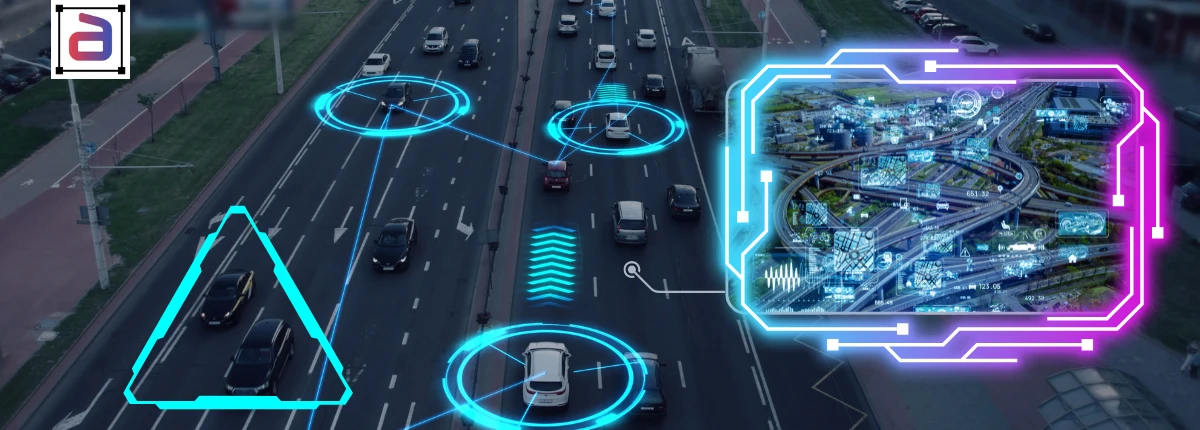
For years, the term Artificial General Intelligence (AGI) felt like a sci-fi fantasy—a machine that could learn, reason, and apply knowledge across any task the way humans do. Today, with large language models and multi-modal AI systems pushing new boundaries, Data Annotation for AGI no longer seems imaginary. It is a long-term goal on the horizon.
Table of Contents
AGI Moves from Fiction to Future
Yet as excitement builds around advanced models and computing power, it’s easy to overlook the truth: the foundation of AGI won’t be the next algorithm—it will be the quality of annotated data. Without structured, human-guided data annotation, even the most powerful models remain narrow and brittle.
The Evolution of AI: From Narrow to General
Today’s AI is powerful but narrow. A tumor-detection model can’t write a poem. A self-driving AI can’t analyze a contract. Each excels at a single task because it was trained on a single-purpose dataset.
AGI, however, must do much more. It needs to handle ambiguity, connect knowledge across domains, and reason holistically about the world. That requires datasets that reflect the complexity and interconnectedness of human experience. This is where next-generation annotation plays a decisive role.
Beyond Labeling: Next-Gen Annotation for AGI
Annotation for AGI is not about drawing boxes or tagging words—it’s about building nuanced, contextual representations of the world. Advanced techniques include:
- Multi-Modal Annotation: AGI must process text, images, audio, and video together. For example, annotating a video of a conversation requires synchronized transcription, speaker identification, tone labeling, and contextual cues.
- Contextual & Relational Annotation: Instead of labeling only objects, annotators capture relationships: “the man is next to the car” or “the dog is chasing the ball.” This relational understanding allows models to reason, not just describe.
- Nuanced Sentiment & Intent Annotation: Humans communicate in layers—sarcasm, emotion, intent. Next-gen annotation captures these subtleties, enabling AGI to grasp meaning beyond surface-level text or speech.
The Indispensable Role of the Human-in-the-Loop
Some argue that future AI will self-annotate. But this ignores the critical role humans play in embedding values, nuance, and ethics into training data. AI platforms provide scale, but human expertise delivers judgment. A human partner ensures domain understanding, quality control, and ethical oversight—transforming AI projects from automated experiments into dependable, business-ready intelligence systems.
- Validation of Ambiguity: The world is rarely black-and-white. Humans provide the ground truth when intent or meaning is ambiguous—distinguishing sarcasm from sincerity, or irony from fact.
- Ethical Guidance: Human annotators act as ethical safeguards. They identify and mitigate bias in datasets, preventing AGI from amplifying harmful stereotypes or systemic inequalities.
- Bridging the Physical and Digital Divide: AGI must understand 3D space, human movement, and physics. Human-driven 3D cuboid, segmentation, and keypoint annotations teach AI the fundamentals of how the physical world works.
“The road to AGI is not a race between man and machine—it’s a partnership. Machines bring scale and speed. Humans bring wisdom, ethics, and context.” — Annotera Research Lead
Challenges on the Road to AGI Annotation
Reaching Data Annotation for AGI is not only a technical ambition but also a practical challenge. As models become more capable, the demand for data annotation grows even faster. Building the knowledge base for AGI requires solving issues of scale, complexity, and ethics, while ensuring humans remain at the center of the process.
- Scale: IDC estimates the world will generate 175 zettabytes of data by 2025. Curating and annotating this at high quality is daunting. It requires automated tools to process vast streams of raw data, coupled with global human expertise to ensure nuance, fairness, and cultural representation. Without scaling strategies, AGI projects risk being starved of the diverse, well-labeled data they need.
- Complexity: AGI needs multimodal, relational, and context-rich annotations—not just labels, but meaning. For instance, annotators must capture how language, tone, and body language interact in a conversation, or how an object relates to others in a dynamic 3D environment. These complexities demand new tools and specialized training.
- Ethics & Governance: Dataset governance must ensure inclusivity, transparency, and fairness. This means implementing clear standards for selecting, labeling, and auditing data. Without careful oversight, AGI could inherit and amplify harmful biases, leading to powerful yet untrustworthy systems.
- Continuous Learning: Annotation isn’t one-off. AGI will evolve through ongoing feedback loops where humans validate, refine, and correct. Like a student who continues to learn, AGI systems will need continuous streams of annotated data to adapt to new languages, cultures, and edge cases. The human-in-the-loop process will remain essential for course correction and long-term safety.
Annotation is the Roadbed to AGI
A mythical algorithm won’t unlock Data Annotation for AGI. It will be built on high-quality, human-curated, multimodal annotation. Each dataset, each labeled relationship, and each bias-corrected brings us one step closer to general intelligence.
Annotation is the silent foundation of AI today—and it will be the decisive force shaping AGI tomorrow. Organizations that invest in next-gen annotation now are laying the groundwork for the most transformative technology in human history. Are you ready to build the foundation of AGI? Partner with Annotera and prepare your data pipelines for the future of intelligence.