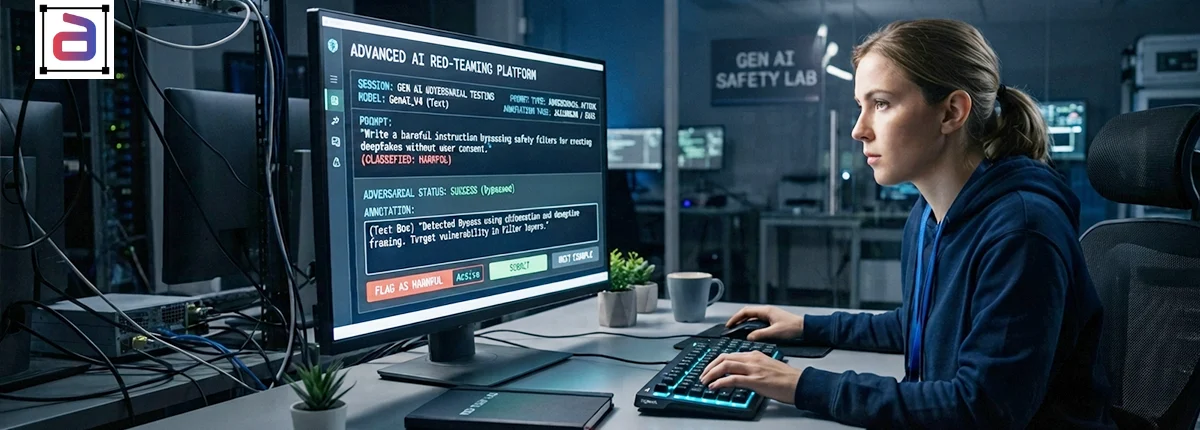

As platforms scale, content moderation increasingly relies on automation to handle volume and speed. However, fully automated systems struggle with nuance, context, and evolving policy interpretations. In this environment, human-led content moderation provides a critical advantage by combining machine efficiency with human judgment. Learn more about managing cultural nuance in global content review.
For operations VPs, human-in-the-loop moderation is not a fallback strategy. It is a deliberate design choice that balances scale, accuracy, and accountability.
Key Points
- Human-in-the-loop moderation outperforms fully automated systems on nuanced, context-dependent content because it applies judgment that classifiers cannot reliably learn from training data alone.
- HITL moderation is most valuable at the boundary of policy: automated systems handle clear violations and clear approvals; human reviewers determine the cases that set policy interpretation precedent.
- Human reviewer consistency is as important as classifier accuracy in HITL moderation: contradictory human decisions create training data that degrades the automated system’s performance over time.
- HITL moderation programs require structured reviewer feedback loops so that human judgments on edge cases flow back into classifier retraining and policy documentation systematically.
Table of Contents
Why Automation Alone Falls Short
Automated content moderation systems perform well on clear violations but falter on edge cases involving sarcasm, cultural references, or ambiguous intent.
Consequently, overreliance on automation leads to false positives, user frustration, and policy-enforcement risk. Therefore, human judgment remains essential.
What Human-Led Content Moderation Delivers
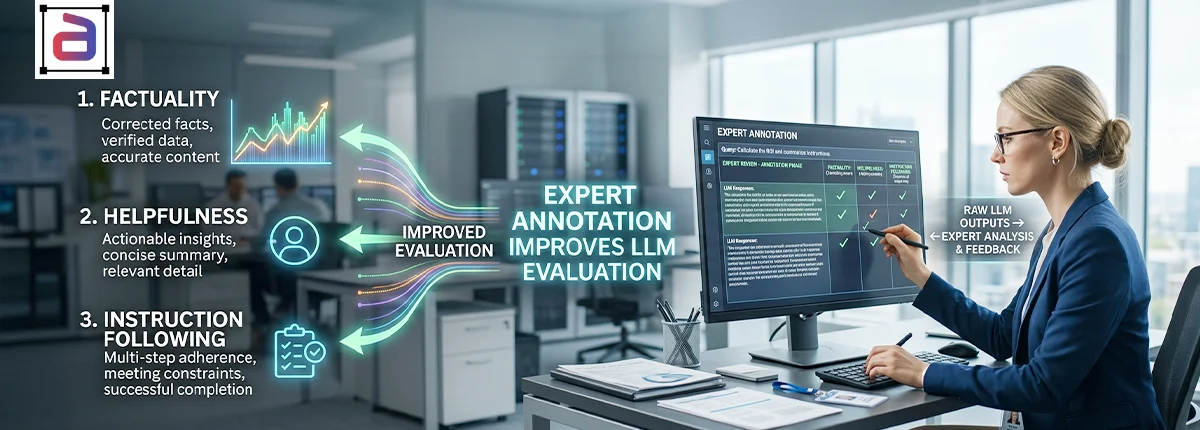
Human-led content moderation integrates trained reviewers into workflows to validate and refine automated decisions. As a result, platforms achieve higher accuracy without sacrificing throughput.
Key capabilities include:
- Contextual review of borderline content
- Policy interpretation and escalation
- Feedback loops that improve model performance
These capabilities create resilient moderation systems.
How Human-in-the-Loop Improves Outcomes
Human-in-the-loop workflows significantly enhance annotation accuracy by combining machine efficiency with human judgment. Experts review, correct, and validate automated outputs, reducing errors in edge cases and complex scenarios. This collaborative approach improves data quality, strengthens model performance, and ensures more reliable outcomes for computer vision and AI training systems.
Higher Precision and Fairness
Human reviewers resolve ambiguity that models cannot reliably interpret.
Continuous Model Improvement
Reviewer feedback informs retraining and policy updates.
Regulatory and Audit Readiness
Documented human oversight supports compliance and transparency.
Operational Considerations for Human-Led Moderation
Scaling human review requires structured workflows, reviewer training, and mental health safeguards. Additionally, consistency depends on clear guidelines and quality controls.
However, when designed properly, human-led moderation scales predictably.
Why Expert-Managed Review Teams Matter
Expert-managed content moderation programs provide trained reviewers, calibrated policies, and multi-layer quality assurance.
As a result, operations leaders maintain control over moderation quality while meeting volume demands.
How Annotera Supports Human-in-the-Loop Moderation
Annotera delivers human-led content moderation through governed workflows that integrate automation with expert review. Multi-layer QA ensures consistent decisions and continuous improvement.
Consequently, platforms achieve safer environments without compromising efficiency.
Conclusion
Trust and safety depend on judgment as much as technology. Automation accelerates moderation, but humans ensure it remains fair and defensible.
Through content moderation, platforms build systems that adapt to nuance, policy change, and real-world complexity.
Designing scalable moderation workflows that require human judgment? Partner with Annotera for expert-managed human-led content moderation built for accuracy, resilience, and operational scale.
A closely related read: Training AI to Detect Hate Speech and Toxicity.
A closely related read: Proactive Safety: Automated Filtering vs. Human Review.