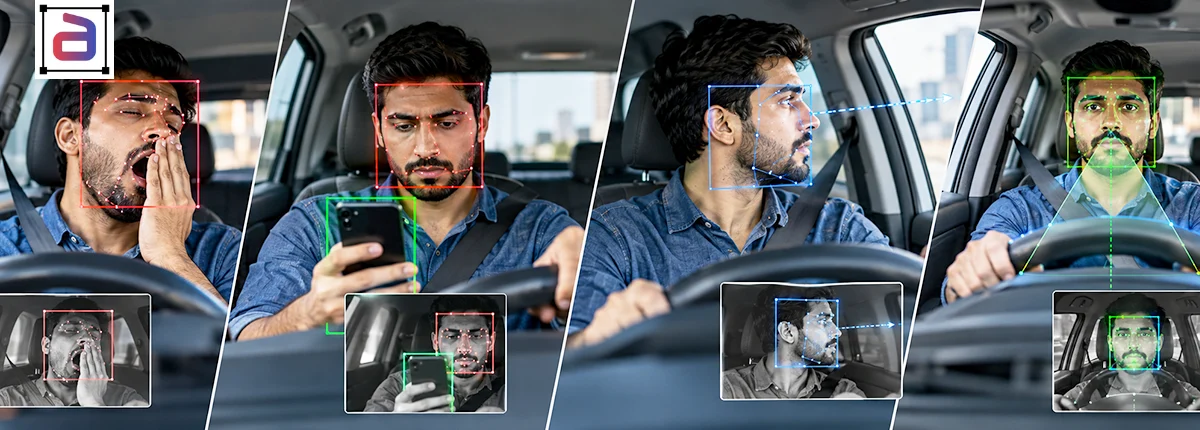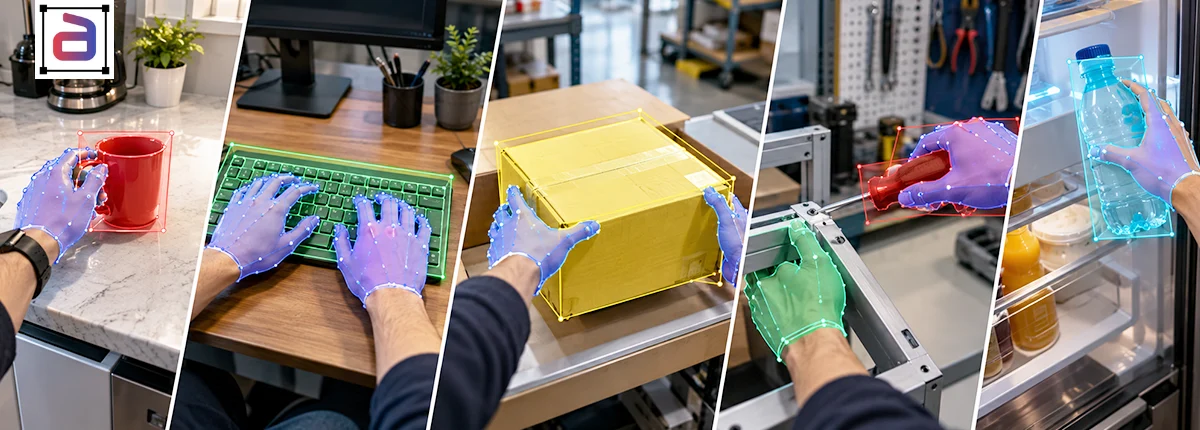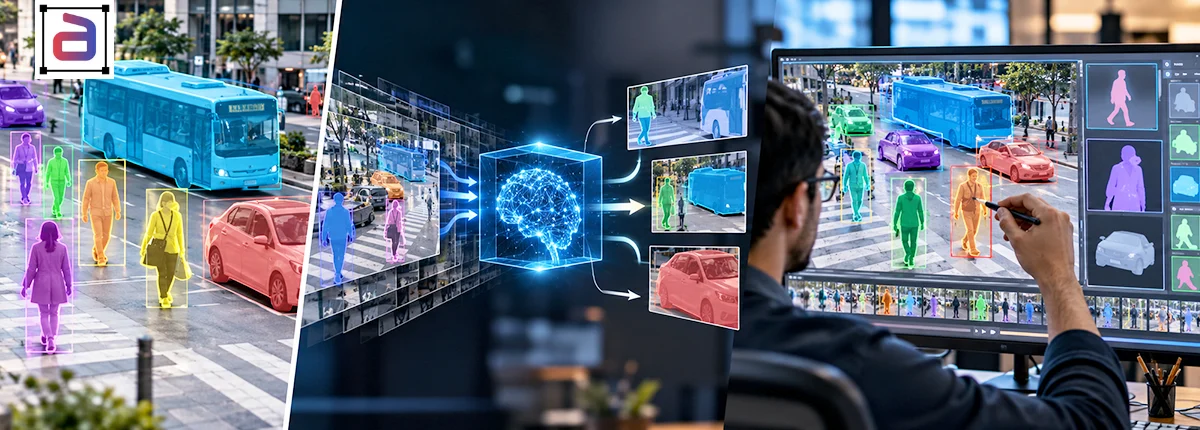
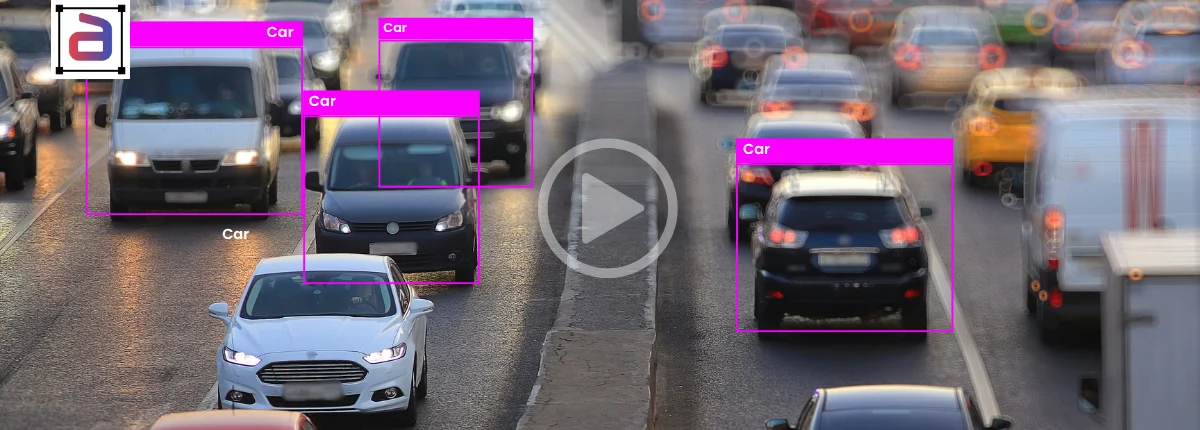
Video data is rapidly becoming the backbone of modern AI systems—from autonomous vehicles and industrial robotics to retail intelligence and sports analytics. As organizations scale AI initiatives, the accuracy of object tracking and action recognition models is tied directly to the quality of their underlying annotations. Yet video annotation optimization, with its temporal complexity and dense frame-by-frame information, remains one of the most challenging formats to label accurately and efficiently. The full breakdown of those challenges and proven strategies to address them is in the guide to mastering video annotation challenges and best practices.
At Annotera, we work with enterprises worldwide to streamline complex video-annotation pipelines. This article outlines the most effective strategies to optimize video annotation—whether managed in-house or through a video annotation outsourcing partner—and highlights why a specialized data annotation company like Annotera can significantly accelerate model performance.
Table of Contents
Key Points
- Object tracking annotation quality is determined by ID consistency across the full track lifetime, not by per-frame bounding box accuracy: ID breaks create training signal that teaches the model to lose tracks.
- Action recognition annotation must cover the complete temporal extent of each action from onset to completion: clipping actions too early or extending them into the subsequent action produces classifiers with systematic timing errors.
- Video annotation optimization for tracking requires keyframe strategy: annotating every nth frame at high quality and interpolating between keyframes outperforms annotating every frame at lower quality for most tracking applications.
- Action recognition video annotation must cover intra-class variation: the same action performed slowly, quickly, with different body types, and from different camera angles requires representative coverage in training data.
Why Optimized Video Annotation Matters Today
Video is now the fastest-growing modality in AI training data. Analyst reports show that the global data-annotation outsourcing market is expanding steadily as companies leverage deep learning for video analytics across sectors. This surge is driven by use cases such as autonomous vehicles, surveillance systems, smart manufacturing, and human-behavior modeling.
Academic studies reveal a direct link between annotation accuracy and downstream model quality: improved label fidelity consistently boosts object detection and tracking benchmarks.
As Andrew Ng noted in an interview on the future of AI, “It’s actually time to spend more time on the data.” His observation reflects an industry-wide shift toward data-centric AI—where annotation rigor becomes a strategic advantage.
For organizations pursuing advanced computer-vision systems, optimized video annotation is no longer optional. It is foundational. Industry forecasts place the global data-annotation outsourcing market on a steep growth trajectory—reflecting strong demand for specialized video annotation services.
Core Principles for High-Quality Video Annotation
As a trusted data annotation company, Annotera streamlines complex video datasets with precision, enabling faster model development and superior accuracy in object tracking and action recognition through optimized video annotation workflows. Core Principles for High-Quality Video Annotation focus on clear guidelines, advanced tools, and rigorous QA processes, ensuring smoother workflows and significantly improved accuracy for object tracking and action recognition.
1. Establish an Exhaustive Annotation Schema
Before annotators touch a single frame, define:
- Precise object classes
- Action labels and behavioral definitions
- Occlusion rules
- Temporal continuity guidelines
- Treatment of edge cases such as truncation or multi-object interactions
A clear schema reduces ambiguity, lowers error rates, and forms the backbone of scalable annotation operations.
2. Use the Right Annotation Technique for the Task
Object tracking and action recognition require different label types:
- Bounding boxes: Fast, scalable, ideal for tracking
- Instance segmentation: Higher precision for dense or overlapping scenes
- Key-point annotation: Essential for pose estimation and fine-grained actions
- Event timestamps: Required for temporal segmentation
Automated interpolation between key frames can significantly reduce manual workload, while manual annotation remains crucial for rapid motion, occlusions, and object collisions.
3. Adopt Model-in-the-Loop Annotation
Pre-annotation using a baseline model accelerates workflows dramatically:
- The model labels the frames initially
- Annotators correct low-confidence predictions
- Corrected data retrains the model in a continuous loop
This approach boosts both efficiency and accuracy. Annotera integrates model-in-the-loop capabilities directly into enterprise video-annotation optimization.
4. Implement Multi-Layer Quality Assurance
Video annotation errors can propagate across hundreds of frames. Therefore, wn effective QA system includes:
- Secondary review of each sequence
- Consensus-based adjudication for ambiguous actions
- Automated temporal-consistency checks
- Statistical sampling to measure annotator drift
5. Train Annotators for Temporal Reasoning
Annotating video is substantially more complex than image labeling. Annotators must understand motion patterns, partial visibility, contextual cues, and object persistence. Moreover, for domain-specific use cases like autonomous driving or medical imaging, expert-trained teams are essential—one of the advantages of working with an experienced video annotation company.
6. Integrate Active Learning for Smarter Frame Selection
Not all frames provide equal value. Instead, active learning focuses video annotation optimization effort on:
- Hard or ambiguous frames
- Low-confidence model predictions
- Sequences with rapid transitions
- Edge cases critical for generalization
7. Standardize Metadata and Ensure Traceability
Frame rate, sensor metadata, versioning, and annotator identifiers provide crucial traceability. Moreover, this enables robust debugging and is mandatory in regulated industries.
When to Leverage Outsourcing for Video Annotation
Organizations increasingly turn to data annotation outsourcing to reduce operational burden and accelerate development cycles. Video annotation requires specialized tooling, rigorous QA, and highly trained teams—capabilities that are costly to build internally. Also, when to Leverage Outsourcing for Video Annotation becomes clear as projects scale, since specialized partners offer greater efficiency, stronger quality controls, and faster turnaround for complex tracking and action-recognition workflows.
A premium video annotation company should provide:
- Expertise in object tracking, action recognition, pose estimation, and event segmentation
- Model-in-the-loop tooling
- SLA-backed quality benchmarks
- Scalable, domain-trained annotation teams
- Enterprise-grade security and compliance
Because video labeling is time-intensive, outsourcing to a structured, high-governance partner like Annotera ensures speed, consistency, and technical excellence.
How To Optimize Your Video Annotation Workflows
How to Optimize Your Video Annotation Workflows begins with clearer guidelines, enhanced automation, and multi-layer QA, ensuring higher accuracy and more efficient outcomes for tracking and action-recognition models. Further, Annotera’s methodologies are engineered for enterprise-grade video annotation such as:
- Specialized teams trained in temporal and behavioral annotation
- AI-assisted workflows to compress project timelines
- Multi-level QA delivering above-industry accuracy
- Seamless integration with ML pipelines
- Secure and compliant infrastructure for sensitive data
Whether you are training object trackers, surveillance systems, or human-action recognition models, Annotera helps you scale with precision and speed.
Conclusion: High-Quality Annotation is a Strategic Advantage
As video becomes the primary data source for next-generation AI, the ability to annotate it accurately at scale will determine which organizations succeed in deploying production-ready computer-vision models. Optimizing your annotation workflow—and partnering with the right data annotation company—is a strategic imperative. Therefore, accelerate your next AI milestone—partner with Annotera for expert video annotation outsourcing.
Contact us today to start your pilot project.
A closely related read: How to Write Effective Annotation Guidelines That Improve Accuracy.
A closely related read: Cross-Camera Re-Identification: Annotating Identity Across Multi-Camera Video Networks