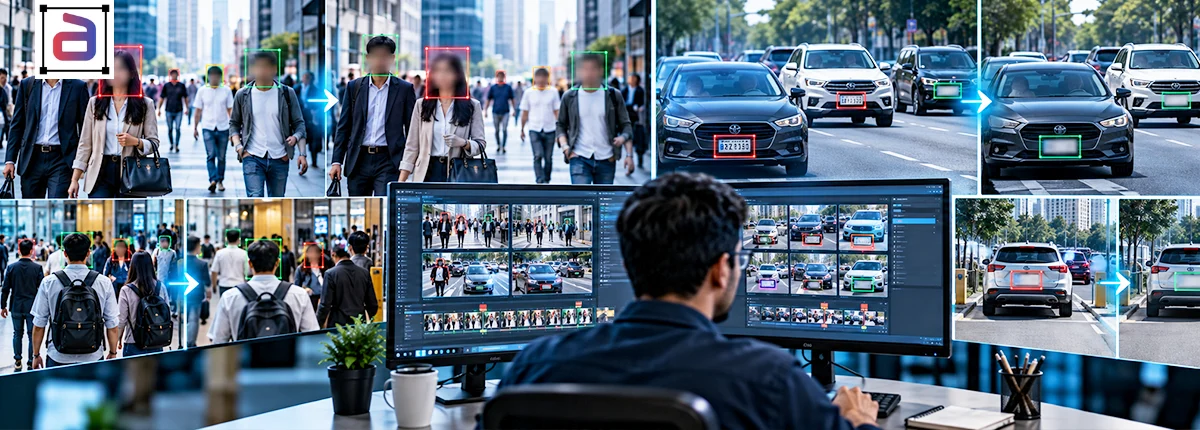
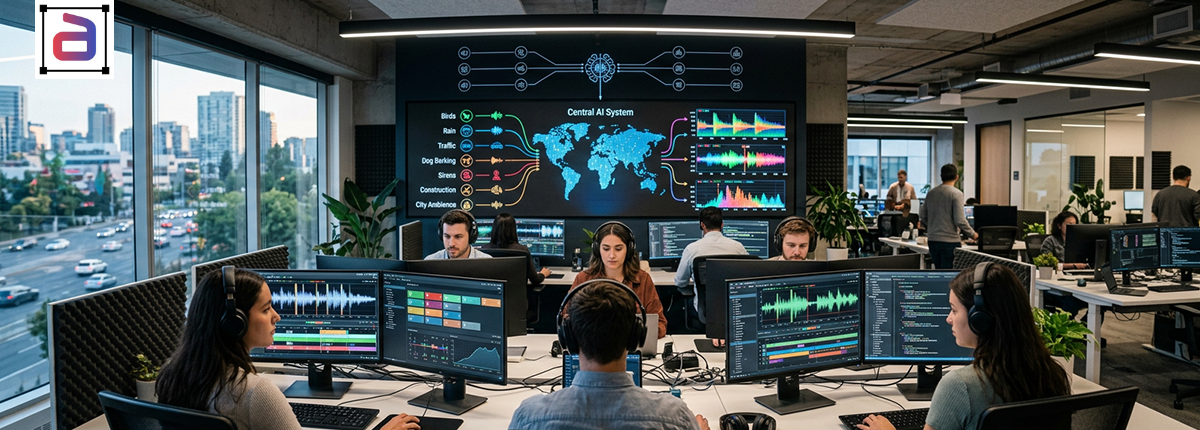
The world is becoming increasingly intelligent—not just through what machines can see, but also through what they can hear. From detecting emergency sirens in smart cities and monitoring machinery in manufacturing plants to identifying wildlife sounds for conservation, Environmental Sound Recognition (ESR) is transforming how AI understands the world. However, even the most advanced AI models cannot accurately recognize environmental sounds without one essential ingredient: high-quality audio classification annotation. Every successful Environmental Sound Recognition system is built on meticulous annotation. For teams building systems specifically around safety events — gunshots, glass breaks, alarms, and distress calls — the deeper focus on audio event tagging for real-time safety AI covers the additional precision requirements those use cases demand.ulously labeled audio datasets that teach AI to distinguish between thousands of acoustic events across diverse real-world environments. This is where a trusted data annotation company like Annotera makes the difference. At Annotera, we deliver scalable audio annotation services that combine human expertise, rigorous quality assurance, and industry best practices to help organizations build reliable AI solutions that perform with confidence in real-world conditions.
Understanding Audio Classification Annotation
Audio classification annotation is the process of labeling audio recordings based on the sounds they contain so machine learning algorithms can recognize, categorize, and interpret them accurately. Unlike speech transcription, which focuses on converting spoken language into text, audio classification teaches AI to identify non-speech acoustic events such as:
- Vehicle horns
- Fire alarms
- Gunshots
- Dog barking
- Rainfall
- Machinery noise
- Bird calls
- Glass breaking
- Thunderstorms
- Human screams
These labeled datasets enable AI systems to recognize sounds in noisy, dynamic environments where multiple acoustic events often occur simultaneously.
As AI pioneer Andrew Ng famously said: Data is food for AI.
For Environmental Sound Recognition, accurately annotated audio data is the foundation that determines whether an AI model succeeds or fails. Audio Classification Annotation involves labeling audio recordings into predefined categories, such as speech, music, machinery, or environmental sounds. Moreover, accurate annotation enables AI models to recognize and classify sounds effectively, thereby improving performance across diverse real-world applications.
Why Environmental Sound Recognition Is Growing Rapidly
Environmental Sound Recognition is becoming a mission-critical capability across industries where real-time situational awareness drives operational efficiency and public safety. According to MarketsandMarkets, the global Smart Cities market is projected to surpass USD 1 trillion by 2030, fueled by AI-powered monitoring technologies that leverage environmental sensors, including acoustic intelligence. Meanwhile, Grand View Research estimates the Predictive Maintenance market will exceed USD 80 billion by 2030, with sound-based anomaly detection emerging as one of the most effective methods for identifying equipment failures before they become costly breakdowns. These trends highlight a growing reality: AI systems are increasingly expected to listen, understand, and respond to the world around them. As AI adoption expands across industries, environmental sound recognition is becoming increasingly important. Moreover, it enables intelligent systems to detect critical audio events, improve public safety, enhance industrial monitoring, and support smarter, real-time decision-making in dynamic environments.
Where Audio Classification Annotation Creates Business Value
Audio Classification Annotation delivers significant business value across industries by enabling accurate sound recognition. Furthermore, it supports predictive maintenance, smart surveillance, healthcare monitoring, customer analytics, and environmental sensing, thereby improving operational efficiency and AI-driven decision-making. Accurate audio timestamp annotation creates business value by improving speech-to-text accuracy, accelerating AI model training, and enhancing voice analytics. Moreover, it enables reliable subtitle generation, conversational AI, call center intelligence, and multilingual speech applications, ultimately delivering better user experiences and operational efficiency.
Smart Cities
Modern cities deploy AI-powered acoustic monitoring systems capable of detecting:
- Emergency sirens
- Gunshots
- Explosions
- Traffic congestion
- Public disturbances
- Infrastructure failures
Accurate sound recognition enables faster emergency response and improves public safety.
Industrial AI
Manufacturers increasingly rely on environmental sound recognition to identify:
- Bearing wear
- Motor abnormalities
- Air leaks
- Pump failures
- Conveyor defects
Early detection minimizes downtime while reducing maintenance costs.
Wildlife & Environmental Monitoring
Researchers use annotated audio datasets to automatically identify:
- Bird species
- Marine mammals
- Insect populations
- Animal movement
AI-powered biodiversity monitoring provides scalable environmental insights that were previously impossible to collect manually.
Healthcare
Hospitals and healthcare providers leverage acoustic AI to detect:
- Patient distress
- Falls
- Persistent coughing
- Respiratory abnormalities
- Medical equipment alarms
These systems support proactive patient care while reducing monitoring workloads.
Autonomous Mobility
Autonomous vehicles and intelligent transportation systems depend on accurate audio classification to recognize:
- Emergency vehicles
- Collision sounds
- Construction zones
- Weather-related hazards
- Roadside warnings
Environmental sound recognition enhances both safety and navigation.
Why High-Quality Audio Annotation Matters
Developing reliable Environmental Sound Recognition models is far more complex than labeling isolated sounds. High-quality audio annotation is essential for building accurate and reliable AI systems. Moreover, it improves sound classification, reduces recognition errors, and enhances model performance. As a result, businesses can deploy more dependable AI solutions across diverse real-world applications. Real-world recordings often include:
- Background conversations
- Wind noise
- Echoes
- Multiple overlapping sound events
- Varying recording quality
A single audio clip may contain rain, traffic, birds, footsteps, and construction equipment simultaneously. Without consistent annotation standards, AI models struggle to generalize and frequently produce inaccurate predictions. As computer scientist Fei-Fei Li noted:
“The current state of AI is built on decades of progress in data collection, labeling, and computation.”
Her observation underscores a critical truth: high-quality labeled data remains the competitive advantage behind successful AI systems.
Best Practices for Audio Classification Annotation
Successful audio datasets require more than simply assigning labels. To achieve reliable AI performance, follow consistent annotation guidelines and use well-defined audio categories. Additionally, incorporate expert human review and rigorous quality assurance. Consequently, these practices improve annotation accuracy, reduce inconsistencies, and enhance model performance across diverse acoustic environments. Organizations should follow structured annotation workflows that include:
Comprehensive Label Taxonomies
Standardized sound categories ensure consistency across large datasets and distributed annotation teams.
Multi-Level Quality Assurance
Reliable datasets require multiple validation stages including:
- Initial annotation
- Independent review
- Expert verification
- Continuous quality audits
Rich Metadata Annotation
Capturing contextual information such as timestamps, environmental conditions, recording quality, and confidence scores significantly improves model performance.
Multi-Label Support
Environmental recordings frequently contain several simultaneous sound events. Annotation workflows should accurately identify every relevant acoustic event rather than assigning only one label.
Domain Expertise
Annotators must understand subtle acoustic differences across industries to produce datasets suitable for production-grade AI systems.
Why Businesses Are Choosing Data Annotation Outsourcing
As AI projects grow in scale, organizations increasingly recognize that building internal annotation teams is both expensive and time-consuming. This is why data annotation outsourcing has become a strategic business decision. As AI initiatives continue to grow, businesses are increasingly choosing data annotation outsourcing to scale efficiently. Moreover, outsourcing provides access to skilled annotators, faster turnaround times, and consistent quality, thereby accelerating AI development while reducing operational costs. Partnering with an experienced data annotation company offers significant advantages:
- Faster project delivery
- Reduced operational costs
- Access to experienced annotation specialists
- Flexible workforce scaling
- Enterprise-grade quality assurance
- Domain-specific expertise
Rather than investing heavily in infrastructure and workforce management, organizations can focus on AI innovation while trusted annotation partners handle data preparation.
Why Annotera Is the Trusted Partner for Audio Annotation Services
At Annotera, we understand that exceptional AI begins with exceptional data. Our specialized audio annotation services are designed to support organizations building next-generation AI solutions across smart cities, industrial automation, healthcare, automotive, robotics, and environmental monitoring. Annotera combines experienced human annotators with robust quality assurance to deliver accurate audio annotation services. Moreover, our scalable workflows, multilingual expertise, and customized annotation solutions help businesses develop reliable, high-performing AI models across diverse industries. Our capabilities include:
- Audio classification annotation
- Acoustic event detection
- Audio segmentation
- Speaker diarization
- Wake-word annotation
- Emotion annotation
- Metadata enrichment
- Multi-label audio annotation
- Custom ontology development
What differentiates Annotera is our commitment to quality at every stage of the annotation lifecycle. Our delivery framework combines:
- Expert human annotators
- Customized annotation guidelines
- Multi-stage quality control
- Scalable global delivery teams
- Secure data handling
- Rapid turnaround times
Whether you need thousands or millions of annotated audio files, our audio annotation outsourcing solutions ensure your AI models receive the high-quality training data required for production success.
The Future Belongs to AI That Can Hear
Environmental Sound Recognition is rapidly becoming a cornerstone of intelligent systems. As IoT, edge AI, autonomous machines, and smart infrastructure continue to expand, audio intelligence will play an increasingly vital role in enabling machines to understand complex real-world environments. Organizations that invest in high-quality annotated audio data today will be better positioned to build AI systems that are more accurate, reliable, and adaptable tomorrow. The difference between a good AI model and a great one often comes down to the quality of its training data—and that starts with expert annotation.
Partner with Annotera to Build Smarter Audio AI
Whether you’re developing smart city platforms, industrial monitoring solutions, healthcare technologies, or next-generation AI applications, Annotera delivers the precision, scalability, and expertise needed to accelerate your success. As a trusted data annotation company, we combine human intelligence with robust quality assurance to provide industry-leading audio annotation services and scalable audio annotation outsourcing solutions tailored to your business needs. Ready to transform raw audio into intelligent AI insights? Connect with Annotera today to discover how our expert annotation teams can help you build accurate Environmental Sound Recognition models that perform reliably in the real world. Let’s create high-quality training data that powers the next generation of AI innovation.
A closely related read: content filtering as an audio classification use case.