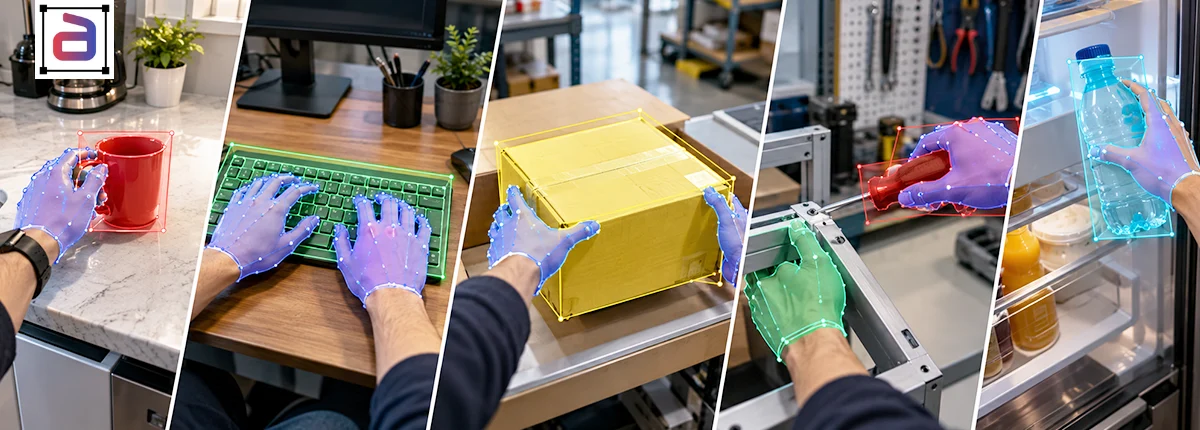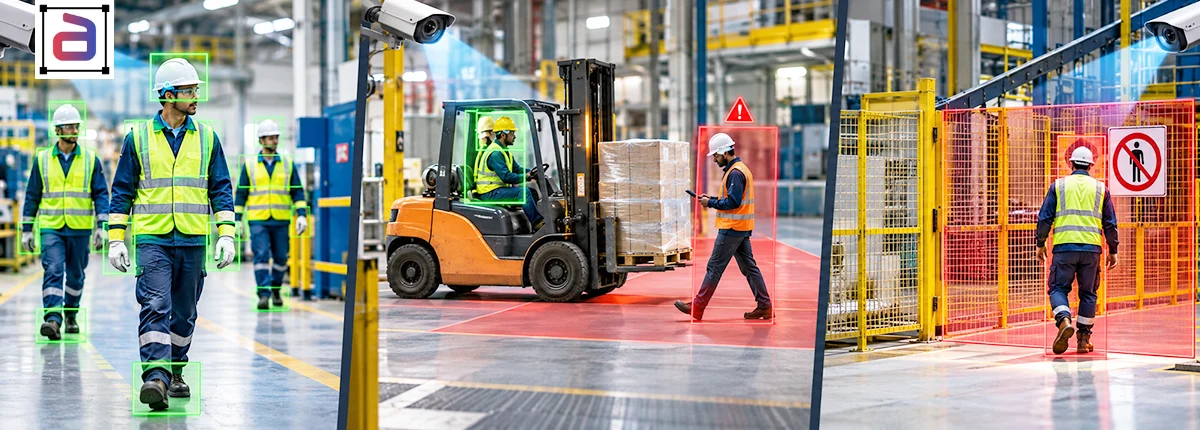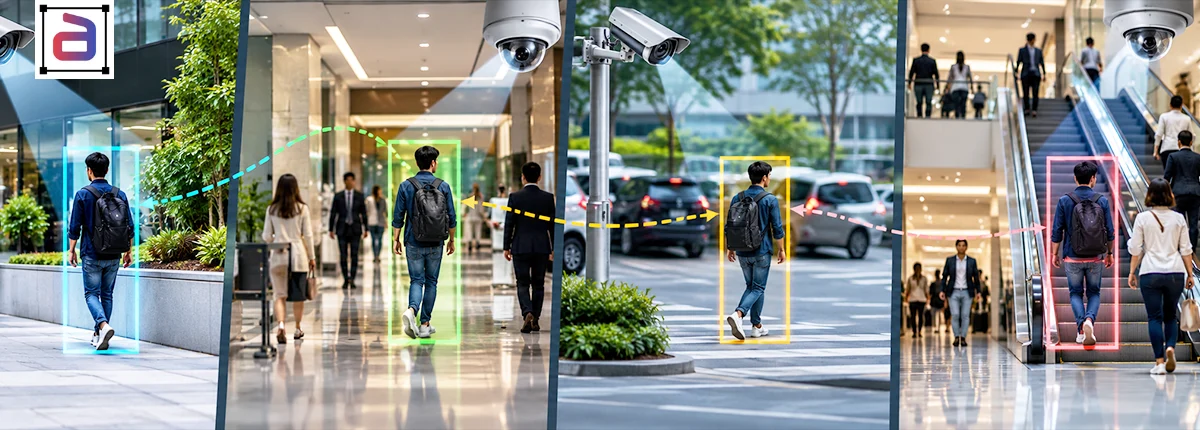
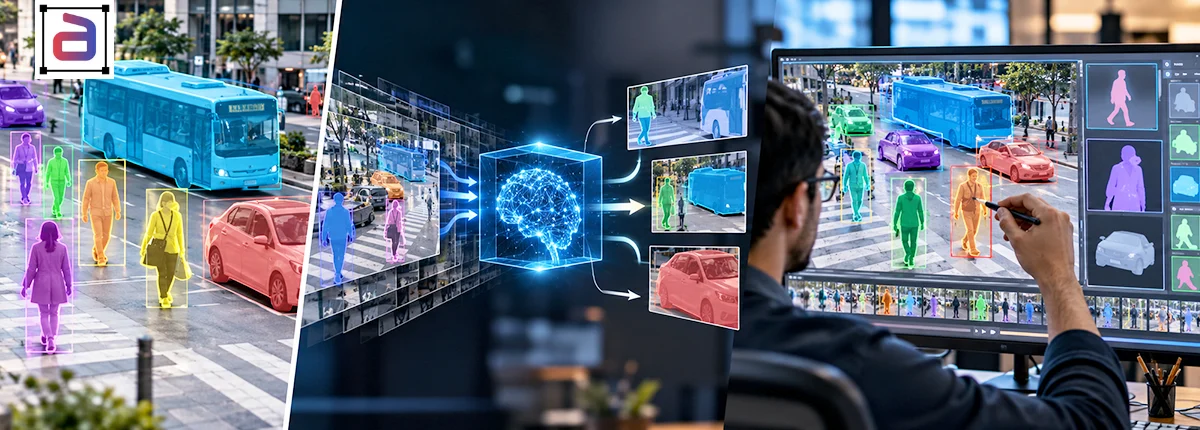
Video annotation is undergoing a major transformation. Foundation models inspired by Meta’s Segment Anything Model (SAM) are helping computer vision teams identify objects, generate segmentation masks, and propagate annotations across video frames with significantly less manual effort. For organizations building AI-powered systems, these capabilities offer an opportunity to accelerate dataset preparation without compromising the quality of training data. However, faster annotation does not automatically mean better annotation. Objects can disappear behind obstacles, change appearance, overlap with similar objects, or move through challenging lighting conditions. Even advanced models can produce inaccurate masks or inconsistent object identities in these situations.
The solution is a balanced approach that combines AI-powered automation with expert human validation. For businesses developing autonomous vehicles, intelligent surveillance, retail analytics, and robotics applications, this combination is essential for building reliable computer vision datasets. At Annotera, we believe that effective video annotation is not simply about generating labels at scale. It is about ensuring that those labels accurately represent real-world visual information and support the intended AI application.
Key Points
- Faster Video Annotation: SAM-style foundation models automate object segmentation and mask generation, reducing repetitive manual labeling and accelerating dataset preparation.
- Human Review Ensures Accuracy: Expert validation helps correct segmentation errors caused by occlusion, motion blur, challenging lighting, and complex scenes.
- Reliable Multi-Object Tracking: Human-in-the-loop workflows help maintain object identities across video frames, reducing identity switches and inconsistent tracking labels.
- Annotera Delivers Quality-Focused Solutions: Annotera combines scalable video annotation workflows with human-led quality assurance to support reliable AI training datasets for computer vision applications.
What Are SAM-Style Foundation Models?
SAM-style foundation models are designed to identify and segment objects using prompts such as points, bounding boxes, or existing masks. The original SAM model focused on image segmentation, while Segment Anything Model 2 (SAM 2) extends promptable segmentation to both images and videos. It can propagate an object’s segmentation across frames and allows users to refine predictions when necessary. This capability changes how annotation teams approach video datasets. Instead of manually outlining the same object in every frame, annotators can identify an object in a selected frame and use the model to generate candidate masks throughout the sequence. Common applications include:
-
Object segmentation: Identifying the precise pixel boundaries of vehicles, pedestrians, products, and other objects.
-
Instance segmentation: Separating individual objects belonging to the same category.
-
Annotation pre-labeling: Generating initial labels that human annotators can review and correct.
-
Video object tracking support: Maintaining object masks across frames to help construct temporally consistent datasets.
These models can reduce repetitive work, but their predictions still require evaluation against the specific requirements of each project.
How Auto-Labeling Makes Video Annotation More Efficient
Traditional video annotation involves drawing bounding boxes, outlining objects, assigning classes, and maintaining consistent labels across hundreds or thousands of frames. For large-scale computer vision projects, these tasks can consume substantial time and resources. SAM-style models can streamline this workflow in several ways.
1. Faster Object Segmentation
Foundation models can generate initial segmentation masks from relatively simple prompts. Annotators can then refine boundaries rather than creating every mask from scratch. This is particularly useful for videos containing recurring objects, such as vehicles on roads, people in surveillance footage, or products moving along retail conveyor belts.
2. Scalable Dataset Preparation
Automated pre-labeling helps annotation teams process larger video collections while directing human effort toward challenging scenes. This can improve throughput when projects involve multiple camera feeds, diverse environments, and extensive frame sequences.
3. More Consistent Starting Labels
A model-assisted workflow provides a common starting point for annotators. However, model consistency should not be confused with annotation accuracy: systematic errors can also spread across multiple frames if predictions are accepted without sufficient review.
4. Support for Multi-Object Tracking
Multi-object tracking involves detecting multiple objects and maintaining their identities as they move through successive video frames. Segmentation models can provide detailed object masks, while tracking systems associate detections over time. For example, a traffic dataset may need to distinguish several similar-looking cars as they cross an intersection. A segmentation model may identify each car’s visible pixels, but the tracking pipeline must also preserve the correct identity of each vehicle. Accurate annotation therefore requires both spatial precision and temporal consistency.
Where Human Review Still Matters
Automation can accelerate labeling, but complex video scenes introduce challenges that require human judgment, project-specific rules, and structured quality assurance.
1. Occlusion and Object Reappearance
Objects regularly disappear behind vehicles, pedestrians, furniture, or other obstacles. When they reappear, a model may generate an inaccurate mask or associate the object with a different instance. Human reviewers can verify object continuity, correct segmentation errors, and ensure that annotations follow the project’s occlusion rules.
2. Motion Blur and Challenging Lighting
Fast-moving objects, low-resolution footage, reflections, nighttime conditions, rain, and fog can make object boundaries difficult to distinguish. Automated masks may omit important details or include pixels from the background. Reviewers should pay particular attention to these difficult frames, especially when datasets support autonomous driving, safety monitoring, or other applications where inaccurate labels can affect model performance.
3. Identity Switches in Multi-Object Tracking
Crowded scenes create a different problem: two objects may look similar, cross paths, or temporarily overlap. A tracking pipeline can mistakenly assign one object’s identity to another, producing incorrect trajectories. Human validation helps identify identity switches, fragmented tracks, missed detections, and inconsistent associations. These checks are particularly valuable when training models to understand movement, predict trajectories, or interpret interactions between objects.
4. Incorrect Boundaries and Fine Details
A segmentation mask can look plausible while still violating the annotation specification. For example, a robotics dataset might require a precise mask around a gripper, while an automotive dataset might need clearly defined boundaries around partially visible vehicles. Human annotators can correct these details and apply consistent rules for object parts, overlapping instances, and ambiguous boundaries.
5. Domain-Specific Context
A foundation model may identify an object without understanding the specific label distinctions required by an AI project. Retail analytics may require separate labels for adjacent products, while robotics applications may need annotations that distinguish an object being manipulated from surrounding equipment. Experienced reviewers help ensure that labels reflect the operational requirements of the dataset rather than simply the model’s visual predictions. Meta’s own research acknowledges these limitations. Its SAM 2 documentation notes that performance can deteriorate with long occlusions, drastic viewpoint changes, crowded scenes, and fast-moving objects. It also describes manual corrections as part of the interactive workflow. As the research demonstrates, human involvement remains relevant even when the underlying model is highly capable.
Building a Human-in-the-Loop Video Annotation Workflow
A reliable auto-labeling pipeline should integrate human review from the beginning rather than treating quality assurance as a final checkpoint.
-
Define annotation standards. Establish object classes, mask boundaries, tracking rules, occlusion handling, and quality acceptance criteria before processing begins.
-
Generate model-assisted labels. Use suitable foundation models to produce initial masks and propagate annotations across frames where supported.
-
Identify high-risk frames. Prioritize frames with low-confidence predictions, rapid movement, object overlap, camera changes, or identity inconsistencies.
-
Conduct expert review. Have trained annotators correct inaccurate masks, validate object identities, and resolve ambiguous cases.
-
Measure and improve quality. Audit representative samples, track recurring errors, and refine model prompts, annotation guidelines, and reviewer instructions.
This approach allocates human effort according to annotation risk. Straightforward frames can move through a streamlined process, while difficult cases receive additional scrutiny. The goal is not to review every frame with equal intensity. It is to ensure that every annotation meets the required quality standard.
Measuring the Quality of Auto-Labeled Video
Annotation speed is only one measure of workflow performance. Organizations should also evaluate the accuracy and consistency of the resulting dataset.
| Quality metric | What it measures |
|---|---|
| Intersection over Union (IoU) | Overlap between predicted and reference segmentation masks |
| Class accuracy | Whether objects receive the correct category labels |
| IDF1 or HOTA | Tracking identity and overall tracking performance |
| Temporal consistency | Whether masks and object identities remain coherent across frames |
| Human correction rate | How frequently generated annotations require manual changes |
These metrics should be selected according to the project’s objectives. For instance, a dataset designed for object segmentation may prioritize mask accuracy, while a tracking dataset requires additional attention to identity continuity. Human audits remain important because aggregate scores can conceal errors in difficult scenes. Evaluating edge cases alongside representative samples gives teams a more complete understanding of dataset reliability.
Why Annotera Is a Strategic Partner for Video Annotation
As computer vision applications become more sophisticated, businesses need annotation workflows that balance scalability, technical precision, and dependable quality control. Annotera supports organizations developing AI systems through video annotation solutions aligned with their dataset requirements and application objectives. For businesses exploring video annotation outsourcing services, a human-in-the-loop approach can help manage large-scale labeling requirements while maintaining clear annotation standards. By combining automated pre-labeling with expert review, organizations can direct resources toward the frames and objects that need the most attention. As a video annotation company, Annotera can support annotation workflows involving:
-
Object detection and bounding box annotation.
-
Video object segmentation and mask refinement.
-
Multi-object tracking and identity consistency.
-
Quality assurance for complex and challenging video sequences.
-
Training data preparation for autonomous vehicles, retail analytics, surveillance, and robotics.
The right annotation strategy depends on the complexity of the footage, the intended model, and the accuracy requirements of the application. Annotera’s focus is on helping businesses prepare structured, high-quality visual datasets that support dependable AI development.
Conclusion: Automation Is Powerful, but Human Expertise Remains Essential
SAM-style foundation models are making video annotation faster and more scalable by automating repetitive segmentation tasks and propagating object masks across video frames. However, challenges involving occlusion, motion blur, similar-looking objects, and temporal inconsistencies demonstrate why automated predictions cannot always be accepted without validation. The most effective approach combines foundation-model capabilities with targeted human review, measurable quality standards, and continuous improvement. As Meta’s SAM 2 research illustrates, interactive correction remains part of effective video segmentation workflows. The future of video annotation is not automation versus human expertise—it is automation strengthened by human expertise. For AI teams, this balance can make the difference between a dataset that is merely large and one that is genuinely useful for training reliable computer vision systems.
Ready to Improve Your Video Annotation Workflow?
Partner with Annotera to explore scalable video annotation solutions for your computer vision projects. Whether your requirements involve segmentation, multi-object tracking, or complex real-world video datasets, our team can help you identify an approach aligned with your quality and production goals. Contact Annotera to discuss your video annotation requirements and build a stronger foundation for your AI initiatives.