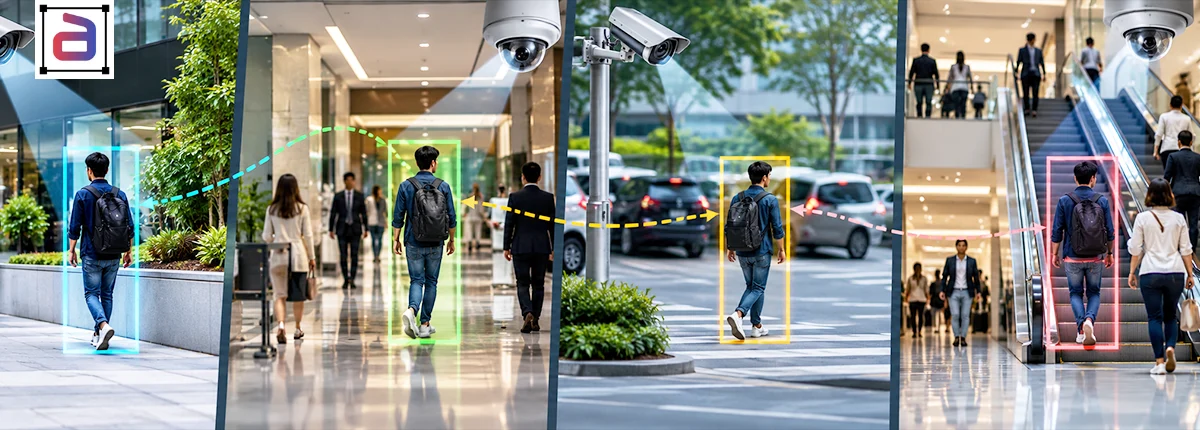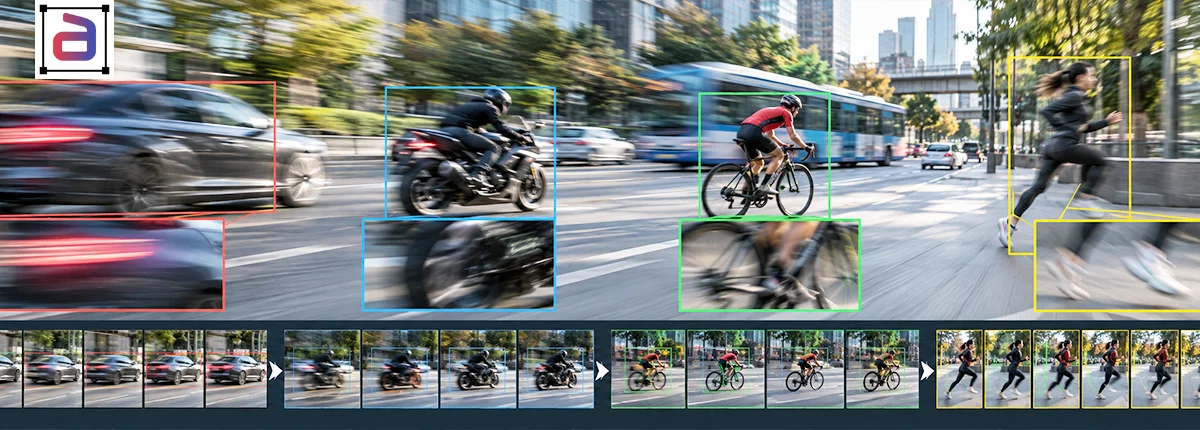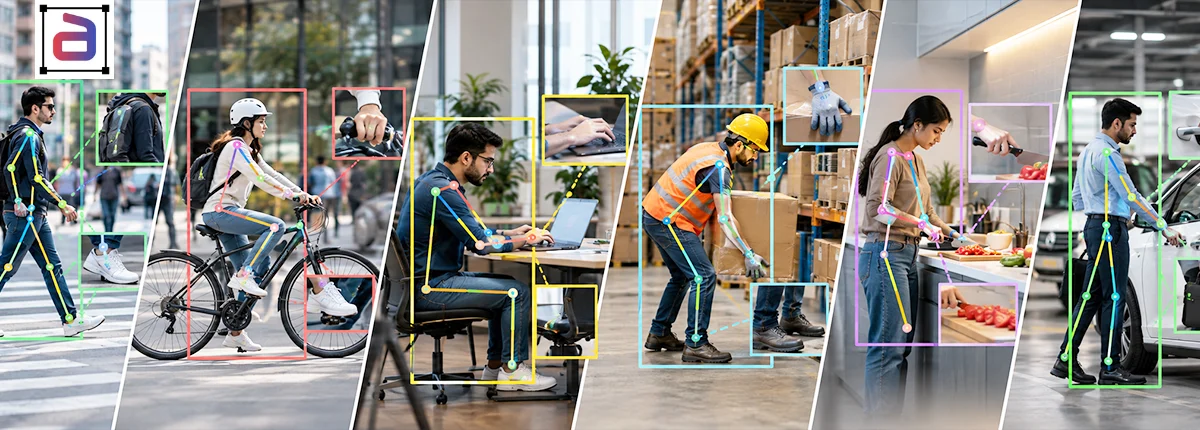
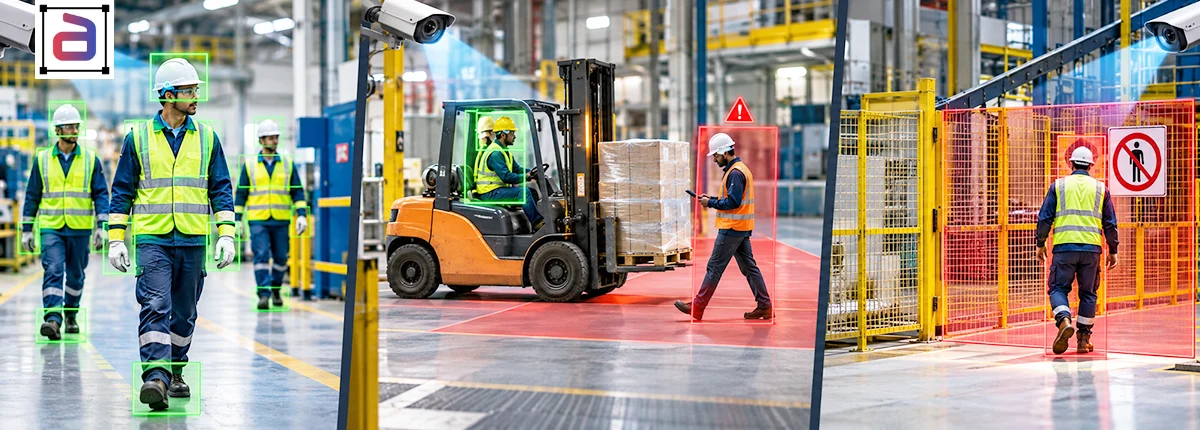
Workplace safety is no longer just about responding to accidents after they happen. Across manufacturing facilities, construction sites, warehouses, and logistics operations, organizations are increasingly adopting artificial intelligence (AI) to identify hazards, monitor unsafe activities, and prevent incidents before they escalate. Yet, even the most sophisticated computer vision system is only as effective as the data used to train it. AI models must learn to recognize missing personal protective equipment (PPE), detect unauthorized entry into restricted zones, and identify dangerous interactions between workers and moving machinery. This requires accurately labeled, context-rich video datasets. Video annotation is the foundation of workplace safety AI. By labeling workers, safety equipment, movement patterns, hazardous zones, and near-miss events, businesses can train AI models to interpret workplace environments more effectively. At Annotera, we help AI teams prepare high-quality training datasets that support intelligent video analytics and computer vision applications. With structured annotation workflows and quality-focused processes, organizations can develop more reliable safety-monitoring systems and move toward proactive risk management.
Key Points
- PPE Compliance Detection: Video annotation helps train AI models to identify missing helmets, safety vests, goggles, and other protective equipment.
- Restricted-Zone Monitoring: Annotated video data enables AI systems to detect unauthorized entry into hazardous areas and monitor safety boundary violations.
- Near-Miss Detection with Multi-Object Tracking: Tracking workers and moving equipment across video frames helps AI identify unsafe proximity, hazardous interactions, and potential collision risks.
- High-Quality Training Data with Annotera: Annotera provides video annotation outsourcing services to support reliable workplace safety AI, improve dataset consistency, and strengthen proactive hazard detection.
1. Why Video Annotation Matters for Workplace Safety AI
Traditional safety monitoring often depends on manual inspections, periodic audits, and human observation of surveillance footage. While these approaches remain important, they can struggle to cover multiple locations and continuous video streams efficiently. AI-powered video analytics can help identify potential safety violations, but models need labeled examples of both safe and unsafe behavior to learn meaningful patterns. Video annotation transforms raw footage into structured training data by identifying objects, actions, locations, and events across individual frames and video sequences. For example, an annotated video might identify a worker without a helmet, mark a hazardous machine zone, or track a forklift approaching a pedestrian. These labels help AI models distinguish ordinary workplace activity from situations that require further attention. As the saying goes, “Prevention is better than cure.” In industrial environments, this principle translates into identifying warning signs early, supporting timely intervention, and reducing reliance on reactive safety measures.
2. PPE Compliance Detection Through Accurate Video Annotation
Personal protective equipment plays a critical role in reducing occupational risks. Depending on the workplace, employees may be required to wear helmets, reflective vests, gloves, safety goggles, protective footwear, or hearing protection. Computer vision models can analyze surveillance footage to identify whether required PPE is visibly present. However, their performance depends on training datasets that represent different workers, camera angles, lighting conditions, and equipment configurations. Video annotation supports PPE detection through several techniques:
- Object detection: Labeling helmets, safety vests, goggles, gloves, and other visible protective equipment using bounding boxes.
- Worker identification: Associating detected PPE with the correct individual in crowded workspaces.
- Compliance classification: Categorizing observable conditions, such as helmet detected or safety vest missing.
- Occlusion handling: Annotating partially obscured workers and equipment according to consistent visibility guidelines.
For example, an AI model trained on diverse, carefully labeled footage may learn to flag a worker entering a production area without a required helmet. However, PPE requirements differ by task and location. Annotation guidelines should reflect site-specific safety policies, and AI-generated alerts should be reviewed when visual evidence is uncertain. Annotera helps organizations develop structured video datasets that support PPE compliance detection across complex operational environments.
3. Restricted-Zone Monitoring and Unauthorized Entry Detection
Industrial facilities often contain restricted areas around robotic work cells, heavy machinery, forklift routes, chemical storage areas, and electrical installations. Unauthorized entry can expose employees to significant hazards. AI-powered video monitoring can help detect when a person crosses a designated boundary or enters a prohibited area. To train these systems effectively, datasets must capture both the spatial layout of the environment and the movement of people within it. Key annotation tasks include:
- Restricted-zone mapping: Labeling hazardous areas, safety perimeters, and designated pedestrian pathways.
- Person detection: Identifying workers approaching or entering restricted locations.
- Boundary-crossing annotation: Marking when an individual crosses a defined zone boundary.
- Movement analysis: Labeling trajectories and the duration of presence within hazardous areas.
Consider an automated manufacturing facility where employees must remain outside a robotic arm’s operating zone while equipment is active. Annotated video sequences can help train models to recognize entry into that zone and distinguish it from normal movement nearby. Accurate annotations should account for camera perspective, changing visibility, and differences between authorized and unauthorized access. With Annotera’s video annotation outsourcing services, organizations can prepare consistent datasets that help computer vision teams build more context-aware restricted-zone monitoring solutions.
4. Near-Miss Detection: Understanding Risk Before an Accident
Near-miss incidents provide valuable information about workplace hazards. A forklift passing dangerously close to a pedestrian, a worker stepping into the path of moving machinery, or two vehicles approaching an unsafe distance may indicate a risk even when no collision occurs. Detecting these situations requires AI models to understand how multiple objects move and interact over time. This is where multi-object tracking becomes essential. It allows computer vision systems to maintain object identities across consecutive video frames, enabling analysis of movement trajectories, relative distances, and potentially hazardous interactions. Video annotation for near-miss detection can include:
- Tracking workers, forklifts, vehicles, and machinery across video sequences.
- Labeling unsafe proximity and potentially dangerous crossing patterns.
- Identifying sudden stops, unexpected direction changes, and abrupt evasive movements.
- Marking the beginning, duration, and end of near-miss events.
- Including routine interactions and non-hazardous examples to reduce false positives.
For instance, an AI model may learn to identify a pedestrian entering a forklift’s projected path by analyzing their respective trajectories and movements. However, proximity alone does not always indicate danger. High-quality annotations should capture relevant context, while model validation should account for speed, distance, visibility, and the operational environment. As the safety principle emphasizes, “An ounce of prevention is worth a pound of cure.” Near-miss analytics can help organizations investigate recurring hazards and improve safety procedures before similar situations result in injuries.
5. Key Challenges in Workplace Safety Video Annotation
Developing reliable safety AI requires more than labeling visible objects. Annotation teams must address several challenges:
- Complex visual environments: Shadows, low light, dust, reflections, and crowded workspaces can make workers and PPE difficult to identify.
- Temporal consistency: Worker identities and object tracks must remain consistent across frames to support dependable multi-object tracking.
- Rare hazardous events: Serious near-misses may occur infrequently, making representative examples and realistic negative samples important for model training.
- Ambiguous safety conditions: Some events require contextual interpretation. Clear annotation guidelines and escalation procedures help prevent inconsistent labels.
- Quality assurance and privacy: Reviewer checks, standardized taxonomies, access controls, and appropriate data-retention policies help maintain dataset quality while protecting workplace footage.
Addressing these challenges early helps AI teams build datasets that better reflect real operational conditions.
6. How Annotera Supports Workplace Safety AI
Building effective workplace safety AI requires a reliable data annotation partner that understands the importance of consistency, context, and scalability. As a video annotation company, Annotera supports computer vision projects that require structured labeling of people, objects, activities, and interactions across video footage. Our annotation workflows can support:
- PPE detection and compliance classification.
- Restricted-zone entry and boundary-crossing analysis.
- Worker and equipment tracking using multi-object tracking workflows.
- Near-miss event identification and temporal labeling.
- Quality-focused dataset preparation for industrial video analytics.
Through video annotation outsourcing services, organizations can scale dataset preparation while allowing internal teams to concentrate on model development, testing, and deployment. Annotera’s focus on structured annotation and quality control helps AI developers prepare training data aligned with their project requirements. The objective is to establish a stronger foundation for computer vision systems that support workplace awareness and proactive risk management.
Conclusion: Build Safer Workplaces with Better Training Data
Workplace safety AI is advancing beyond basic object recognition toward a deeper understanding of worker behavior, restricted areas, and potentially hazardous interactions. Accurate video annotation makes this possible by helping models learn from diverse, carefully labeled examples. From PPE compliance and unauthorized entry detection to near-miss analysis powered by multi-object tracking, high-quality training datasets are essential to developing reliable computer vision solutions. Ready to strengthen your workplace safety AI initiative? Partner with Annotera for video annotation outsourcing services tailored to your computer vision and industrial safety requirements. Our team can help you prepare structured, quality-focused datasets for PPE detection, restricted-zone monitoring, and near-miss analysis. Contact Annotera today to discuss your video annotation requirements and build a stronger data foundation for safer, smarter workplaces.
A closely related read: How Video Annotation Supports Workplace Safety AI and PPE Compliance Detection.