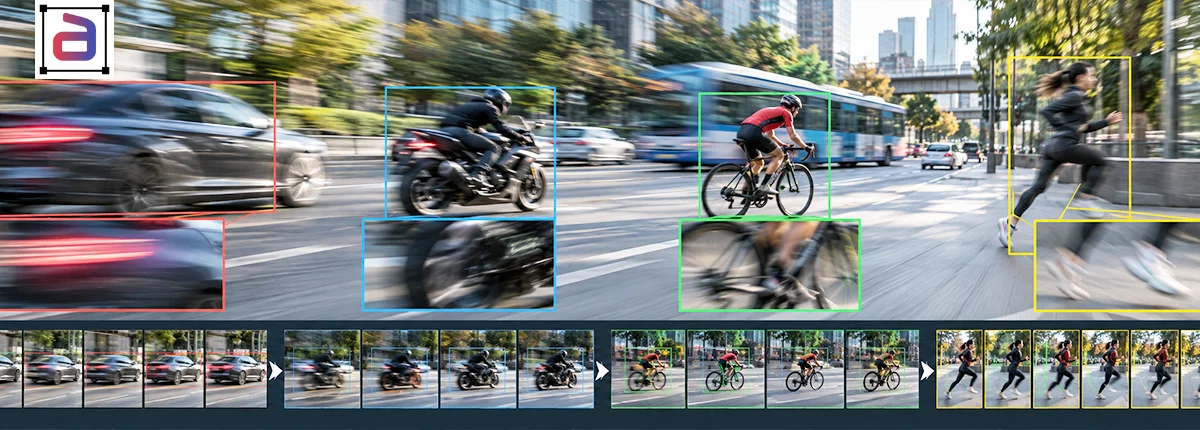
A vehicle accelerates through an intersection. A robotic arm rapidly picks up an object. An athlete changes direction in a fraction of a second. In each scenario, motion blur can obscure the visual details that computer vision models need to understand the scene accurately. For AI developers, this creates a critical data challenge. Blurred edges, distorted object shapes, and inconsistent visibility can make it difficult to identify objects, maintain tracking identities, and interpret movement across consecutive frames. Even a small annotation error can introduce misleading information into a training dataset. High-quality video annotation must capture not only what an object looks like, but also how it moves when visual evidence becomes imperfect. For organizations building autonomous driving systems, robotics applications, intelligent surveillance, and real-time analytics, addressing motion blur is essential to preparing reliable training data. Annotera helps AI teams approach these challenges through structured video annotation workflows designed around accuracy, consistency, and project-specific requirements.
Key Points
- Establish Clear Annotation Guidelines: Define consistent rules for labeling blurred objects, placing bounding boxes, and handling uncertain visual details to improve annotation accuracy.
- Leverage Temporal Context: Analyze consecutive video frames to maintain object identities, improve tracking continuity, and understand high-speed movements.
- Strengthen Quality Assurance: Combine blur-specific quality checks, human validation, and AI-assisted annotation to minimize labeling errors and maintain dataset consistency.
- Build Robust Computer Vision Datasets: Use strategic frame sampling and representative real-world footage to improve model reliability across challenging visual conditions, with Annotera’s video annotation expertise supporting scalable AI development.
What Is Motion Blur, and Why Does It Matter?
Motion blur occurs when an object or camera moves during image exposure, causing visual details to appear stretched, smeared, or indistinct. Fast-moving objects, camera shake, longer exposure times, and insufficient lighting can all contribute to the problem. In computer vision datasets, motion blur affects several annotation tasks:
- Object detection: Blurred edges make accurate bounding box placement more difficult.
- Object tracking: Temporary visual distortions can cause identity switches or broken tracking sequences.
- Image and video segmentation: Unclear contours complicate pixel-level boundary labeling.
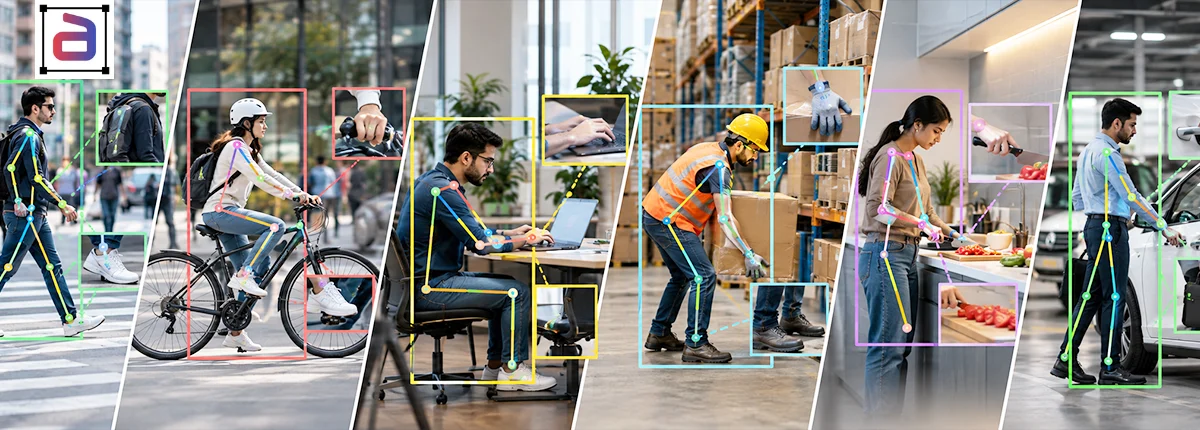
- Human pose estimation: Rapid movement can obscure joints and body landmarks.
- Action recognition: Incomplete visual cues can make movement classification less reliable.
Consider a high-speed vehicle that appears clearly in one frame but becomes heavily blurred in the next. If annotators change its bounding box inconsistently or assign a new tracking ID without justification, the model may learn an inaccurate representation of its movement. As a practical principle, “Annotation quality is not just about labeling what is visible; it is about preserving what the visual evidence can reliably support.” This principle should guide every motion-blur annotation workflow.
7 Strategies for Handling Motion Blur in Video Annotation
1. Establish Clear Rules for Blurred Objects
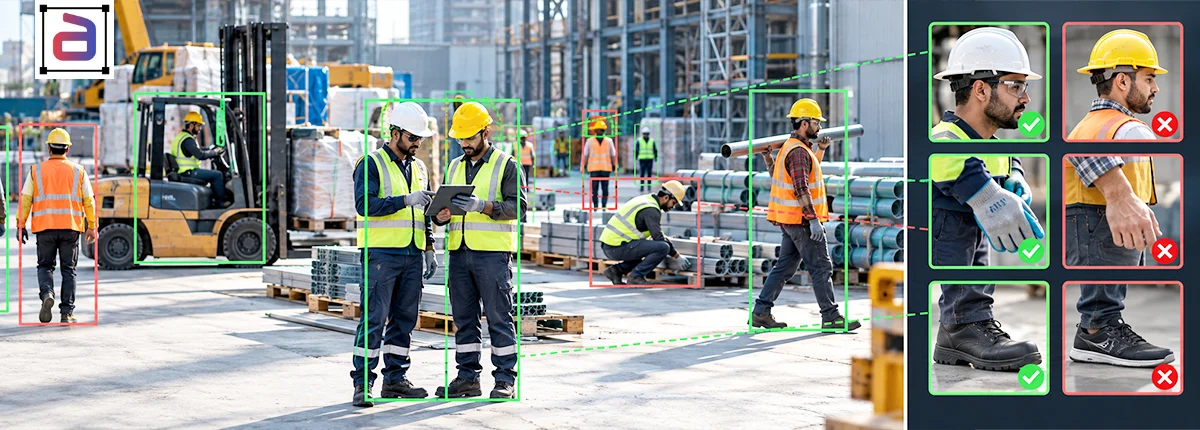
Consistency begins with well-defined annotation guidelines. Before a project starts, teams should determine how to label objects with unclear boundaries, partial visibility, and varying degrees of blur. For example, should a bounding box represent the estimated full extent of an object or only its visibly supported region? The answer depends on the target model and annotation specification. What matters is applying the chosen rule consistently. Guidelines should also define when annotators can assign a class label, how to handle uncertain identities, and when an object should be marked as partially visible or difficult to classify. Where appropriate, introduce attributes such as motion-blurred, low visibility, or uncertain annotation. These labels help downstream teams distinguish reliable ground truth from inherently ambiguous examples. Annotators should never invent precise boundaries or classifications when the footage does not provide sufficient evidence.
2. Use Temporal Context to Maintain Tracking Accuracy
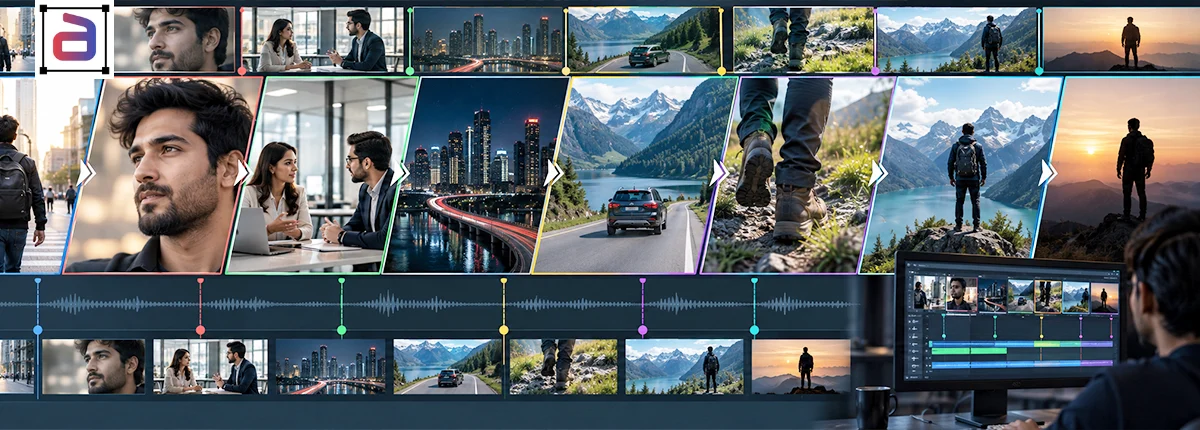
A blurred frame may provide limited information, but neighboring frames can reveal an object’s identity, direction, and trajectory. Reviewing consecutive frames helps annotators determine whether a vehicle has changed lanes, whether a pedestrian is continuing along the same path, or whether a moving object has temporarily disappeared behind an obstacle. This approach is particularly important for multi-object tracking datasets, where maintaining a consistent identity across frames is essential. Annotators should preserve track IDs when continuity is supported by the available evidence and carefully review re-identification after temporary occlusion. They should also avoid blindly copying labels from adjacent frames, as objects can change direction, overlap, or leave the scene. Temporal review transforms video annotation from isolated frame labeling into a process that captures meaningful motion.
3. Select the Appropriate Annotation Technique
Different computer vision applications require different levels of spatial precision. Bounding box annotation is suitable for object detection and tracking, provided teams apply consistent box-placement rules to blurred objects. Polygon annotation and segmentation masks are valuable when accurate object boundaries matter. However, when motion blur makes a contour indeterminate, annotators should follow a predefined uncertainty policy instead of drawing unsupported boundaries. Keypoint annotation supports human pose estimation and movement analysis. Only sufficiently supported landmarks should receive precise coordinates. Trajectory and track ID annotation captures object movement across frames and helps models learn temporal relationships. For demanding applications, combining these annotation methods can provide a more comprehensive representation of objects, movement, and scene dynamics.
4. Apply Strategic Frame Sampling
Annotating every frame may be necessary for certain applications, but it can increase project costs and review time. Conversely, sampling frames too sparsely can miss critical movements and transitions. A more effective approach combines regular frame sampling with targeted annotation of challenging sequences. Prioritize frames around sudden acceleration, rapid turns, collisions, abrupt camera movement, and transitions between clear and blurred appearances. Increase sampling density when objects move unpredictably or when small positional errors could affect downstream performance. Keyframe interpolation can accelerate annotation when motion is predictable. However, interpolated boxes or masks must be reviewed because fast movement, occlusion, and changes in direction can cause annotation drift. The objective is to balance annotation efficiency with the temporal resolution required by the intended AI application.
5. Introduce Motion-Blur-Specific Quality Assurance
Traditional quality checks may identify missing labels or incorrect classes without detecting subtle errors caused by motion blur. A dedicated quality assurance process should examine:
- Bounding box and segmentation boundary consistency.
- Tracking identity continuity across consecutive frames.
- Class-label accuracy when object appearance changes.
- Temporal alignment between annotations and video events.
- Appropriate handling of ambiguous or partially visible objects.
Reviewers should inspect complete sequences rather than evaluating difficult frames independently. Disagreements should be documented, resolved using the annotation guidelines, and incorporated into future annotator training. For large datasets, a structured escalation process can route complex cases to experienced reviewers. This helps identify recurring errors before they affect thousands of annotations.
6. Combine Human Expertise With AI-Assisted Annotation
Automated detection and tracking tools can generate initial labels, propagate bounding boxes, and reduce repetitive work. Yet the same motion blur that challenges human annotators can also cause automated systems to miss objects, misplace boundaries, or confuse tracking identities. A human-in-the-loop workflow combines machine-assisted efficiency with human judgment. AI-generated annotations should be treated as preliminary predictions rather than automatically accepted as ground truth. Annotators can correct errors, review uncertain frames, and validate tracking continuity before the dataset is approved. For complex or safety-critical applications, additional independent quality checks may be necessary to meet the required precision standards.
7. Build Datasets That Reflect Real-World Conditions
Models trained primarily on clear, well-lit footage may struggle when deployed in challenging environments. Training datasets should reflect the motion conditions expected in production, including fast-moving vehicles, nighttime surveillance, rainy roads, sports footage, and industrial automation. Where useful, teams can document blur severity, lighting conditions, visibility, and annotation confidence. These attributes support dataset analysis and help ML engineers investigate performance differences across operating conditions. The goal is not to eliminate every difficult frame. It is to prepare representative datasets that teach models how to operate under realistic visual constraints.
How Annotera Supports High-Quality Video Annotation
Handling motion blur at scale requires more than annotation tools. It requires clearly documented standards, trained annotators, temporal consistency, and measurable quality controls. Annotera supports AI teams with video annotation workflows tailored to computer vision requirements, including object detection, tracking, segmentation, and motion-related labeling. For organizations managing large or complex datasets, video annotation outsourcing services can provide access to specialized annotation expertise and scalable review workflows while allowing internal teams to focus on model development. A well-planned video annotation outsourcing strategy should prioritize:
- Clear, application-specific annotation guidelines.
- Consistent object identities across video sequences.
- Human validation of AI-assisted labels.
- Quality checks for spatial accuracy and temporal continuity.
- Transparent communication, data security, and project-specific quality benchmarks.
By aligning annotation workflows with the intended model and deployment environment, Annotera helps organizations build a stronger foundation for computer vision development.
Conclusion: Turn Difficult Frames Into Valuable Training Data
Motion blur is a natural challenge in high-speed computer vision, but inconsistent annotation does not have to become an additional source of model error. Clear guidelines, temporal analysis, appropriate annotation techniques, strategic frame sampling, and specialized quality assurance can improve the reliability of blurred-video datasets. Combining human expertise with validated automation further supports scalable annotation without sacrificing essential quality controls. Ultimately, the objective is not to make every frame look perfect. It is to produce consistent, evidence-based labels that help AI models learn from real-world visual complexity. Ready to strengthen your computer vision training datasets? Partner with Annotera for video annotation solutions tailored to your data requirements, project scale, and quality expectations. Connect with our team to discuss your video annotation needs and build a more reliable foundation for your next AI initiative.
A closely related read: Video Annotation vs Image Annotation: Key Differences and Why Motion Matters.