Workplace safety is moving beyond checklists, periodic inspections, and reactive incident reporting. As industrial environments become increasingly connected, AI-powered video analytics is helping organizations identify safety risks, monitor compliance, and create safer working conditions in real time. One of the most practical applications is PPE compliance detection. Computer vision models can analyze video streams to identify workers, recognize protective equipment, and flag situations where required PPE appears to be missing or incorrectly used. But there is a critical component behind every reliable workplace safety AI system: high-quality annotated video data. AI does not automatically understand what constitutes a hard hat, safety vest, safety harness, or unsafe behavior. It learns these visual patterns from carefully labeled training examples. This makes video annotation outsourcing services an important part of developing accurate and scalable workplace safety solutions.
“Safety is not a gadget but a state of mind.” — Eleanor Everet
In an AI-enabled workplace, that state of mind can increasingly be supported by intelligent systems trained to recognize safety-critical situations.
Key Points
- Video Annotation Enables PPE Detection – High-quality annotated video helps AI models accurately identify helmets, safety vests, gloves, goggles, harnesses, and other protective equipment.
- Real-World Data Improves AI Accuracy – Diverse datasets covering different lighting, camera angles, occlusions, environments, and worker movements help safety AI perform reliably in real workplace conditions.
- AI Goes Beyond PPE Compliance – Annotated video can support restricted-zone monitoring, worker-vehicle interaction detection, unsafe proximity analysis, fall detection, and broader workplace safety intelligence.
- Outsourcing Scales Safety AI Development – Video annotation outsourcing services enable organizations to access scalable annotation expertise, quality assurance, and AI-ready datasets without building large internal labeling teams.
Why PPE Compliance Is a Critical AI Use Case
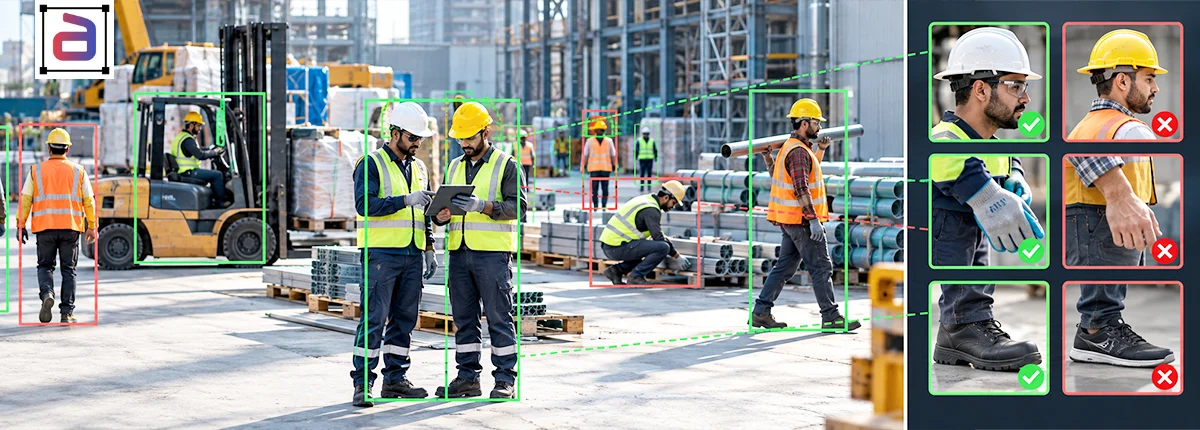
Personal protective equipment is an essential component of many workplace safety programs. Depending on the working environment, employees may need helmets, gloves, safety glasses, high-visibility clothing, protective footwear, respirators, hearing protection, or fall-protection equipment. Yet PPE compliance can be difficult to monitor continuously. A large manufacturing facility may contain hundreds of workers, multiple production areas, changing shifts, moving machinery, and dozens of cameras. Supervisors cannot realistically observe every video feed continuously. This is where computer vision can complement human safety teams. A trained AI model can analyze video footage and identify visual patterns such as:
- Workers without required helmets
- Missing high-visibility safety vests
- Improper use of protective equipment
- Workers entering designated PPE zones without protection
- Missing safety glasses or face protection
- Workers entering restricted areas
- Unsafe proximity to machinery or vehicles
- Potentially hazardous workplace activities
The quality of these detections, however, depends on the quality of the training data.
How Video Annotation Trains Workplace Safety AI
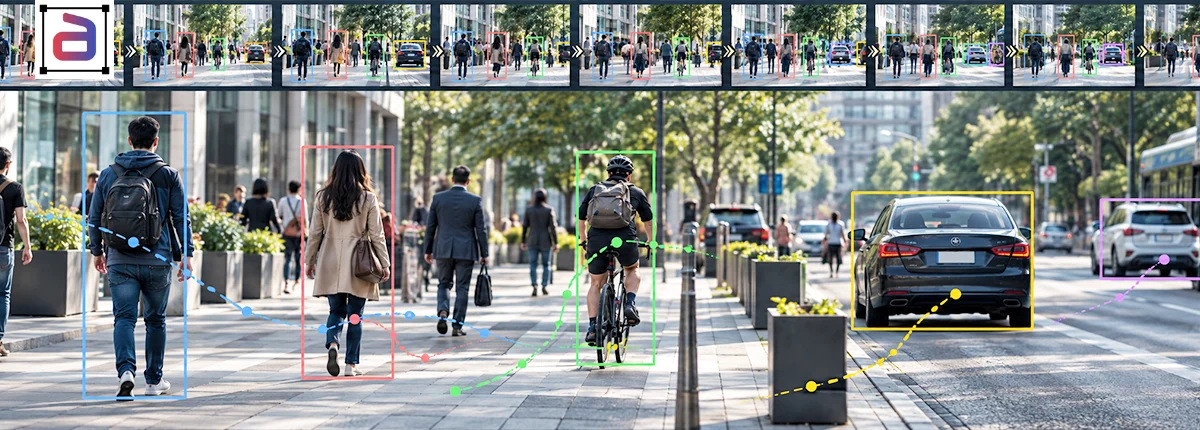
Video annotation converts raw footage into structured information that machine learning models can learn from. For PPE compliance detection, annotators may identify workers and draw precise labels around helmets, vests, gloves, goggles, masks, harnesses, and other protective equipment. But effective annotation goes beyond simply drawing boxes. The dataset may need to capture relationships between workers and their PPE, changes across frames, different camera perspectives, partial occlusions, and compliance or non-compliance scenarios. For example, an annotated sequence could teach an AI model to distinguish between:
- Compliant: Worker wearing a helmet and high-visibility vest.
- Non-compliant: Worker entering a designated zone without a helmet.
- Partial compliance: Worker wearing a helmet but missing another required PPE item.
These examples provide the visual foundation required for PPE detection models.
Video Annotation Must Reflect Real Workplace Conditions
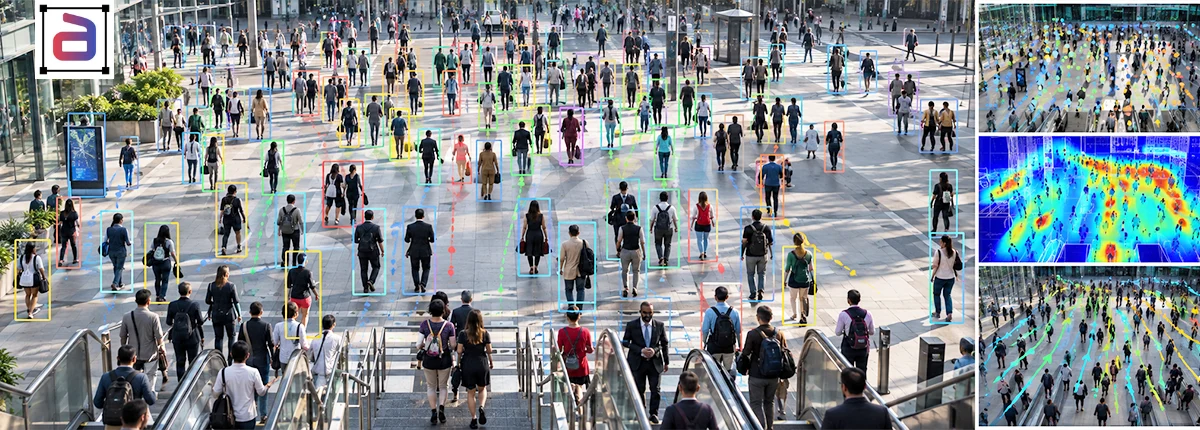
One of the biggest challenges in workplace safety AI is that real-world environments are unpredictable. Workers may move behind equipment. Multiple people may overlap. Protective equipment can appear different depending on distance and camera angle. Lighting can change throughout the day. Dust, reflections, shadows, motion blur, and low-resolution footage can further complicate detection. A training dataset built only from clear, front-facing footage may therefore perform poorly in real deployments. This is why Annotera emphasizes diverse and representative video annotation. Training datasets can incorporate scenarios involving:
- Different lighting conditions
- Indoor and outdoor environments
- Multiple camera viewpoints
- Crowded workspaces
- Partial occlusion
- Workers at different distances
- Different PPE colors and designs
- Motion blur
- Complex industrial backgrounds
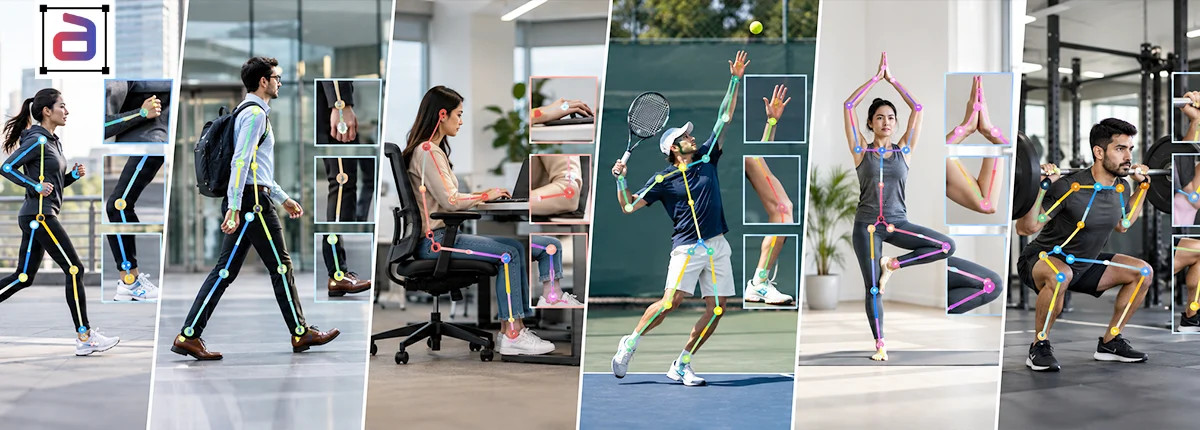
- Different worker postures and movements
The objective is simple: teach AI to perform in the real world, not merely in controlled examples.
From PPE Detection to Complete Workplace Safety Intelligence
PPE compliance is only one part of the opportunity. Once appropriately annotated datasets are available, computer vision systems can be developed for broader workplace safety applications. For example, AI models can potentially identify:
Restricted-Zone Violations
Workers entering hazardous or restricted areas can be detected based on predefined visual zones.
Worker-Vehicle Interactions
In warehouses and logistics environments, computer vision can analyze interactions between workers, forklifts, autonomous mobile robots, and other vehicles.
Unsafe Proximity
Models can be trained to identify potentially dangerous distances between workers and machinery.
Fall and Incident Detection
Annotated video sequences can support models designed to identify falls, abnormal movements, or other safety-related events.
Unsafe Behaviors
Organizations can create datasets for specific safety behaviors relevant to their operational environment. This transforms video analytics from a simple PPE checker into a broader workplace safety intelligence system.
Why Annotation Quality Directly Impacts AI Performance
A safety AI model is only as reliable as the data used to train and evaluate it. Inconsistent labeling can introduce noise into a dataset. Missing edge cases can create blind spots. Incorrect object boundaries can affect detection accuracy. Poor temporal annotation can make it difficult for models to understand events unfolding across multiple frames. For this reason, professional annotation workflows should incorporate:
- Detailed annotation guidelines
- Consistent labeling taxonomies
- Multi-level quality assurance
- Reviewer validation
- Edge-case identification
- Dataset balancing
- Temporal consistency checks
- Accuracy sampling
- Continuous feedback loops
At Annotera, these principles form an important part of our approach to building AI-ready visual datasets.
Why Video Annotation Outsourcing Makes Sense
Building a large-scale internal annotation team can be expensive and operationally complex. Organizations may need to recruit and train annotators, implement annotation platforms, establish quality-control processes, and manage fluctuating project volumes. Video annotation outsourcing offers a scalable alternative. By working with an experienced annotation partner, organizations can access trained annotation resources without having to build the entire labeling infrastructure internally. This can be particularly valuable for AI companies, industrial technology providers, safety solution developers, and enterprises developing computer vision applications across multiple facilities. Outsourcing also allows internal AI teams to concentrate on model architecture, engineering, deployment, and performance optimization while specialized teams handle data preparation.
How Annotera Supports Workplace Safety AI
At Annotera, we understand that workplace safety datasets require more than high-volume labeling. They require contextual understanding, consistent annotation, rigorous quality control, and the ability to represent challenging real-world conditions. Our video annotation capabilities can support datasets for:
- PPE detection
- Worker detection and tracking
- Safety-gear classification
- Restricted-zone monitoring
- Industrial object detection
- Worker-vehicle interaction analysis
- Safety-event recognition
- Action and activity recognition
- Computer vision model training and evaluation
By combining scalable annotation workflows with structured quality assurance, Annotera helps businesses convert raw video into valuable training data for next-generation safety AI.
The Future of AI-Powered Workplace Safety
Workplace safety technology is evolving from periodic observation toward continuous, data-driven intelligence. The goal is not to replace safety professionals. Instead, AI can help them identify patterns, prioritize potential risks, and respond more efficiently to safety issues. As computer vision systems become more sophisticated, the demand for high-quality, diverse, and accurately annotated video datasets will continue to grow. Organizations that invest in the data foundation today can be better positioned to build safety AI systems that perform reliably in complex operational environments.
“The goal of a safety program is not to eliminate all risk, but to manage risk intelligently.”
That is where quality data makes a difference.
Build Better Workplace Safety AI With Annotera
Whether you are developing a PPE compliance model, building industrial computer vision solutions, or scaling an existing workplace safety platform, the right training data can significantly influence AI performance. Annotera provides scalable video annotation outsourcing services designed to transform complex video data into structured, AI-ready datasets. From PPE detection to workplace activity recognition, our annotation expertise can help your AI systems learn from the visual complexity of real-world environments. Ready to turn your workplace video data into high-quality training data? Connect with Annotera today and build the data foundation for smarter, safer AI.