
Intent Classification for Banking: Reducing Transaction Friction

Banking intent detection is fundamentally different from intent detection in retail or tech because the stakes are higher and the regulatory constraints are embedded in the problem. A model trained on generic chatbot conversations will not capture the nuance of banking language or the regulatory requirements that shape routing decisions. Teams building fintech intent systems […]
Why Text Categorization Is the Backbone of RAG Systems

Retrieval-Augmented Generation systems depend on more than a powerful language model. Their accuracy hinges on what the model retrieves before it generates. If the retrieval layer pulls in weakly related or misclassified content, the model hallucinates confidently — and the user has no way to tell the difference. Text categorization is what prevents that failure. […]
Reducing Manual Workloads with Automated Text Tagging

Operations teams manage an ever-growing volume of documents, tickets, emails, and reports. As workloads increase, manual tagging and routing quickly become bottlenecks that slow execution and introduce inconsistency. In this context, text classification automation enables organizations to categorize content automatically, reducing manual effort and improving speed and accuracy. For operations directors, automated text tagging is […]
Text Categorization for News and Media Platforms

News and media organizations publish content at a relentless pace across topics, formats, and channels. As volumes increase, accurately and quickly organizing articles becomes critical for discovery, monetization, and editorial control. In this context, news classification services enable media platforms to categorize content in real time, ensuring stories reach the right audiences while eliminating manual […]
Hierarchical Text Classification: Organizing Complex Data
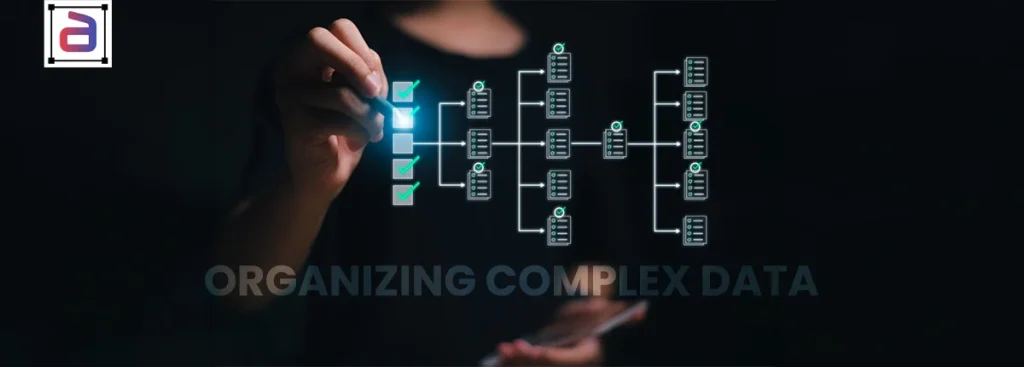
As enterprise datasets grow in size and complexity, flat category structures struggle to reflect how information is actually organized and consumed. Documents often belong to multiple layers of meaning, from broad domains to highly specific subtopics. In this context, text categorization techniques that support hierarchical classification enable organizations to structure complex data using multi-level taxonomies. […]
Training AI to Understand Context with Semantic Metadata

Artificial intelligence systems often process language accurately at a surface level but struggle to grasp deeper context, intent, and relationships. Understanding why information matters, not just what it says, is essential for advanced reasoning and decision-making. In this context, semantic annotation for AI provides the metadata layer that teaches models — and when applied to […]
Semantic Annotation for Healthcare: Linking Patient Records

Healthcare data is fragmented across electronic health records, lab systems, imaging platforms, and clinical notes. Connecting these sources into a unified patient view is essential for analytics, care coordination, and research. In this context, therefore, medical semantic annotation enables healthcare organizations to link patient records by systematically tagging clinical entities.. The polygon annotation complement for […]
Building Knowledge Graphs with Semantic Labeling

Knowledge graphs rely on explicit meaning and relationships to connect data across entities, concepts, and domains. Unlike flat data models, they require structured semantics to support reasoning, inference, and complex queries. In this context, semantic tagging in NLP provides the foundational layer that enables text data to be transformed into interconnected knowledge. For teams applying […]
Semantic Labeling Techniques for Search Relevance: Beyond Keyword Matching

Search relevance is no longer defined by keyword matches. Users expect search systems to understand the intent and meaning behind their queries, not just scan for matching words. Semantic labeling techniques are the annotation work that makes that possible: they enrich content with structured meaning that retrieval systems can reason over rather than simply index. […]
Beyond Keywords: The Power of Semantic Annotation

Search and discovery systems have traditionally relied on keywords to retrieve information. However, keywords alone fail to capture intent, relationships, and contextual meaning within text. As organizations build more intelligent search engines and data-driven products, semantic annotation services enable the transformation of raw text into structured, machine-readable data — and the direct application of that […]