
A multilingual AI model can speak dozens of languages and still fail to understand the people who use them. Why? Because language is more than vocabulary and grammar. It carries culture, social norms, humor, emotion, regional expressions, traditions, and context. A response that sounds perfectly acceptable in one linguistic environment can feel unnatural, insensitive, or even inappropriate in another. As enterprises expand AI products across global markets, cultural awareness is becoming an important dimension of multilingual LLM quality.
Native-language annotation provides the human insight needed to teach models not just how people speak, but how meaning changes across communities. As a 2026 survey of multilingual LLM research notes, models can struggle with “cultural commonsense”—the implicit knowledge shaped by social norms, traditions, and shared experiences. For organizations developing globally capable AI, this makes high-quality LLM & GenAI annotation services an important part of building reliable multilingual training and evaluation pipelines.
Key Points
- Native-language annotation adds cultural context that translation alone cannot capture, including idioms, tone, regional expressions, and social norms.
- Native-speaker feedback improves LLM training by providing high-quality preference, correction, and evaluation signals for multilingual models.
- Culturally aware annotation strengthens AI safety by helping identify language-specific slang, sensitive expressions, bias, and context-dependent risks.
- Annotera enables scalable multilingual AI development through LLM & GenAI annotation services, human preference datasets, and RLHF & fine-tuning data workflows.
Why Multilingual AI Needs Cultural Context
Imagine an LLM answering the same customer question in English, Hindi, Japanese, Arabic, and Spanish. A literal translation may preserve the words while losing the intended meaning. The problem can appear in subtle ways:
- A formal expression may be translated into language that sounds overly casual.
- An idiom may be interpreted literally.
- A culturally specific joke may lose its meaning.
- A response may use the wrong level of politeness.
- A regional expression may be technically correct but unfamiliar to local users.
- A safety classifier may misunderstand slang or context-specific language.
Research published by ACL also indicates that multilingual LLM performance can vary depending on whether language and cultural context are aligned, reinforcing the distinction between simply processing a language and understanding its cultural context. This is why multilingual model development cannot rely exclusively on translated datasets.
What Is Native-Language Annotation?
Native-language annotation involves qualified native speakers or highly proficient linguistic experts reviewing and labeling AI data according to defined linguistic, contextual, cultural, and quality criteria. Depending on the use case, annotation can cover:
- Intent classification
- Sentiment and emotion
- Named entities
- Toxicity and safety
- Response quality
- Cultural appropriateness
- Formality and politeness
- Translation evaluation
- Instruction-response pairs
- Preference ranking
- Idioms and colloquial expressions
- Regional terminology
- AI-generated response correction
The goal is straightforward: give the model better human-generated signals about how language is actually understood and used.
Native Speakers Bring What Translation Cannot
Translation converts language. Native annotation captures context. Consider an AI-powered customer-support assistant. A translated response may be grammatically flawless but still fail to match the expected tone of a particular audience. Native annotators can recognize distinctions between respectful and overly formal language, friendly and inappropriate phrasing, or natural and unnatural expressions. They can also identify cultural references, ambiguous wording, regional vocabulary, and context-dependent meanings that automated systems may overlook.
“Translation can transfer words; native-language annotation helps transfer intent, context, and human expectations.”
That distinction becomes particularly important for enterprise applications where AI outputs directly influence customer interactions.
Turning Native Feedback Into Training Signals
Native-language annotation becomes especially valuable during supervised fine-tuning and human-preference workflows. Suppose an AI team generates five responses to the same prompt. Native-language annotators can evaluate those responses based on:
- Linguistic accuracy
- Relevance to the prompt
- Cultural appropriateness
- Naturalness
- Tone and politeness
- Safety
- Overall user preference
Annotators can correct problematic responses and rank stronger alternatives. The resulting datasets can become valuable RLHF & fine-tuning data, helping models learn which outputs are preferred by users within specific linguistic and cultural contexts. Instead of asking only, “Is this answer grammatically correct?”, teams can ask a more meaningful question: “Would a native speaker consider this response accurate, natural, respectful, and appropriate in context?” That shift can substantially improve the usefulness of multilingual AI evaluation.
Building Multilingual Annotation Workflows That Scale
Scaling native-language annotation requires more than hiring speakers of different languages. Organizations need structured guidelines, quality controls, and consistent evaluation criteria. A robust workflow can include: Data Collection → Language Verification → Native Annotation → Quality Review → Adjudication → Dataset Validation → Model Training → Evaluation Annotators should receive language-specific instructions covering cultural nuances, terminology, edge cases, safety considerations, and escalation procedures. Multiple annotators can also review selected samples to measure agreement and identify ambiguous cases. Senior reviewers or linguists can then adjudicate disagreements. This matters because annotation itself can introduce bias. Recent research on multilingual LLM annotation bias highlights issues involving annotator subjectivity, task framing, and cultural mismatches. Therefore, diverse annotator recruitment and continuous guideline refinement should be treated as quality-engineering activities—not administrative details.
Cultural Awareness Also Strengthens AI Safety
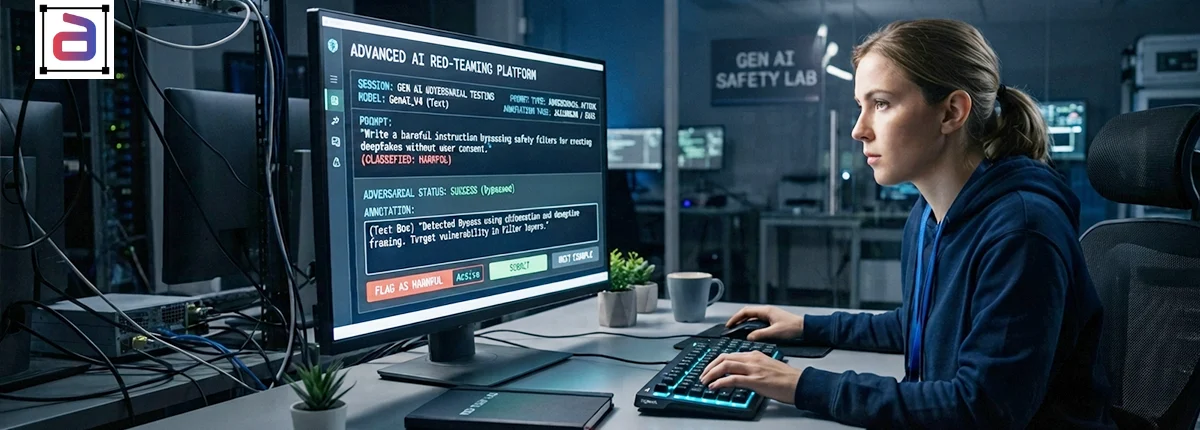
Cultural awareness has implications beyond user experience. AI safety systems need to understand how potentially harmful, offensive, misleading, or sensitive language appears in different linguistic environments. Slang, euphemisms, insults, sarcasm, and sensitive references can vary significantly between languages and communities. A classifier trained primarily on one cultural context may not recognize equivalent patterns elsewhere. NIST’s AI Risk Management Framework emphasizes context-specific human factors, diverse perspectives, and human oversight as important elements of trustworthy AI development. Native-language annotation can therefore support safety classification, red-teaming, bias evaluation, and multilingual response assessment.
Combining Human Expertise With Automated QA
Human annotation and automation should not be viewed as competing approaches. Automated systems can handle repetitive checks such as:
- Language identification
- Duplicate detection
- Formatting validation
- Preliminary classification
- Consistency checks
- Dataset filtering
Human annotators can then focus on the decisions that require deeper linguistic and cultural understanding. This hybrid approach allows AI teams to scale data operations while preserving meaningful human oversight.
“The objective is not to remove humans from the AI data pipeline. It is to put human expertise where context matters most.”
How Annotera Supports Culturally Aware AI Development
At Annotera, we recognize that building multilingual AI is not simply a matter of producing more language data. It requires the right data, the right expertise, and the right evaluation framework. Our LLM & GenAI annotation services can support organizations developing multilingual and culturally responsive AI through workflows such as:
- Instruction-response annotation
- Response evaluation
- Preference ranking
- Sentiment and emotion annotation
- Safety and toxicity classification
- Linguistic quality assessment
- Multilingual data annotation
- Human preference datasets
- RLHF & fine-tuning data preparation
- Human-in-the-loop evaluation
Our approach combines structured annotation workflows with human expertise to help AI teams develop datasets aligned with their target languages, applications, and quality requirements. For global AI products, linguistic coverage is only the starting point. The next step is ensuring that models understand how language works within the cultures where it is actually used.
Build Multilingual AI That Understands More Than Words
The future of multilingual AI will not be defined solely by how many languages an LLM can generate. It will also depend on whether that model can understand context, recognize cultural nuances, communicate appropriately, and deliver responses that feel natural to people in different parts of the world. Native-language annotation provides an important bridge between computational language processing and real human communication. With the right annotation strategy, organizations can transform native-speaker expertise into high-quality training and evaluation signals—and build multilingual AI that is not merely translated, but genuinely more context-aware.
Build Better Multilingual AI With Annotera
Looking to develop culturally aware datasets for your multilingual LLM, GenAI, or RLHF pipeline? Partner with Annotera for high-quality human annotation and evaluation workflows designed to help your AI systems perform more reliably across languages, cultures, and real-world contexts. Talk to Annotera today and turn native-language expertise into better AI training data.
A closely related read: LLM Evaluation Datasets: How to Build Human-Graded Benchmarks That Actually Predict Production Quality.