Artificial intelligence has evolved from recognizing objects to understanding human behavior. Today, AI systems can detect whether a patient has fallen, identify unsafe worker behavior, analyze athletes’ movements, monitor customer interactions in retail stores, and even help autonomous robots collaborate safely with humans. Behind these intelligent capabilities lies one essential ingredient: high-quality video annotation. Human Activity Recognition (HAR) is one of the most demanding applications of computer vision because it requires AI to understand not just what appears in a video, but what is happening over time.
Every action, movement, interaction, and transition must be accurately labeled before an AI model can learn to recognize it reliably. As the demand for intelligent video analytics accelerates, organizations are increasingly partnering with an experienced data annotation company to build production-ready datasets through scalable video annotation services. For enterprises looking to reduce costs while maintaining quality, data annotation outsourcing has become a strategic advantage rather than simply an operational decision. This reinforces a broader principle we explore in why quality training data is essential for AI vision.
Key Points
- High-quality video annotation is the foundation of accurate Human Activity Recognition (HAR), enabling AI models to understand complex human actions, interactions, and temporal events across industries like healthcare, robotics, retail, and surveillance.
- Human Activity Recognition presents unique annotation challenges, including temporal complexity, occlusions, crowded environments, similar-looking actions, and moving cameras, making expert human annotation essential for reliable AI performance.
- Combining AI-assisted labeling with Human-in-the-Loop validation and multi-stage quality assurance significantly improves annotation accuracy, reduces labeling errors, and produces production-ready datasets for computer vision models.
- Annotera’s scalable video annotation services and data annotation outsourcing solutions help organizations accelerate AI development with high-quality training data, expert annotators, and enterprise-grade quality standards tailored for real-world Human Activity Recognition applications.
The Growing Demand for Human Activity Recognition
Human Activity Recognition is transforming industries by enabling machines to interpret human actions from video sequences. Modern HAR systems power applications such as:
- Smart surveillance and public safety
- Workplace safety monitoring
- Healthcare and patient fall detection
- Autonomous robots and cobots
- Retail behavior analytics
- Sports performance analysis
- Manufacturing process monitoring
- Elderly care and assisted living
The rapid adoption of these technologies is fueling unprecedented growth in computer vision and video analytics. According to Grand View Research, the global AI video analytics market reached approximately USD 12.6 billion in 2024 and is projected to exceed USD 71 billion by 2033, growing at a CAGR of 21.4%. Gesture and action recognition represent one of the market’s leading application segments. Similarly, the broader computer vision market is forecast to grow to USD 58.29 billion by 2030, highlighting the increasing reliance on AI systems capable of interpreting visual information across industries. The message is clear: organizations investing in AI need reliable training data—and that starts with expert video annotation.
What Is Video Annotation for Human Activity Recognition?
Unlike image annotation, where annotators label a single frame, human activity recognition requires understanding actions across an entire sequence of frames. A video annotation specialist may need to identify:
- When an action begins
- When it ends
- Which objects are involved
- Whether multiple people interact
- Changes in body posture
- Motion trajectories
- Context surrounding the activity
For example, distinguishing between picking up a package, placing it on a shelf, and dropping it accidentally requires understanding movement over time—not just analyzing one image. This temporal complexity makes HAR one of the most sophisticated forms of computer vision annotation.
Why High-Quality Video Annotation Matters
Machine learning models only become as intelligent as the data used to train them. As computer vision pioneer Fei-Fei Li famously said:
“Data is the food for AI.”
That statement is especially relevant for Human Activity Recognition. Incomplete, inconsistent, or inaccurate labels create confusion during training, resulting in models that misclassify actions, generate false alarms, or fail in real-world scenarios. High-quality video annotation services enable AI models to learn:
- Human movement patterns
- Action sequences
- Body posture changes
- Human-object interactions
- Group activities
- Behavioral context
- Temporal relationships
The difference between a reliable AI system and one that performs inconsistently often comes down to annotation quality.
The Biggest Challenges in Video Annotation for Human Activity Recognition
1. Understanding Actions Over Time
Unlike static images, activities unfold across dozens—or even thousands—of video frames. Annotators must determine:
- Exactly when an activity starts
- When it finishes
- Whether two activities overlap
- Whether pauses represent separate events
Even slight inconsistencies can negatively affect model performance.
2. Similar-Looking Activities
Many human actions appear nearly identical. Examples include:
- Walking vs. jogging
- Sitting vs. crouching
- Picking vs. placing
- Falling vs. kneeling
- Waving vs. signaling
Without detailed annotation guidelines, these subtle differences introduce label noise that reduces AI accuracy.
3. Occlusions and Crowded Environments
People frequently move behind:
- Vehicles
- Machinery
- Shelves
- Furniture
- Other individuals
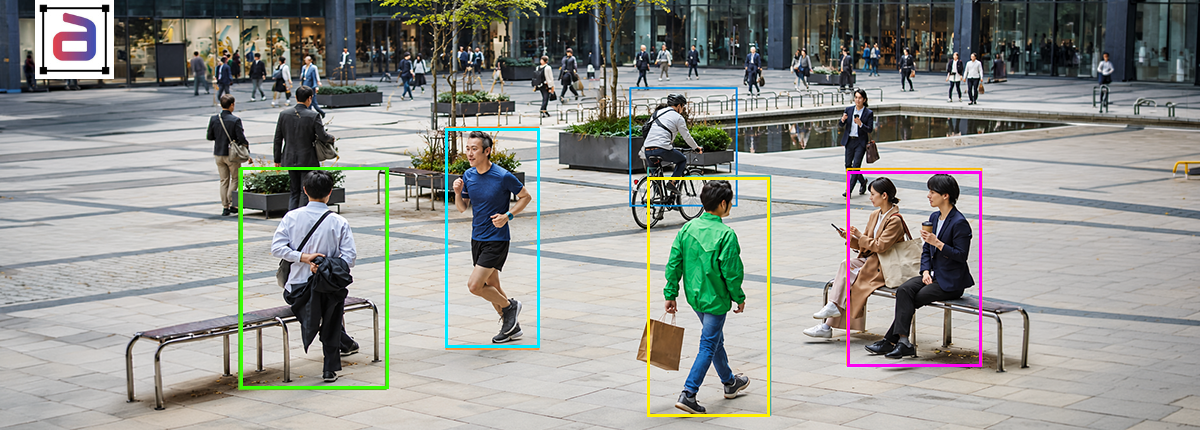
Maintaining consistent object identities throughout these occlusions requires experienced annotators and robust quality controls. Crowded scenes in airports, retail stores, warehouses, and stadiums add another layer of complexity by introducing overlapping activities and multiple simultaneous interactions.
4. Camera Motion and Dynamic Perspectives
Many HAR datasets come from:
- Body-worn cameras
- Autonomous robots
- Drones
- Dashcams
- Mobile devices
Moving cameras create motion blur, perspective shifts, and changing backgrounds, making frame-by-frame annotation considerably more challenging.
5. Long-Duration Video Streams
Industrial surveillance systems often generate thousands of hours of video. Annotating every frame manually is inefficient without intelligent workflows that combine automation with expert human validation.
Best Practices That Improve Annotation Quality
Organizations developing Human Activity Recognition models should prioritize quality throughout the annotation lifecycle.
Standardized Annotation Guidelines
Every annotator should follow clearly documented rules for:
- Activity definitions
- Label hierarchy
- Edge cases
- Occlusion handling
- Frame inclusion criteria
Consistency is essential for producing trustworthy datasets.
Human-in-the-Loop Validation
AI-assisted labeling speeds up annotation, but automation alone cannot resolve ambiguous situations. Human reviewers remain essential for:
- Correcting automated predictions
- Resolving complex interactions
- Validating edge cases
- Maintaining dataset consistency
As AI researcher Andrew Ng observed:
“Rather than focusing solely on improving algorithms, many AI teams will achieve greater impact by improving the quality of their data.”
For Human Activity Recognition, this philosophy directly translates into better-performing models.
Multi-Level Quality Assurance
Professional annotation workflows should include:
- Initial annotation
- Peer review
- Expert validation
- Random quality audits
- Final approval
These review layers dramatically reduce labeling errors before datasets reach model training.
Why Businesses Choose Data Annotation Outsourcing
Building an internal annotation team requires significant investment in hiring, training, infrastructure, quality management, and scalability. That is why many AI companies prefer data annotation outsourcing. Partnering with an experienced data annotation company provides:
- Faster project turnaround
- Dedicated annotation specialists
- Flexible workforce scaling
- Lower operational costs
- Consistent quality assurance
- Domain-specific expertise
- Enterprise security and compliance
More importantly, outsourcing allows AI teams to focus on model development while trusted annotation experts manage dataset creation.
Why Annotera Is the Right Partner for Human Activity Recognition
At Annotera, we understand that exceptional AI begins with exceptional data. Our specialized video annotation services help organizations develop highly accurate datasets for Human Activity Recognition across industries including healthcare, manufacturing, robotics, retail, autonomous systems, logistics, and security. Our capabilities include:
- Frame-by-frame video annotation
- Action and event labeling
- Multi-object tracking
- Pose and keypoint annotation
- Human-object interaction labeling
- Human-in-the-Loop validation
- Multi-stage quality assurance
- Scalable enterprise annotation workflows
As a trusted data annotation company, Annotera combines experienced human annotators with AI-assisted workflows to deliver datasets that improve model accuracy while reducing development timelines. Whether you’re launching a proof of concept or scaling enterprise AI, our data annotation outsourcing solutions are designed to meet demanding quality and performance standards.
The Future of Human Activity Recognition Depends on Better Data
As AI systems become more capable of understanding human behavior, expectations for accuracy continue to rise. From preventing workplace accidents and enhancing patient care to enabling collaborative robotics and intelligent surveillance, Human Activity Recognition is becoming a foundational capability across industries. However, sophisticated algorithms alone are not enough. Reliable AI begins with reliable training data. High-quality video annotation, consistent labeling standards, and rigorous quality assurance are what enable machine learning models to interpret complex human activities with confidence. Organizations that invest in expert annotation today will be better positioned to build trustworthy, scalable AI solutions tomorrow.
Ready to Build Smarter Human Activity Recognition Models?
If you’re developing AI systems that rely on accurate human activity recognition, don’t let poor-quality training data become your biggest obstacle. Partner with Annotera for enterprise-grade video annotation services backed by experienced annotators, Human-in-the-Loop quality assurance, and scalable data annotation outsourcing solutions. Whether your project involves surveillance, healthcare, robotics, retail, manufacturing, or autonomous systems, Annotera delivers the precision your AI models need to perform in the real world. Contact Annotera today to discuss your project and discover how expertly annotated video data can accelerate your AI success.
A closely related read: Human-in-the-Loop (HITL) Approaches for Higher-Quality LLM Fine-Tuning Data.