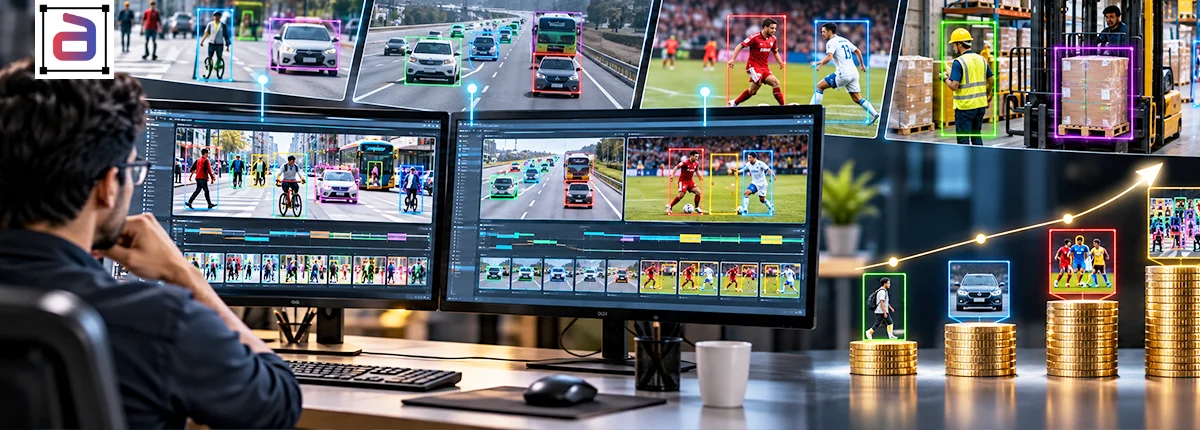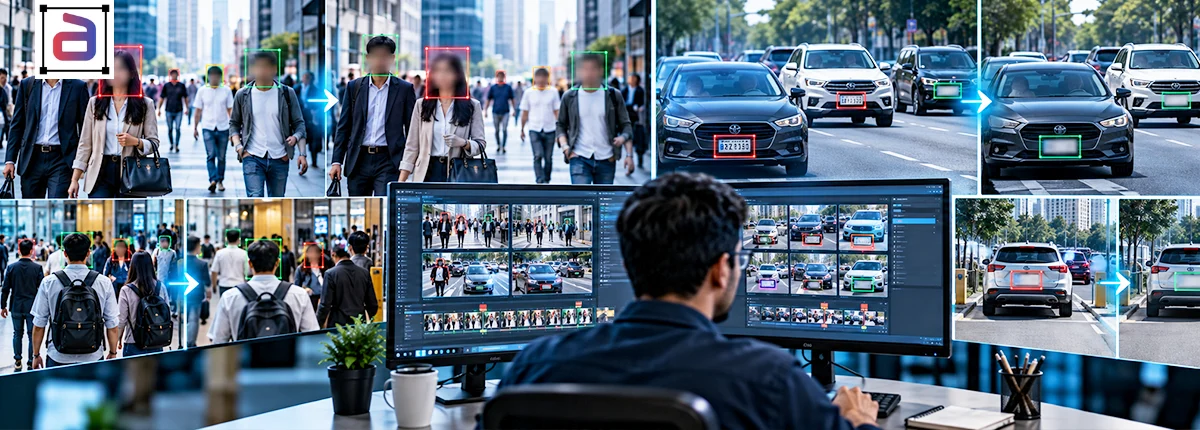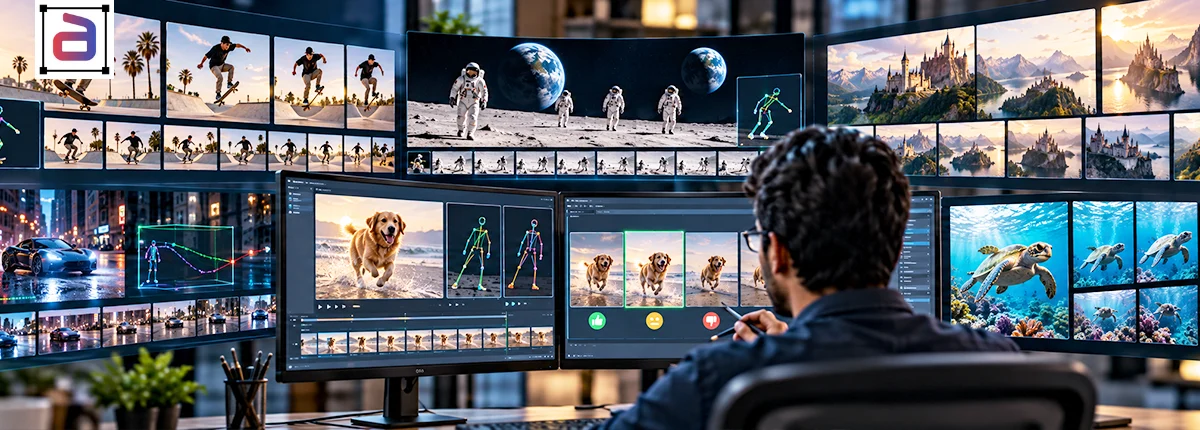
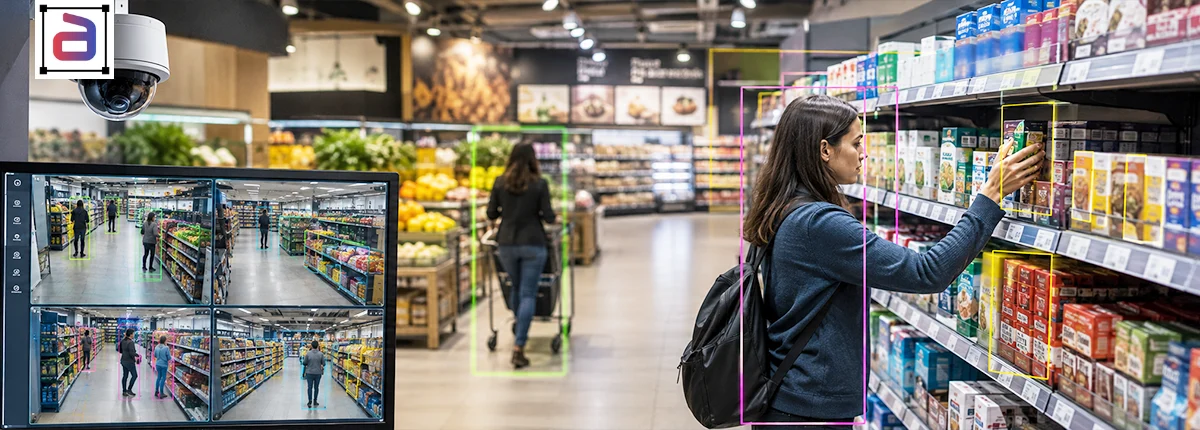
Retail is undergoing a major transformation as artificial intelligence and computer vision move from experimental technologies to practical tools for everyday store operations. From identifying suspicious activity to monitoring shelf availability, retailers are increasingly using video intelligence to improve security, inventory accuracy, and customer experience. But sophisticated AI models are only as reliable as the data used to train them. In retail environments, where shoppers, employees, products, shelves, carts, and changing store conditions constantly interact, generic datasets are rarely enough. This is where video annotation for retail becomes essential. By converting raw surveillance and operational video into structured, accurately labeled datasets, retailers can train computer vision models to recognize objects, track movement, understand interactions, and identify events. For organizations considering data annotation outsourcing, high-quality video annotation can become a strategic foundation for scalable retail AI.
Key Points
- Video Annotation Strengthens Retail Loss Prevention – Accurately labeled video helps AI systems identify suspicious activities, monitor high-risk areas, and improve self-checkout surveillance.
- Smart Shelf Monitoring Improves Inventory Visibility – Video annotation enables AI to detect empty shelves, misplaced products, product interactions, and planogram inconsistencies.
- High-Quality Data Drives Better Retail AI – Consistent annotation, temporal labeling, object tracking, and segmentation help computer vision models perform reliably in complex retail environments.
- Outsourcing Enables Scalable Annotation – Partnering with an experienced data annotation company like Annotera provides scalable video annotation outsourcing, expert workflows, and quality-controlled datasets for retail AI.
What Is Video Annotation for Retail?
Video annotation is the process of labeling objects, activities, movements, and events across video frames so machine learning systems can learn from them. Unlike image annotation, video annotation introduces a temporal dimension. The AI model needs to understand not only what appears in a frame, but also where it moves, how it changes, and what happens next. In retail applications, annotated video can include:
- Shoppers and employees
- Products and product categories
- Shelves, racks, and displays
- Shopping carts and baskets
- Product pickups and placements
- Shelf gaps and misplaced products
- Customer movement trajectories
- Checkout interactions
- Entry and exit events
- Suspicious or unusual activity
These labels create the ground truth required to train, validate, and evaluate retail computer vision systems.
“In computer vision, better models begin with better ground truth.”
How Video Annotation Supports Retail Loss Prevention
Retail loss prevention is no longer limited to reviewing hours of surveillance footage after an incident. AI-powered video analytics can help retailers identify potentially important events in real time and direct human attention toward situations that warrant investigation. Frictionless checkout depends on the same discipline, which is where annotation for checkout automation comes in.
1. Recognizing Potentially Suspicious Activities
Retail theft often involves a sequence of actions rather than one isolated frame. A shopper may pick up an item, move through an aisle, interact with another object, and leave an area without completing an expected transaction. Annotated video can capture these temporal patterns and help train models to recognize behaviors that may require further review. Importantly, AI should support human decision-making rather than automatically determine whether a customer has committed theft. High-quality annotation enables systems to flag potentially relevant events while keeping final decisions with trained personnel.
2. Monitoring High-Risk Areas
Electronics sections, cosmetics displays, self-checkout counters, and store exits may require enhanced monitoring. Video annotation can label people, objects, zones, and movements within these areas. Computer vision models can then learn to detect deviations from expected activity.
“The goal of retail AI is not simply to watch more footage. It is to make surveillance data more useful.”
3. Improving Self-Checkout Monitoring
Self-checkout environments create unique challenges for computer vision. Systems may need to understand whether a product was scanned, whether an item moved into the bagging area, or whether unexpected interactions occurred. Frame-level and temporal annotations allow models to learn the sequence of events rather than relying solely on object detection. This can help retailers develop smarter systems for identifying anomalies while reducing unnecessary alerts.
The Role of Video Annotation in Smart Shelf Monitoring
Retail AI extends well beyond security. Smart shelf monitoring uses computer vision to provide real-time visibility into inventory presentation and product availability.
Detecting Empty Shelves
A product being unavailable on the shelf can mean a missed sale even when inventory exists in the backroom. Annotated video can teach models to distinguish stocked shelves from empty spaces and identify specific shelf areas that require replenishment.
Identifying Misplaced Products
Customers frequently return products to the wrong location. A product that is technically in stock but positioned incorrectly may still be difficult for shoppers to find. By labeling products and their expected shelf locations, AI models can learn to detect misplaced merchandise and alert store teams.
Monitoring Product Interactions
Understanding how customers interact with merchandise can provide valuable insights into shopping behavior. Annotation can capture events such as:
- Picking up a product
- Examining an item
- Returning an item to a shelf
- Moving products between locations
- Interacting with promotional displays
These insights can support merchandising, store operations, and customer experience initiatives.
Supporting Planogram Compliance
Retailers invest heavily in product placement and visual merchandising. Planogram compliance ensures that products appear in their intended positions and configurations. Computer vision models can compare observed shelf conditions against expected arrangements when trained on appropriately annotated datasets. This can help retailers identify misplaced products, missing facings, and display inconsistencies at scale.
Annotation Techniques Used in Retail Video
Different AI applications require different annotation approaches. Bounding boxes are commonly used to identify shoppers, products, carts, and other objects. Polygon annotation and segmentation provide more precise object boundaries and can be particularly valuable when products overlap or have irregular shapes. Object tracking links an object or individual across consecutive frames, allowing models to understand movement. Keypoint annotation can identify specific human body points for applications involving posture and movement analysis. Temporal annotation is particularly important for retail loss prevention because many relevant activities occur over multiple frames. The right combination depends on the model architecture, business objective, camera setup, and desired level of precision.
Why Annotation Quality Determines AI Performance
Retail environments are challenging computer vision environments. Lighting changes throughout the day. Customers partially block products. Shelves become crowded. Packaging can be reflective. Camera perspectives differ between locations. A dataset that looks accurate under controlled conditions may fail when exposed to these real-world variations. This is why annotation quality requires more than simply drawing boxes around objects. Retail projects need:
- Clearly defined annotation guidelines
- Consistent class definitions
- Frame-to-frame consistency
- Experienced annotators
- Quality-control checkpoints
- Edge-case handling
- Regular dataset audits
As the saying goes:
“Training data is the foundation; model performance is the structure built on it.”
Weak foundations make reliable AI difficult to achieve.
Why Data Annotation Outsourcing Makes Sense for Retailers
Creating a large-scale internal annotation operation can be expensive and difficult to manage. Retail organizations may need to process thousands of hours of video while maintaining consistent labeling standards. Data annotation outsourcing allows retailers to access specialized annotation teams and scalable workflows without building an entire annotation operation internally. When evaluating a data annotation company, retailers should look beyond cost. Important considerations include annotation accuracy, scalability, quality assurance, turnaround time, data security, domain expertise, and the ability to support complex video annotation requirements.
Choosing a Video Annotation Company
The right video annotation company should function as more than a labeling vendor. It should understand how annotated data will ultimately be used to train and evaluate computer vision models. For retailers considering video annotation outsourcing, a capable provider should be able to support:
- Object detection and classification
- Video segmentation
- Multi-object tracking
- Temporal event annotation
- Human activity labeling
- Shelf and product annotation
- Custom taxonomies
- Quality assurance and validation
- Large-scale annotation workflows
Data security is equally important. Retail surveillance footage may contain sensitive visual information, making secure handling, controlled access, and appropriate privacy practices essential components of the annotation workflow.
How Annotera Helps Build Retail-Ready Training Data
At Annotera, we understand that retail computer vision requires more than generic object labeling. Models need to interpret complex environments where products, people, shelves, and actions continuously interact. Annotera provides scalable video annotation outsourcing solutions designed to transform raw retail footage into structured, high-quality training datasets. Our human-led workflows can support object detection, segmentation, tracking, and temporal event annotation while maintaining consistency through rigorous quality-control processes. Whether your goal is improving loss prevention, identifying shelf gaps, detecting misplaced products, or building smarter retail analytics, Annotera can help create the data foundation your AI systems need.
Conclusion
Retail AI has the potential to transform how stores approach loss prevention, inventory visibility, merchandising, and customer experience. But the path to reliable computer vision does not begin with the model alone. It begins with accurate, representative, and consistently annotated data. From suspicious activity detection to smart shelf monitoring, video annotation enables AI systems to understand what is happening inside dynamic retail environments. For retailers looking to scale computer vision without compromising data quality, partnering with an experienced data annotation company can accelerate development while reducing the operational burden of managing annotation internally. Ready to turn your retail video into AI-ready training data? Partner with Annotera for scalable, high-quality video annotation solutions tailored to your computer vision objectives. Contact Annotera today and build the data foundation for smarter, safer, and more efficient retail operations.
A closely related read: Powering Autonomous Shopping with Annotation at Scale