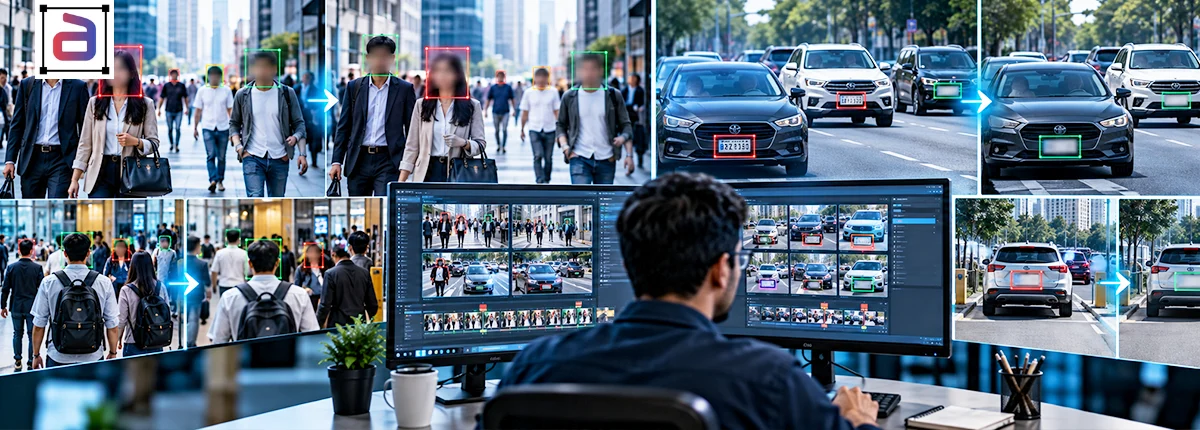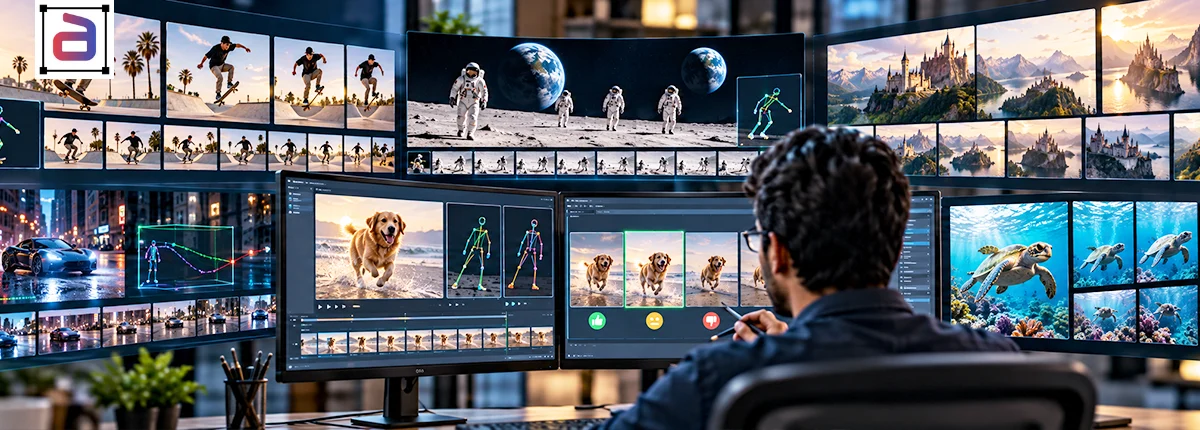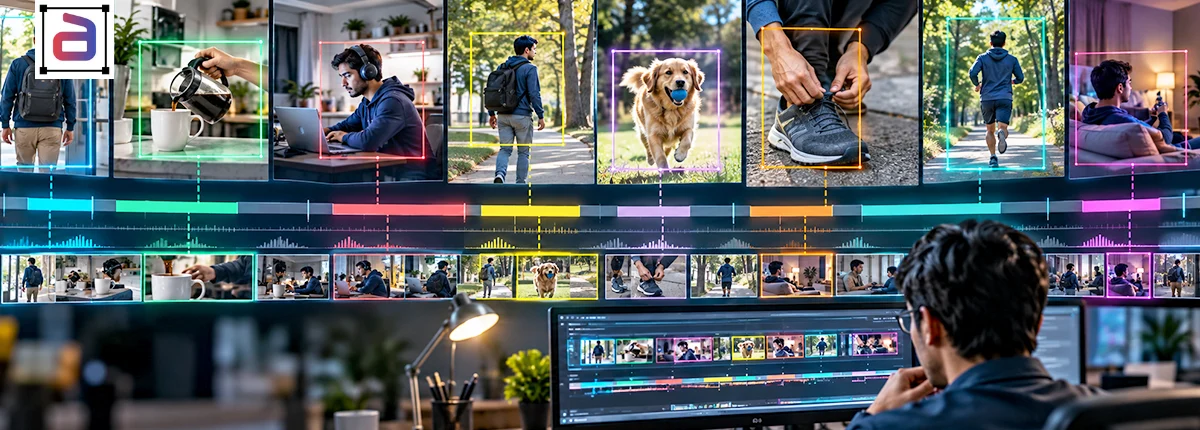
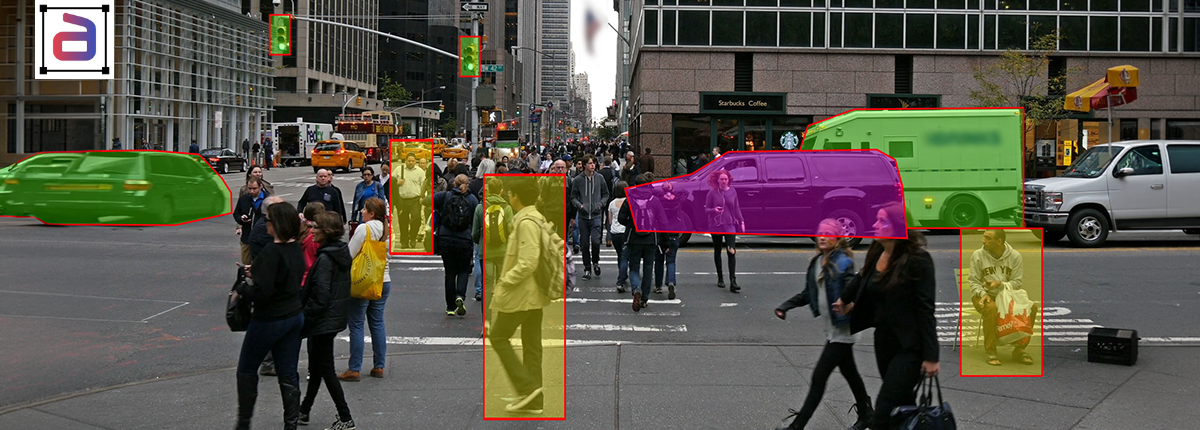
Artificial intelligence has transformed how organizations collect, process, and label visual data. AI-assisted annotation tools can now automatically detect objects, track movement, and label thousands of video frames within minutes. While these innovations have accelerated dataset creation, one reality remains unchanged: when accuracy matters most, manual frame-by-frame video annotation continues to outperform fully automated labeling. From autonomous vehicles navigating busy city streets to medical AI analyzing surgical procedures, even a single labeling error can affect model performance, increase retraining costs, and introduce operational risks. Automation is an incredible accelerator—but it is not yet a replacement for human judgment. This philosophy has become the cornerstone of modern AI development. At Annotera, we help organizations transform raw video into high-quality training datasets through meticulous human-guided annotation workflows that deliver the precision today’s AI demands.
Why Video Annotation Quality Matters More Than Ever
Computer vision systems are only as intelligent as the data they learn from. According to Grand View Research, the global data collection and labeling market is projected to grow significantly through the coming years, driven by the rapid adoption of AI across automotive, healthcare, retail, manufacturing, robotics, and security industries. Organizations are increasingly recognizing that high-quality annotated data is one of the strongest competitive advantages in AI development.
As AI adoption accelerates across industries, video annotation quality has become more critical than ever. After all, even the most advanced models rely on accurate training data. Therefore, precise annotations directly improve model accuracy, reliability, and real-world performance. Similarly, Gartner has repeatedly emphasized that poor data quality—not algorithm limitations—is among the leading reasons AI initiatives fail to deliver expected business outcomes. In other words, building a better model begins with building a better dataset. As Andrew Ng, founder of DeepLearning.AI and a leading voice in data-centric AI, famously said:
“Rather than improving the code, the biggest gains come from improving the data.”
What Is Frame-by-Frame Video Annotation?
Frame-by-frame video annotation is the process of manually reviewing and labeling every individual frame within a video sequence. Frame-by-frame video annotation is the process of labeling every individual video frame to create precise training data for AI models. Unlike automated interpolation, this approach captures subtle movements and complex interactions, thereby improving model accuracy and consistency. Instead of relying entirely on AI-generated interpolation or automated tracking, trained annotators verify each frame to ensure complete accuracy. This includes identifying:
- Object boundaries
- Human poses
- Vehicle movement
- Lane markings
- Traffic signs
- Facial expressions
- Behavioral events
- Object interactions
- Occlusions
- Scene transitions
Every frame becomes a verified source of ground truth, enabling AI models to learn from highly accurate data rather than estimated predictions.
Why Automation Still Falls Short
AI-assisted annotation tools have dramatically improved productivity. Although AI-powered annotation tools improve efficiency, they often struggle with complex scenarios such as occlusions, motion blur, and crowded environments. As a result, manual review remains essential to ensure accurate, consistent, and reliable video annotations. Features like automatic tracking, interpolation, and object detection can reduce annotation time by more than half on straightforward datasets. However, real-world environments are rarely straightforward. Automation continues to struggle with:
- Heavy occlusions
- Motion blur
- Fast-moving objects
- Camera shake
- Poor lighting
- Adverse weather
- Dense urban traffic
- Similar-looking objects
- Crowded public spaces
Once an automated tracker loses an object, the error often propagates across hundreds of subsequent frames. A single missed detection can evolve into an entire sequence of inaccurate labels. Manual reviewers identify these inconsistencies immediately, preventing annotation drift before it impacts model training.
Human Intelligence Recognizes Context That AI Cannot
Humans don’t simply recognize objects—they understand situations. While AI can identify patterns, it often misses contextual nuances and intent. In contrast, human annotators understand complex interactions, behavioral cues, and scene dynamics, thereby producing more accurate annotations for high-performance computer vision models. Experienced annotators can distinguish between:
- A pedestrian temporarily hidden behind a truck versus one who has exited the scene.
- A cyclist preparing to turn versus riding straight ahead.
- Suspicious behavior versus ordinary public activity.
- Temporary object overlap versus permanent disappearance.
This contextual understanding is extraordinarily difficult for automated systems. As Fei-Fei Li, Professor at Stanford University and Co-Director of the Stanford Human-Centered AI Institute, has stated:
“If our era is the next Industrial Revolution, AI is surely one of its driving forces.”
But like every industrial revolution, AI depends on quality inputs. Without accurate training data, even the most sophisticated models cannot make reliable decisions.
Industries Where Manual Precision Makes the Difference
From autonomous vehicles to healthcare and surveillance, many industries require exceptional annotation accuracy. Therefore, manual frame-by-frame labeling remains indispensable for capturing complex scenarios and ensuring AI models perform reliably in real-world environments. The same rigor applies to static labeling; see how we approach maintaining bounding box accuracy at scale.
Autonomous Vehicles
Autonomous driving systems operate in highly dynamic environments where every frame contributes to vehicle perception. This rely on accurately annotated video data to detect roads, pedestrians, and obstacles. Consequently, manual frame-by-frame annotation ensures every movement is captured precisely, improving perception models and enhancing driving safety under real-world conditions. Manual annotation ensures accurate labeling of:
- Pedestrians
- Cyclists
- Emergency vehicles
- Lane boundaries
- Traffic signals
- Road hazards
- Vehicle interactions
Missing just a few frames may reduce tracking accuracy and compromise downstream perception models.
Healthcare AI
Medical video datasets require exceptional precision because every annotation may influence clinical decisions. Healthcare AI requires highly accurate video annotations for applications such as surgical analysis and medical imaging. Therefore, manual frame-by-frame labeling helps capture critical visual details, improving diagnostic accuracy and supporting more reliable clinical decision-making. Applications include:
- Surgical video analysis
- Endoscopy
- Ultrasound interpretation
- Patient monitoring
- Medical robotics
Healthcare organizations cannot afford annotation inconsistencies, making manual verification essential.
Retail Intelligence
Retail AI relies on video analytics to understand customer behavior, shelf inventory, and store operations. This intelligence relies on video analytics to understand customer behavior, product interactions, and store operations. As a result, manual frame-by-frame annotation captures subtle actions that improve AI-driven insights, inventory management, and overall customer experience. Frame-level annotation enables models to accurately detect:
- Customer movement
- Product interactions
- Queue management
- Shopping patterns
- Inventory changes
Subtle behavioral events often occur within only a few frames and may be overlooked by automated systems.
Security & Surveillance
Surveillance AI must accurately detect unusual activities across diverse environments. Security and surveillance systems depend on accurate video annotation to detect suspicious activities and unusual events. Therefore, manual frame-by-frame labeling enhances AI accuracy by capturing critical details that automated tools may overlook in complex environments. Manual frame-by-frame annotation improves:
- Intrusion detection
- Crowd analysis
- Abandoned object detection
- Behavioral recognition
- Threat identification
Human reviewers provide contextual judgment that automation still cannot replicate consistently.
The Real Cost of Poor Video Annotation
Many organizations measure annotation success by speed alone. Poor video annotation leads to inaccurate training data, reducing AI model performance and increasing retraining costs. Consequently, organizations may experience project delays, higher operational expenses, and unreliable outcomes that impact both business efficiency and user trust. In reality, inaccurate annotations often become far more expensive than slower, higher-quality labeling. Poor annotation quality can result in:
- Lower model accuracy
- Increased false positives
- Missed detections
- Longer retraining cycles
- Higher development costs
- Delayed product launches
- Reduced customer trust
The cost of correcting a poorly annotated dataset after model deployment is often significantly higher than investing in quality annotation from the beginning.
Why Human-in-the-Loop Is the Future
The industry is no longer debating humans versus automation. The future is Human-in-the-Loop (HITL). Human-in-the-Loop combines AI automation with expert human validation to improve annotation quality. As a result, organizations achieve faster workflows while maintaining the accuracy, consistency, and contextual understanding required for reliable AI model development. Modern annotation workflows combine AI efficiency with expert human validation. A typical workflow includes:
- AI generates preliminary annotations.
- Human annotators validate every frame.
- Quality assurance specialists perform secondary reviews.
- Edge cases undergo expert verification.
- Corrected data continuously improves future AI-assisted annotation.
This hybrid approach delivers faster turnaround without compromising annotation quality.
Why Businesses Choose Annotera for Video Annotation
At Annotera, we believe that successful AI begins with exceptional training data—not shortcuts. Businesses choose Annotera for scalable, high-precision video annotation backed by experienced professionals and rigorous quality assurance. Moreover, our Human-in-the-Loop workflows ensure accurate training data that helps AI models perform reliably across diverse real-world applications. As a trusted video annotation company, we combine advanced annotation platforms with experienced human annotators to produce highly accurate, production-ready datasets for enterprise AI. Our capabilities include:
- Bounding box annotation
- Polygon annotation
- Semantic segmentation
- Instance segmentation
- Object tracking
- Keypoint annotation
- Action recognition
- Event annotation
- Multi-object tracking
- Human-in-the-Loop quality validation
Every project undergoes rigorous multi-level quality assurance to ensure consistency, accuracy, and scalability. Whether you’re developing autonomous driving systems, intelligent surveillance, retail analytics, robotics, or healthcare AI, Annotera delivers annotation services designed to improve model performance from the ground up. By partnering with an experienced data annotation company, organizations can accelerate development while maintaining the highest standards of data quality. Our flexible video annotation outsourcing solutions enable businesses to scale annotation operations efficiently without compromising precision.
Why Leading AI Companies Trust Human Precision
Leading AI companies prioritize human precision because high-quality training data drives reliable model performance. Therefore, expert frame-by-frame annotation complements automation by ensuring greater accuracy, consistency, and contextual understanding across complex real-world video datasets. The world’s most successful AI organizations understand a simple truth:
- Automation accelerates annotation.
- Humans ensure annotation quality.
Frame-by-frame verification remains the gold standard whenever datasets contain complex motion, challenging environments, or mission-critical applications. As AI models become more sophisticated, the demand for cleaner, richer, and more reliable training data will only continue to grow. Organizations that invest in annotation quality today will build AI systems that are more accurate, trustworthy, and resilient tomorrow.
Partner with Annotera to Build Better AI
Your AI is only as intelligent as the data it learns from. At Annotera, we combine deep domain expertise, scalable annotation operations, and rigorous quality assurance to deliver video datasets that power real-world AI success. Whether you need a trusted video annotation company for large-scale projects or reliable video annotation outsourcing to accelerate development, our team is ready to support your goals with precision and consistency.
Don’t let annotation quality become the bottleneck in your AI journey. Partner with Annotera for high-precision video annotation services that help you build smarter, safer, and more reliable computer vision models. Contact our experts today to discuss your video annotation requirements and discover how Annotera can accelerate your AI success with enterprise-grade data annotation solutions.
A closely related read: Video Annotation for Retail Analytics: Transforming Customer Behavior Insights.