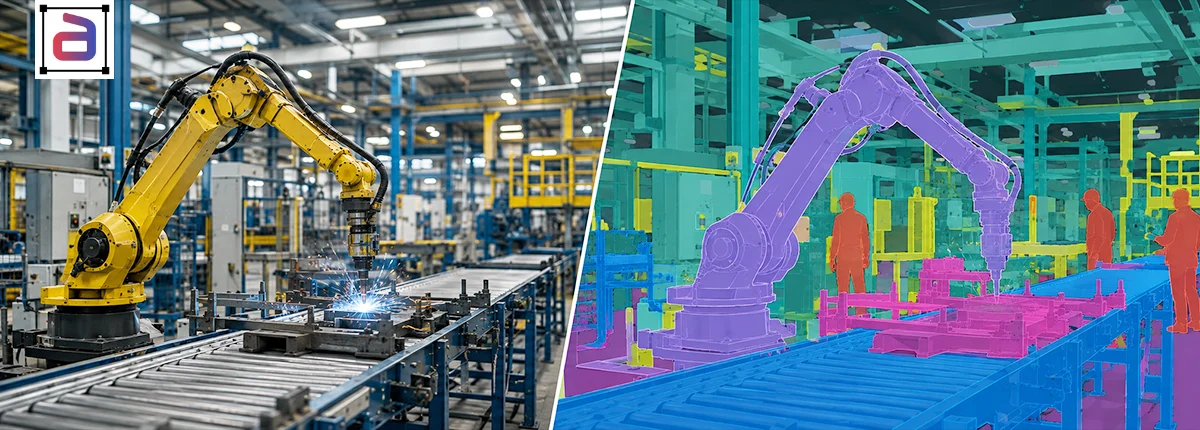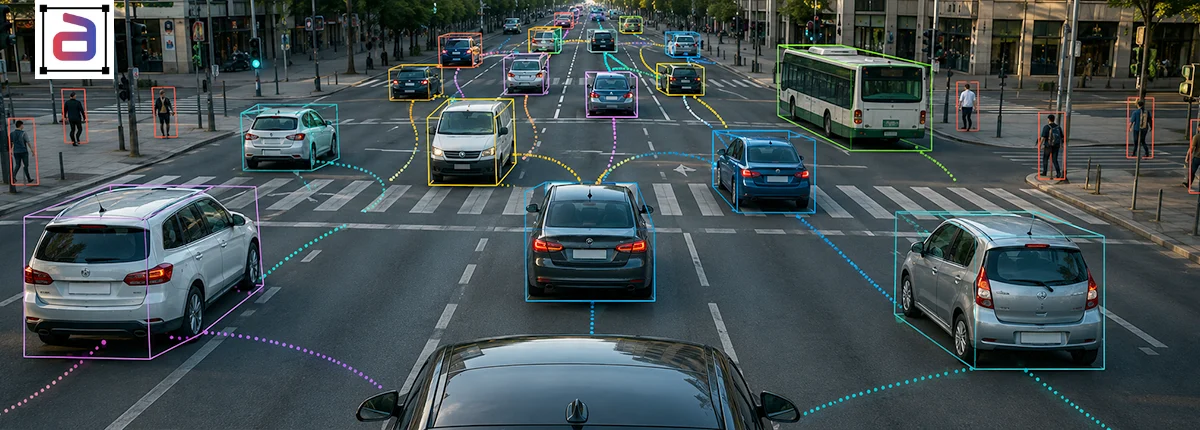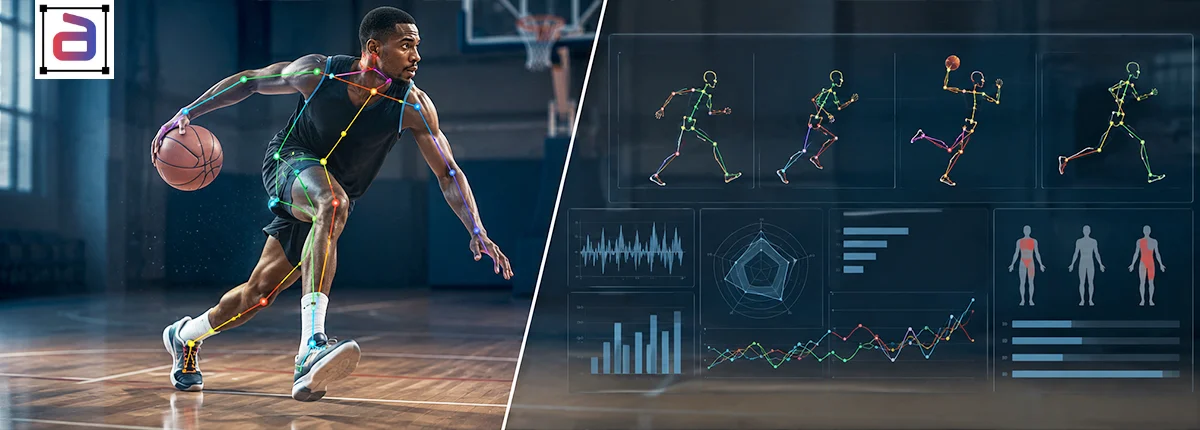
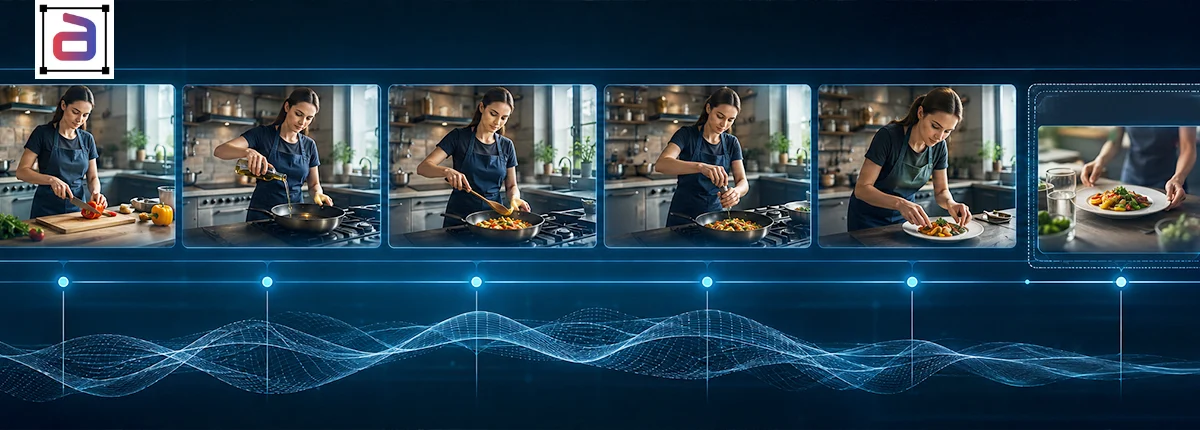
A video is more than a collection of images. It is a sequence of events, actions, transitions, and interactions that unfold over time. For AI to truly understand video, it must recognize not only what is visible in a frame, but also what happened before, what is happening now, and what is likely to happen next. This is where temporal action recognition annotation becomes essential. Temporal action recognition focuses on identifying actions and understanding their position within a video sequence. Research in video understanding consistently emphasizes the importance of temporal relationships between frames because meaningful actions often cannot be interpreted from a single image alone. For businesses developing computer vision, robotics, surveillance, retail analytics, autonomous systems, and other video AI applications, high-quality annotation provides the foundation for teaching models this temporal intelligence.
Key Points
- Teaches AI Temporal Context – Temporal action recognition helps AI understand how actions unfold across video sequences, rather than analyzing isolated frames.
- Improves Video AI Accuracy – Precise temporal segmentation and action labeling enable models to recognize action boundaries, sequences, transitions, and overlapping events.
- Supports Multiple Industries – Temporal annotation powers applications in autonomous vehicles, robotics, retail analytics, security surveillance, sports analytics, and other video AI use cases.
- Enables Scalable Video Annotation – Data annotation outsourcing and specialized video annotation companies like Annotera help businesses create high-quality, machine-learning-ready video datasets at scale.
What Is Temporal Action Recognition Annotation?
Temporal action recognition annotation involves labeling when an action starts, how it progresses, and when it ends within a video. Consider a simple video of a person making coffee. A single frame may show the person holding a cup. But the complete sequence could be: Picking up cup → Pouring water → Adding coffee → Stirring → Drinking Each action represents a temporal event. Annotators identify the relevant video segments and assign appropriate labels and timestamps. This differs significantly from conventional image annotation. Image annotation might identify a person, cup, or coffee machine in a frame. Temporal annotation adds another layer of intelligence by describing the activity taking place across multiple frames. As one research survey puts it, action localization involves determining not only what action is occurring, but also when and where it occurs in a video.
Why Temporal Context Matters for AI
Humans naturally understand events through context. If someone reaches toward a glass, we can anticipate that they may pick it up. If a pedestrian looks toward a vehicle and begins stepping into the road, we recognize a developing situation rather than treating each frame independently. AI systems need training data that enables similar temporal reasoning. Temporal annotation can help models learn:
- Action boundaries — precisely when activities begin and end.
- Action sequences — how one event follows another.
- Action duration — how long an activity continues.
- Transitions — how one action develops into another.
- Overlapping actions — when multiple activities occur simultaneously.
- Temporal context — how surrounding events influence interpretation.
This is especially important for untrimmed videos containing multiple activities. Researchers have noted that long, untrimmed videos present significant challenges because they can contain diverse actions and complex temporal relationships.
From “What Is This?” to “What Is Happening?”
Traditional computer vision often begins with object recognition. What is in the frame? Temporal action recognition asks a more sophisticated question: What is happening in this sequence? For example, consider a warehouse environment. A conventional image annotation system might label: Worker + Box + Shelf + Conveyor Temporal annotation can transform those labels into an actionable sequence: Worker approaches shelf → Reaches for box → Picks up box → Carries box → Places box on conveyor This distinction matters because many real-world AI applications depend on understanding activities rather than merely detecting objects. The resulting training data can help models recognize workflows, identify events, analyze behavior, and potentially anticipate subsequent actions.
The Temporal Annotation Workflow
A reliable temporal annotation process typically begins with collecting and preprocessing video data. Annotators then review footage and identify relevant actions or events. Depending on the application, annotation may involve:
1. Defining the Action Taxonomy
Every action needs a clear definition. For example, “opening a door” should have consistent criteria that distinguish it from “approaching a door” or “touching a door handle.”
2. Identifying Temporal Boundaries
Annotators determine the beginning and ending timestamps of each activity. This is one of the most important stages because ambiguous boundaries can introduce noise into the training dataset. Research on temporal action localization has specifically identified inaccurate temporal boundaries as a significant challenge, particularly when background frames resemble action frames visually.
3. Assigning Action Labels
Each temporal segment receives an appropriate action category. More complex projects may require hierarchical labels, actor identification, object interactions, or additional attributes.
4. Handling Overlapping Events
Multiple actions can occur simultaneously. A worker may walk while carrying an object, or a driver may steer while checking a mirror. Annotation guidelines must establish how such overlapping events should be represented.
5. Quality Assurance
Annotations should undergo systematic review to identify incorrect timestamps, inconsistent labels, missed actions, and ambiguous cases.
Challenges in Temporal Action Recognition Annotation
Temporal video annotation is inherently more complex than static image labeling. Ambiguous boundaries: Actions rarely begin and end at perfectly obvious frames. Long videos: A single video may contain dozens or hundreds of events, making manual review time-intensive. Fine-grained actions: Small movements may distinguish two otherwise similar activities. Multiple actors: Different people may perform different actions simultaneously. Occlusion and camera movement: Poor visibility, changing viewpoints, and camera motion can make activities difficult to interpret. Action overlap: Events may occur concurrently or partially overlap. Fine-grained datasets demonstrate why annotation detail matters. Research has found that coarse action categories can lead to ambiguous temporal boundaries and may cause models to overlook atomic action details. In other words, better labels create better opportunities for models to learn meaningful temporal patterns.
Where Temporal Action Recognition Is Used
The applications extend across multiple industries.
Autonomous Vehicles
Vehicles need to understand how pedestrians, cyclists, and other vehicles move over time. Temporal data can help AI analyze evolving road situations rather than isolated frames.
Retail Analytics
Retail systems can identify customer journeys, product interactions, queue behavior, and checkout activities.
Security and Surveillance
Temporal models can recognize events such as falls, intrusions, unusual movements, crowd activity, or other behavior that cannot be reliably interpreted from a single frame.
Robotics
Robots need to understand human demonstrations and environmental interactions as sequences. Temporal action data can help models learn how individual movements combine into complete tasks.
Sports Analytics
AI can analyze sequences such as passes, serves, shots, tackles, and player movements to understand game dynamics.
Why Data Annotation Outsourcing Can Accelerate Video AI
Building a large temporal dataset internally requires trained annotators, annotation guidelines, quality-control processes, project management, and substantial review time. For organizations working with large video volumes, data annotation outsourcing can provide a scalable approach. Instead of building an entire annotation operation internally, businesses can work with specialized providers that have established workflows and trained teams capable of handling complex video datasets. However, not every provider is equipped for temporal action recognition. Organizations should evaluate whether a data annotation company can support precise temporal segmentation, customized ontologies, overlapping events, quality assurance, and domain-specific requirements.
Choosing the Right Video Annotation Partner
The complexity of temporal data makes partner selection particularly important. A capable video annotation company should offer:
- Clear annotation guidelines and taxonomies
- Accurate temporal segmentation
- Experienced video annotators
- Multi-level quality assurance
- Support for complex and overlapping actions
- Scalable annotation capacity
- Flexible workflows for project-specific requirements
With video annotation outsourcing, the objective should not simply be to produce more labels. It should be to produce consistent, context-rich, machine-learning-ready training data.
How Annotera Helps Build More Intelligent Video AI
At Annotera, we recognize that video intelligence begins with understanding context. Our approach to video annotation focuses on transforming raw footage into structured training data that captures meaningful actions, events, interactions, and temporal relationships. Whether the objective involves computer vision, robotics, autonomous systems, retail analytics, or intelligent surveillance, annotation quality plays a critical role in helping AI models learn from real-world visual behavior. By combining trained human expertise, defined annotation workflows, and quality-focused review processes, Annotera helps organizations tackle the complexity of large-scale video datasets.
Teaching AI to Understand What Comes Next
The next generation of video AI will need to move beyond recognizing isolated objects and frames. It will need to understand events as they unfold. Temporal action recognition annotation provides the foundation for that transition. When AI learns that reaching can lead to picking up, picking up can lead to carrying, and carrying can lead to placing, it begins to understand video as a sequence rather than a collection of disconnected images. As video-based AI continues to advance, organizations need annotation strategies that capture this temporal intelligence accurately and consistently. Annotera helps businesses turn complex video into structured, high-quality training data designed for next-generation AI.
Ready to Build Smarter Video AI?
If your project requires accurate temporal action recognition, event segmentation, or scalable video annotation, partner with Annotera. Our expert annotation workflows can help you transform raw video into reliable training data that supports more capable and context-aware AI systems. Contact Annotera today to discuss your video annotation requirements and build a dataset that teaches AI not only what it sees—but what happens next.
A closely related read: How Temporal Consistency Improves Video Annotation Quality for Computer Vision.