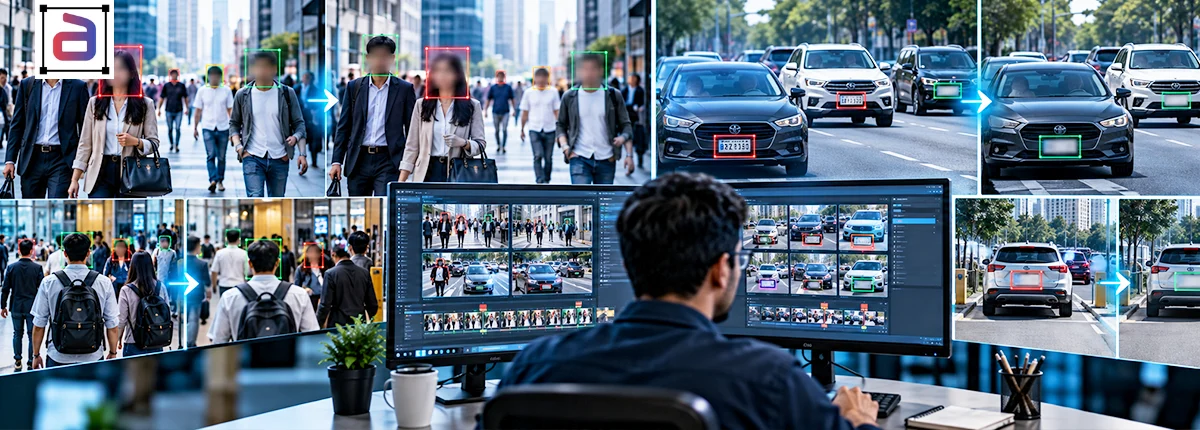
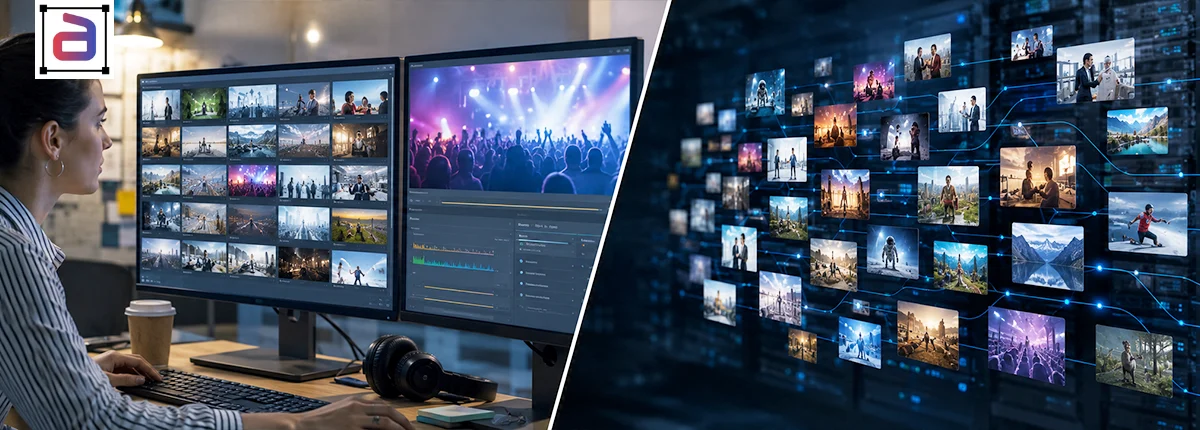
The media and entertainment industry is undergoing a fundamental shift: video is no longer just content to be stored, streamed, and watched. It is becoming a rich source of machine-readable intelligence. Streaming platforms, broadcasters, sports organizations, production studios, advertising companies, and digital publishers are managing enormous video libraries. Yet raw video files alone cannot give AI systems the context they need. Machines must understand what is happening, who or what appears in a scene, which activities occur, and when those events take place. This is where video classification and tagging become essential. By converting unstructured video into structured, searchable datasets, organizations can create the foundation for AI-powered discovery, recommendations, moderation, contextual advertising, content analytics, and automated media workflows. For media companies pursuing AI at scale, that principle has become increasingly important.
Key Points
- Video classification and tagging transform raw video into structured, searchable datasets that support AI-powered content discovery, recommendations, moderation, and analytics.
- Scalable video annotation requires temporal accuracy and consistent labeling, especially when identifying actions, objects, scenes, events, and contextual information across large video libraries.
- Video annotation outsourcing helps media companies scale efficiently by providing trained annotators, specialized workflows, and quality assurance without building large in-house teams.
- Annotera delivers scalable, high-quality video annotation solutions designed to help media and entertainment companies build reliable AI training datasets for next-generation applications.
What Is Video Classification and Tagging?
Video classification involves assigning predefined categories to videos or video segments. Tagging goes a step further by attaching specific attributes, entities, actions, or contextual information to individual scenes or temporal segments. Consider a sports video. A classification system might identify it as football content, while detailed tags could identify:
- Players and teams
- Stadium environments
- Goals and assists
- Fouls and penalties
- Crowd reactions
- Player celebrations
- Game intervals
- Advertisements and brand logos
Similarly, an entertainment platform could tag scenes based on characters, locations, objects, emotions, activities, dialogue, and visual themes. The result is a structured metadata layer that enables AI systems to search and interpret video more intelligently.
Why Searchable Video Data Matters
A large video archive can contain millions of hours of content. Finding a specific scene manually is inefficient, particularly when traditional metadata only includes basic information such as title, genre, date, or creator. AI-ready video classification changes this equation. With granular annotation, a media organization could search for queries such as:
- Scenes containing a specific vehicle
- Videos featuring outdoor nighttime environments
- Clips showing a particular sport or activity
- Content containing specific products or logos
- Scenes involving multiple people
- Moments associated with particular emotions or behaviors
This creates opportunities for semantic video search, automated content indexing, recommendation engines, personalized experiences, and faster editorial workflows. For AI developers, it also creates valuable training data for computer vision and multimodal models.
The Challenge of Video Annotation at Scale
Video is significantly more complex to annotate than static imagery because it contains a temporal dimension. A person appearing in one frame may move, disappear, interact with another person, or perform an action several seconds later. An annotation workflow therefore needs to capture not only what appears but also how the content changes over time. Common challenges include:
Volume and Turnaround
Media organizations continuously generate and acquire new content. Annotation teams must process large volumes without creating production bottlenecks.
Temporal Context
Actions and events unfold across multiple frames. Annotators need clear rules for determining when an event begins and ends.
Taxonomy Complexity
A video may contain multiple overlapping categories, objects, activities, and contextual signals. Poorly designed taxonomies can result in inconsistent labels.
Human Consistency
Different annotators may interpret ambiguous scenes differently. Calibration, detailed guidelines, reviewer checks, and quality assurance are therefore critical.
Multimodal Context
Modern AI systems increasingly combine video with audio, speech, text, and other signals. A robust dataset may need to connect visual events with dialogue, speakers, sounds, and semantic information.
Building Structured Datasets for Media AI
A successful video annotation program begins with a clearly defined annotation taxonomy. Annotera works with AI teams to structure workflows around the intended model and business objective. Depending on the use case, a taxonomy might include: Content categories: Movies, sports, advertisements, documentaries, news, entertainment Scene attributes: Indoor, outdoor, urban, rural, studio, stadium Objects: People, vehicles, products, animals, equipment Actions: Running, walking, dancing, driving, cooking, playing sports Events: Goals, collisions, performances, interviews, celebrations Contextual attributes: Emotions, environments, brands, visual themes Once the taxonomy is established, videos can be segmented and annotated according to precise project guidelines. This transforms video from an unstructured archive into a dataset that AI systems can actually learn from.
How Video Annotation Outsourcing Enables Scale
For organizations processing millions of video assets, building and maintaining an internal annotation operation can become expensive and operationally complex. This is where video annotation outsourcing can provide a strategic advantage. Instead of hiring, training, and managing a large annotation workforce internally, organizations can work with an experienced video annotation company that already has trained specialists, established workflows, annotation infrastructure, and quality-control processes. Annotera, for example, combines trained human annotators with structured workflows and multi-layer quality assurance to deliver scalable video annotation. Its video annotation capabilities include object classification, tracking, activity recognition, segmentation, keypoint annotation, and other computer vision tasks.
“Scale should never come at the expense of annotation quality.”
That principle is particularly important for media AI, where inconsistent metadata can propagate directly into model training and ultimately affect search, recommendation, or classification performance.
Why Choose Annotera for Video Annotation?
Annotera approaches annotation as an AI data engineering challenge—not simply a labeling task. As a specialized data annotation company, Annotera provides annotation across video, image, audio, text, and multimodal datasets. Its workflows are designed around human expertise, scalable delivery, and layered quality validation. For video projects, Annotera offers:
- Scalable annotation teams for high-volume datasets
- Human-in-the-loop workflows for complex visual interpretation
- Multi-layer quality assurance to improve consistency
- Custom annotation taxonomies aligned with model requirements
- Frame-level and temporal annotation
- Object, activity, scene, and behavior labeling
- Secure workflows for sensitive video assets
- Flexible delivery models for evolving AI programs
Annotera’s dedicated annotation model is particularly useful for projects where teams need continuity and domain familiarity as datasets grow. The company states that its quality framework includes annotator-level review, team-lead spot checks, and independent QA validation.
Data Annotation Outsourcing: Beyond Cost Reduction
Data annotation outsourcing is often viewed primarily as a way to reduce operational costs. For sophisticated AI teams, however, its strategic value extends much further. An experienced annotation partner can help organizations:
- Accelerate dataset production
- Access trained annotation specialists
- Establish consistent labeling standards
- Scale capacity as data volumes change
- Reduce internal operational overhead
- Introduce structured quality-control processes
- Support multiple annotation modalities
For media and entertainment companies, this means internal AI teams can focus more heavily on model development, experimentation, product innovation, and deployment while specialized annotation operations handle large-scale dataset preparation.
Applications Across Media and Entertainment
Structured video datasets can support a wide range of AI applications.
Intelligent Content Discovery
AI can identify scenes, objects, actions, and themes to make large archives easier to search.
Recommendation Engines
Granular video metadata can help recommendation systems understand content beyond basic genres and descriptions.
Automated Content Moderation
Classification and tagging can help identify potentially inappropriate, restricted, or policy-sensitive content.
Contextual Advertising
Advertisers can use video intelligence to understand the environments and themes surrounding advertising opportunities.
Sports Analytics
Annotated footage can identify players, actions, events, and game situations for automated analysis.
Archive Monetization
Previously difficult-to-search video archives can become structured, discoverable assets that support new content and commercial opportunities.
The Future Is Searchable, Structured Video
The next generation of media AI will require more than larger video libraries. It will require better-understood video. Classification and tagging provide the semantic foundation that allows machines to transform visual content into usable intelligence. When these annotations are accurate, consistent, and scalable, media companies can unlock applications ranging from semantic search and automated indexing to recommendation, moderation, advertising, and advanced video analytics. For organizations exploring video annotation outsourcing, selecting the right partner is therefore a strategic decision. The objective should not simply be to label more videos—it should be to build datasets that remain useful as AI models, taxonomies, and business requirements evolve. Annotera brings together trained annotation specialists, scalable workflows, human-in-the-loop expertise, and rigorous quality processes to help organizations convert complex video libraries into production-ready AI training data.
Turn Your Video Library Into AI-Ready Data With Annotera
Your video library contains valuable intelligence. The challenge is making that intelligence accessible to AI. Annotera can help you classify, tag, structure, and scale your video datasets with accuracy and consistency. Whether you are building a recommendation engine, semantic video search platform, content moderation system, sports analytics solution, or next-generation media AI application, our team can design an annotation workflow around your requirements. Ready to build a smarter, searchable video dataset? Contact Annotera today and start your annotation pilot.
A closely related read: The Art of Video Annotation for Computer Vision.