
Hearing Emotion: The Art of Audio Sentiment Tagging
Customer experience is inherently emotional—but most CX analytics systems still treat it as transactional. Surveys capture what customers say. Text analytics capture what customers write. But in voice interactions, the most important signals are often never spoken at all. Frustration, hesitation, confidence, relief, and urgency live in tone, pace, pitch, and pauses—not in words. This […]
Tone vs. Text: Why Audio Sentiment Is More Accurate
Text-based sentiment analysis has been a workhorse for data teams for years. It’s fast, scalable, and easy to integrate. But as voice becomes a dominant interface—from contact centers to voice assistants—many data scientists are encountering a hard limitation: Text strips emotion out of speech. What remains is a partial signal that often misrepresents how a […]
Customer Support Excellence: Detecting Voice Sentiment

CRM systems are excellent at tracking what happened—tickets, resolutions, SLAs, and outcomes.What they consistently miss is how the customer felt while it was happening. In voice-based support, emotion is often the strongest indicator of churn risk, escalation, and satisfaction. Yet most CRM platforms still rely on text transcripts, tags, or post-call surveys to infer sentiment.This […]
Training AI to Read Human Tone and Mood with Audio Sentiment Labeling

Human emotion is rarely explicitand almost never binary. Audio quality must be assessed first. For content filtering applications of audio annotation, see the audio classification guide for content filtering. See audio noise labeling services. Human emotion is rarely explicit—and almost never binary. In spoken language, tone, pacing and emphasis communicate meaning. Customer support is one […]
Training Smart Devices for Acoustic Scene Recognition
Smart devices hear everything—but understanding where they are is much harder than detecting sound alone. A microphone can tell you that something happened. Acoustic scene recognition tells you what kind of environment the device is in: a street, a kitchen, a factory floor, a vehicle cabin, or a quiet room. For hardware engineers building edge-AI […]
The Role of Audio Classification in Content Filtering
For years, content moderation has focused on what platforms can see and read. Images are scanned. Videos are flagged. Text is parsed and scored. Yet one of the most influential parts of digital content often goes under-analyzed: audio. Shouting, distress, aggression, explicit sounds, and emotional intensity are frequently conveyed through sound rather than words. For […]
Audio Classification for Security: AI-Powered Threat Detection and Surveillance Analytics

In security operations, speed and accuracy decide outcomes. Cameras capture what can be seen—but many threats are heard before they are seen. A raised voice behind a closed door. Glass breaking after hours. A sudden impact, followed by silence. These events often occur outside the field of view, yet they generate strong acoustic signals. This […]
Building High-Accuracy ASR with Ground Truth Data
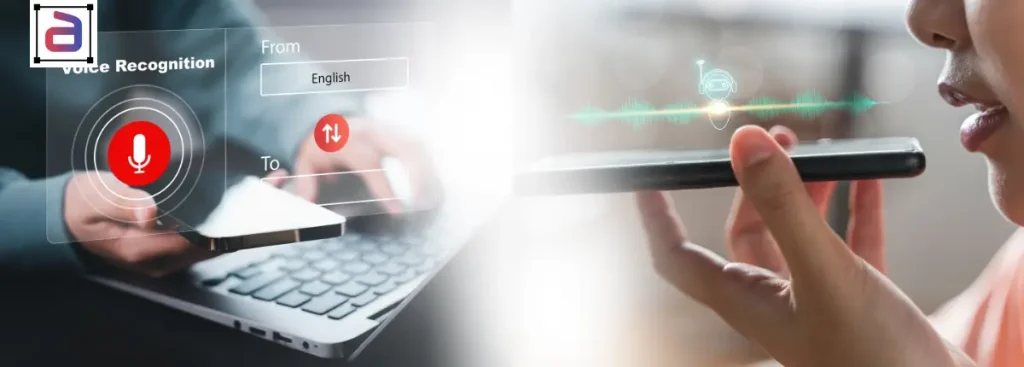
Automatic Speech Recognition systems rarely fail solely because of the model architecture. In practice, the most common reason ASR performance plateaus—or even collapses — in real-world conditions is poor training data. For speech researchers and ASR engineers, transcription for AI training is not clerical work. It is the process of creating ground truth: the reference […]
Verbatim vs. Intelligent: Choosing the Right Audio Transcription Services for Legal and Medical Teams
In legal and medical environments, transcription is not a convenience—it is a record. A single missing word, altered phrase, or misinterpreted pause can change meaning, introduce risk, or compromise compliance. Yet many teams still approach transcription as a one-size-fits-all task. In reality, there are two fundamentally different transcription approaches Audio noise characterization is the upstream […]
Scalable Acoustic Event Detection for Smart Urban Sound Monitoring
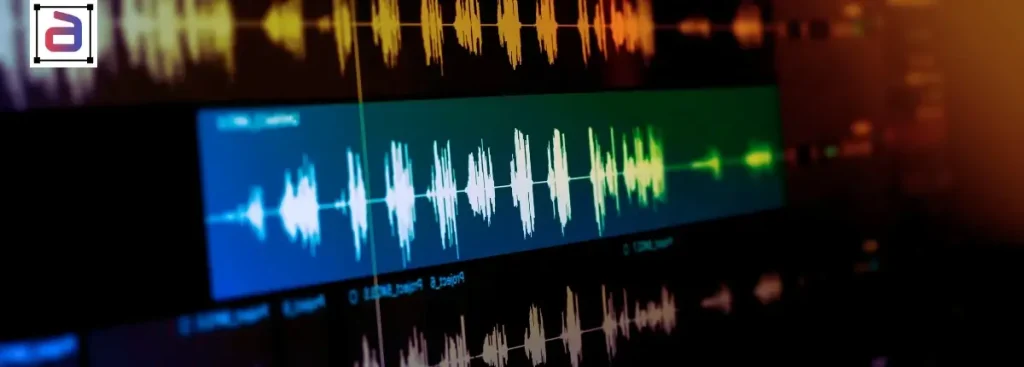
Cities are loud by design. Traffic, construction, public transport, emergency vehicles, crowds, and daily human activity create a continuous acoustic layer that reflects how a city truly functions. For smart city planners, this sound is not noise—it is real-time urban data. To turn that sound into insight, cities increasingly rely on acoustic scene classification and […]