
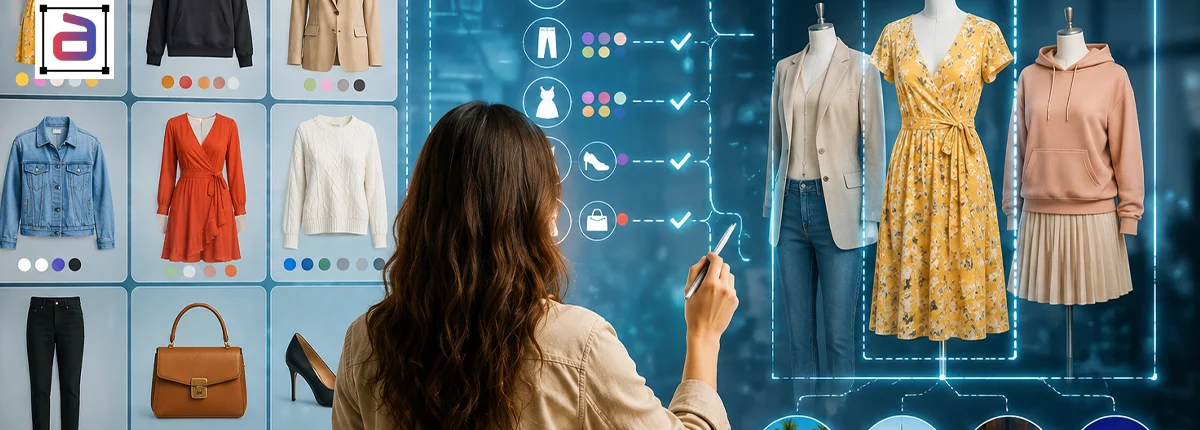
Fashion is no longer driven solely by creativity and consumer trends. Today, artificial intelligence is transforming how fashion brands design, market, recommend, and sell products. From visual search engines and virtual stylists to personalized shopping experiences, AI is becoming a competitive necessity for retailers worldwide. Image classification for Fashion AI enables machines to identify garments, styles, colors, and attributes, helping brands deliver smarter search, recommendations, and personalized shopping experiences. However, the success of fashion AI depends on one critical factor: high-quality training data.
Among the most powerful computer vision techniques shaping the industry is multi-label image classification—a method that enables AI models to recognize multiple attributes within a single fashion image. To achieve this level of intelligence, brands need precise image annotation that captures styles, colors, occasions, materials, and product-specific characteristics. At Annotera, we help fashion brands build robust AI datasets through scalable, high-precision annotation services. As a trusted image annotation company, we understand that the quality of annotations directly determines the quality of AI outcomes. Attribute-rich labels work best alongside video segmentation for e-commerce product masks.
Key Points
- Fashion AI models require multi-label classification — a single garment carries simultaneous attributes of style, color, occasion, and fit that a single-label system cannot capture.
- Annotation taxonomy design is the hardest part of fashion AI datasets: attribute definitions must be consistent enough for annotators yet granular enough for recommendation engines.
- Visual similarity between garment types means annotation errors compound quickly — mislabeled necklines or silhouettes degrade search relevance across thousands of related products.
- Culturally diverse annotators improve dataset quality for global fashion AI because style and occasion labels vary significantly across markets.
Table of Contents
Why Fashion AI Requires Multi-Label Classification
Fashion products rarely fit into a single category. Unlike traditional image classification, fashion products often possess multiple characteristics simultaneously. Therefore, Fashion AI requires multi-label classification to accurately identify attributes, styles, colors, and occasions, thereby enabling more relevant search results, personalized recommendations, and enhanced customer experiences. Consider a women’s dress. It may simultaneously be categorized as:
- Floral
- Summer wear
- Casual
- Maxi dress
- Bohemian style
- Vacation outfit
Traditional image classification assigns only one label to an image. Multi-label classification, however, allows AI models to understand all relevant characteristics simultaneously. This capability mirrors how consumers actually shop. A customer searching for a “blue floral summer dress for beach vacations” expects highly relevant results. Without detailed attribute recognition, AI systems struggle to understand intent and deliver accurate recommendations. As fashion catalogs continue to expand, multi-label classification has become essential rather than optional.
The Business Impact of Fashion AI
The market opportunity is enormous. As consumer expectations continue to evolve, Fashion AI is helping retailers enhance personalization, streamline operations, and improve decision-making. Consequently, businesses can increase customer engagement, optimize inventory management, and drive higher conversion rates while reducing operational costs. The AI In Fashion Market Size was valued at USD 2.46 billion in 2025 and is expected to reach USD 72.56 billion by 2035 and grow at a CAGR of 40.30% over the forecast period 2026-2035.
This rapid adoption aligns with a famous observation from retail visionary Doug Stephens: “The future of retail is not about products. It’s about creating experiences.”
Today, AI is the engine behind many of those experiences. Whether customers are searching for products through images, receiving personalized recommendations, or interacting with AI-powered shopping assistants, accurate product understanding is what drives engagement and conversions. That understanding begins with annotation.
Annotating Fashion Attributes: The Foundation of AI Intelligence
Fashion datasets must capture much more than product categories. To accurately understand fashion products, AI models require detailed attribute annotations. Moreover, labeling elements such as color, style, fabric, and occasion provides essential context, thereby enabling more precise classification, recommendations, and visual search capabilities. For AI systems to make intelligent decisions, images require detailed labels across multiple dimensions.
Product Attributes
These include:
- Sleeve length
- Neckline type
- Collar style
- Hem design
- Fit and silhouette
- Closure type
Visual Characteristics
Models also need information about:
- Color
- Texture
- Fabric appearance
- Patterns
- Embellishments
- Prints
Style Classification
Style-based annotation enables AI systems to identify:
- Casual
- Formal
- Streetwear
- Luxury
- Vintage
- Minimalist
- Bohemian
Occasion-Based Labels
Modern recommendation engines increasingly rely on contextual shopping behavior. Examples include:
- Office wear
- Party wear
- Wedding attire
- Vacation outfits
- Sportswear
- Evening wear
When properly annotated, a single image can contain multiple labels that help AI understand products the way human shoppers do.
Why Annotation Quality Determines Model Performance
One of the biggest misconceptions in AI development is that more data automatically produces better models. While large datasets are important, annotation quality ultimately determines AI accuracy. Therefore, consistent and precise labeling reduces data ambiguity, improves model learning, and consequently enables more reliable predictions, recommendations, and classification outcomes. In reality, better data produces better models.
Andrew Ng, founder of DeepLearning.AI and one of the world’s leading AI experts, famously stated: “Consistently improving the quality of your data is one of the best investments you can make in AI.”
Fashion datasets present unique challenges. A single image may contain multiple garments, overlapping styles, accessories, varying lighting conditions, and subjective fashion interpretations. Without standardized annotation guidelines, inconsistencies quickly emerge. For example:
- One annotator may label an outfit as “business casual.”
- Another may classify it as “formal.”
- A third may simply tag it as “office wear.”
Such inconsistencies create noisy training data that negatively impacts model accuracy. This is why leading retailers increasingly partner with an image annotation company instead of relying solely on internal teams.
Applications of Multi-Label Fashion Classification
Multi-label fashion classification supports a wide range of AI-driven applications. For instance, it enhances visual search, powers personalized recommendations, improves virtual styling experiences, and, ultimately, helps retailers deliver more relevant and engaging customer interactions.
Visual Search
Consumers increasingly prefer searching with images rather than text. Multi-label classification enables AI systems to identify product similarities based on color, style, material, and design attributes, resulting in more accurate search results.
Personalized Recommendations
Recommendation engines thrive on detailed attribute data. Rather than suggesting products based solely on purchase history, AI can recommend items that align with specific style preferences and fashion behaviors. Research consistently shows that personalized experiences significantly increase customer engagement and purchasing likelihood.
AI Styling Assistants
Virtual stylists depend on detailed fashion intelligence. By understanding style categories, occasions, seasonal relevance, and complementary aesthetics, AI assistants can create outfit recommendations that feel more human and context-aware.
Inventory Intelligence
Fashion retailers manage thousands of SKUs across rapidly changing collections. Multi-label classification helps automate catalog organization, improve product discoverability, and streamline inventory management processes.
Why Brands Choose Image Annotation Outsourcing
Building large-scale fashion datasets internally can be costly, time-consuming, and difficult to scale. As fashion datasets continue to grow in size and complexity, many brands turn to image annotation outsourcing. Consequently, they gain access to specialized expertise, scalable resources, faster project delivery, and consistent annotation quality while optimizing operational costs. This is why many enterprises turn to image annotation outsourcing partners. Key advantages include:
Scalability
Large annotation teams can process millions of fashion images efficiently while maintaining consistency.
Domain Expertise
Fashion annotation requires specialized knowledge of garment structures, style terminology, and evolving consumer trends.
Faster Time-to-Market
Outsourcing accelerates dataset creation, enabling brands to launch AI initiatives faster.
Quality Assurance
Dedicated review workflows ensure annotation accuracy across complex, multi-label datasets. For organizations building advanced fashion AI solutions, choosing the right annotation partner can significantly impact project success.
Why Fashion Brands Trust Annotera
At Annotera, we recognize that fashion AI demands more than generic image labeling. At Annotera, we combine fashion domain expertise with rigorous quality assurance processes. As a result, brands receive accurate, scalable, and AI-ready annotations that accelerate model development, improve performance, and support long-term innovation in Fashion AI. Our expert annotation teams are trained to capture the nuances that matter most—from style categories and garment attributes to occasion-based classifications and visual aesthetics. As a leading data annotation company, we provide:
- Multi-label image annotation
- Fashion attribute tagging
- Product taxonomy development
- Quality-controlled annotation workflows
- Scalable image annotation outsourcing solutions
- End-to-end data annotation outsourcing services
Our approach combines domain expertise, rigorous quality standards, and flexible delivery models to help organizations build AI-ready datasets that drive measurable business outcomes. Image classification for Fashion AI helps identify multiple product attributes, styles, and occasions, creating the structured data needed for advanced computer vision applications.
The Future of Fashion AI Starts with Better Data
As fashion retailers continue embracing AI-driven innovation, the importance of high-quality annotations will only grow. Multi-label image classification enables AI systems to understand fashion the way consumers do—through a combination of attributes, styles, contexts, and occasions. The brands that invest in accurate, scalable annotation today will be the ones delivering smarter search experiences, stronger personalization, and more intelligent customer journeys tomorrow. As Fashion AI continues to evolve, the demand for high-quality training data will only increase. Therefore, accurate annotation and well-structured datasets are essential for improving model performance, enabling innovation, and delivering more personalized customer experiences.
Ready to Build Smarter Fashion AI?
Annotera helps fashion brands, retailers, marketplaces, and AI innovators create high-quality annotated datasets that power next-generation computer vision solutions. Contact Annotera today to discover how our expert image annotation services can help you accelerate model performance, improve recommendation accuracy, and unlock the full potential of Fashion AI.
A closely related read: a complete guide to product image categorization.
Read also : Image Annotation Guide