











Clinical notes, radiology images, patient records, and biomedical data collected under HIPAA-aware protocols structured for diagnostic AI, clinical NLP, and medical imaging training.
Medical and healthcare data collection sources the clinical content that diagnostic AI, medical imaging models, clinical NLP systems, and healthcare virtual assistants train on. Annotera collects across the full spectrum of clinical data types of radiology images, pathology slides, ECG and EEG recordings, clinical notes and discharge summaries, surgical video, patient interaction transcripts, and biomarker data under HIPAA-aware handling protocols that protect patient privacy at every stage of the sourcing process.
Healthcare data is the most compliance-sensitive modality in AI. A single gap in consent, de-identification, or access control can make an entire dataset unusable. Annotera builds the compliance framework consent management, PHI de-identification, audit-trail documentation, and restricted-access transfer into the collection protocol before a single record is sourced. With 20-plus years of BPO experience and a 350-plus-person delivery team, Annotera provides compliance-ready medical datasets for diagnostics, imaging, clinical decision support, and surgical AI.
Annotera’s medical and healthcare data collection services cover every clinical data type that healthcare AI programs require, each sourced under the consent, de-identification, and compliance protocols the domain demands.
Physician notes and structured EHR records from licensed clinical and simulated sources for clinical NLP, ICD coding, and healthcare, LLM fine tuning.
X rays, CT scans, MRI images, and ultrasound capture across clinical indications and patient profiles for diagnostic AI and imaging model training so.
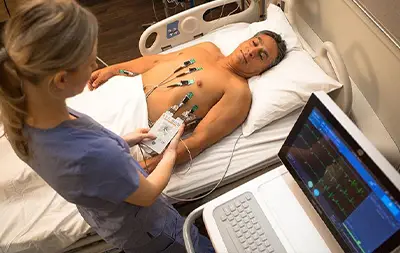
12 lead ECG recordings and EEG multi-channel signals from clinical and ambulatory settings for arrhythmia detection and neural signal groupings today.
Whole slide images and H&E-stained tissue sections from digital pathology platforms, and clinical sources for tumor detection and report automations.
Physician dictations, nurse patient interactions, and team communications under HIPAA aware rules for medical transcription AI and clinical ASRs so.
Telehealth consultation transcripts, patient portal messages and remote monitoring logs for healthcare virtual assistant AI and triage automation.
Operating theatre footage and laparoscopic surgical recordings from simulated and clinical settings for surgical AI and instrument detection AI now.
De identified genomic sequences, lab results, and biomarker panels from licensed research sources for precision medicine and drug response tools now.
Medical data is the most tightly regulated data type in AI. Every Annotera healthcare collection engagement is built on a compliance-first protocol consent management, PHI de-identification, access control, and audit-trail documentation applied before sourcing begins, not retrofitted later.


Healthcare AI spans diagnostics, imaging, clinical NLP, patient monitoring, surgical assistance, and pharma research. Annotera delivers medical datasets tailored to the clinical domain, compliance framework, and annotation taxonomy of each program you run.
We define clinical data categories, sourcing channels, consent requirements, PHI de-identification standards, access controls, and the annotation taxonomy before sourcing begins.
Our specialists source clinical data through licensed healthcare partners, IRB-approved research programs, and data use agreements under HIPAA-aware handling at every step.
Every record undergoes PHI de-identification to Safe Harbor or Expert Determination standards, followed by clinical quality review and a documented audit trail for compliance.
Medical datasets are delivered organized by modality and clinical domain under restricted access, with the option to scale volume or extend to new data types as needed.
Healthcare data collection carries compliance obligations no other modality matches. Annotera’s features are built around the clinical, regulatory, and annotation demands of medical AI, not generic sourcing workflows.

Specialists with healthcare experience understand the clinical context of each data type radiology, EHR structure, and ECG traits ensuring data is clinically meaningful directly.

Patient data is de-identified to HIPAA Safe Harbor or Expert Determination standards, with a de-identification report included in every delivery for compliance verification soon.

Medical data routes directly into Annotera's annotation team for radiology labeling, NLP extraction, signal classification, and video annotation, no compliance gap at all always.
We deliver secure, compliant, and clinically structured healthcare data collection services. Medical AI teams trust us to source the clinical training data their models need under the compliance framework the healthcare domain demands.

20-plus years of BPO experience in healthcare-adjacent programs, including claims processing and clinical documentation, giving Annotera firsthand understanding of workflows.

HIPAA-aware consent management, PHI de-identification, and audit-trail documentation are not add-ons, they are built into every medical collection engagement from day one today.

ISO 27001-aligned and SOC-compliant processes protect clinical data at every stage restricted-access transfer, role-based access, and encrypted storage built into datasets now.

Every medical dataset is reviewed for clinical completeness, de-identification, and signal fidelity before handoff, guaranteeing structured, usable clinical data delivery now.

350-plus trained specialists and a global delivery network scale medical collection, from single-institution pilots to continuous multi-site production without relaxing rules.

Here are answers to common questions about medical data collection, compliance requirements, clinical data types, and how medical datasets fit into AI and ML training programs.
Medical and healthcare data collection is the process of sourcing clinical content radiology images, clinical notes, ECG recordings, pathology slides, patient interaction transcripts, surgical video, and biomarker data that healthcare AI models train on. It is the most compliance-sensitive data collection domain in AI, requiring patient consent management, PHI de-identification, access control, and audit-trail documentation at every stage of the sourcing process.
HIPAA-aware handling means consent is obtained from data subjects before collection, Protected Health Information (PHI) is de-identified to HIPAA Safe Harbor or Expert Determination standards before delivery, access is restricted to authorized personnel under role-based controls, and a de-identification report and audit trail accompany every delivery. It is built into the collection protocol from the first brief, not applied afterward.
Annotera collects clinical notes and EHR records, radiology and medical imaging, ECG and EEG signals, pathology and histology images, medical audio and clinical dictations, patient interaction and telemedicine transcripts, surgical and procedural video, and genomic and biomarker data. Each type is sourced using the consent, de-identification, and access control framework appropriate for the data type and clinical setting.
Yes. Annotera sources real de-identified clinical data through licensed healthcare data partners, IRB-approved research programs, and institutional data use agreements. Where real clinical data is unavailable, insufficient in volume, or risky for specific patient populations, synthetic clinical data such as AI-generated imaging, simulated records, or synthetic bio signals can complement or replace it. Annotera provides both under one program.
Every medical dataset undergoes a documented de-identification process automated PHI detection followed by expert review validated against HIPAA Safe Harbor or Expert Determination standards. A de-identification report documenting the method, identified fields, and residual risk assessment is included with every medical data delivery for compliance verification by your legal and privacy teams.
Yes. De-identified clinical data is organized by data type, clinical category, and annotation class, then routed directly into Annotera’s annotation team for radiology labeling, NLP extraction, signal classification, pathology marking, or surgical video annotation. One partner handle both collection and annotation under the same compliance framework, no handoff gap, no compliance reset between sourcing and labeling.
Medical imaging is delivered in the format your pipeline requires DICOM for radiology and clinical imaging, WSI formats (SVS, NDPI, MRXS) for pathology whole-slide images, standard image formats (PNG, JPEG) for annotation platforms that don’t support DICOM natively, and HL7 FHIR-compliant formats for EHR and clinical record data. Format requirements are defined in the collection brief.