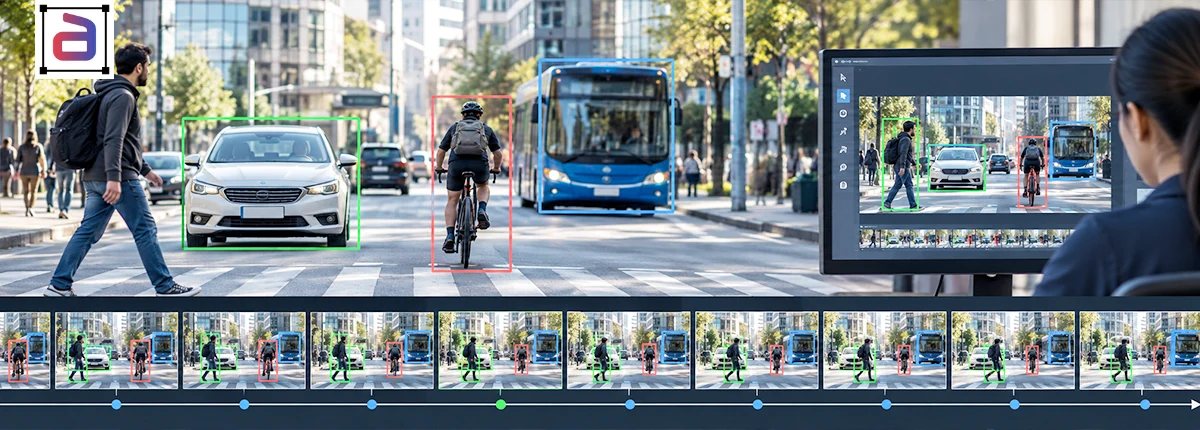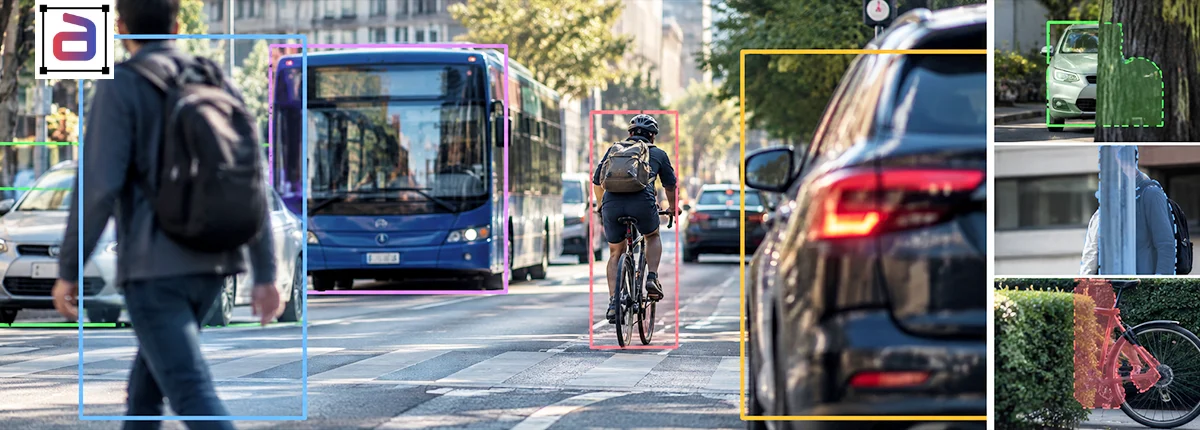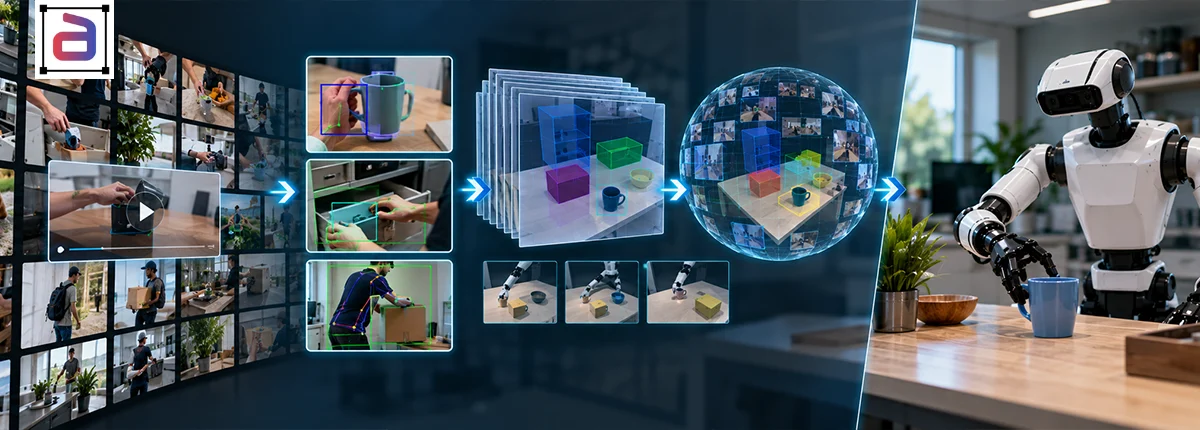
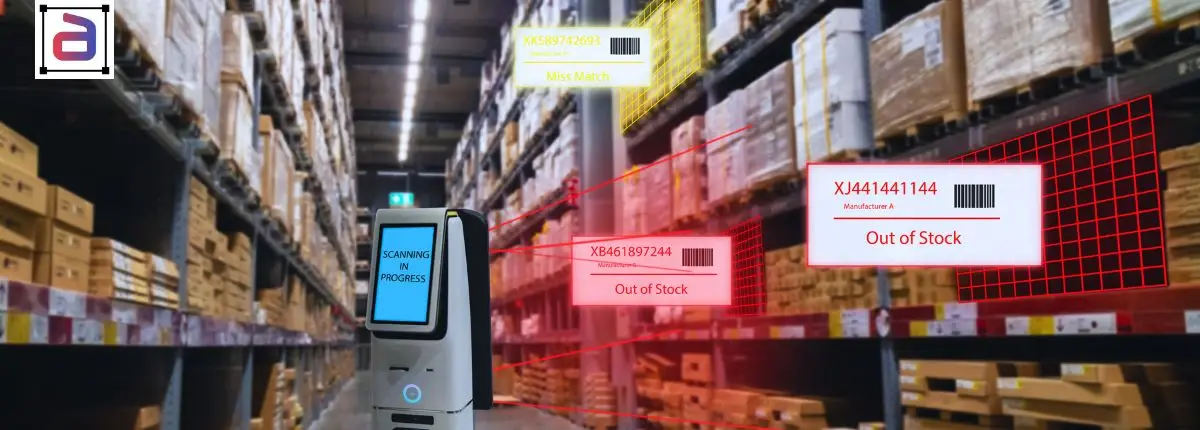
2D bounding boxes are the backbone of product detection in e-commerce. They train AI models to find, identify, and classify products in images automatically. This powers everything from visual search to shelf monitoring to catalog automation. Learn more about bounding box precision and its impact on detection accuracy.
For e-commerce developers, bounding boxes provide the visual ground truth needed to move models from prototype to production. Accurate, consistent labels lead to faster training, better accuracy, and less rework downstream.
Key Points
- 2D bounding boxes label every product in an image with a rectangle and a class name.
- E-commerce teams use them for catalog automation, visual search, and shelf monitoring.
- High-volume annotation requires consistent quality controls across large datasets.
- Managed annotation services scale faster and more reliably than in-house teams.
Table of Contents
What Are 2D Bounding Boxes for Product Detection?
A 2D bounding box is a rectangle drawn around a product in an image. Each box gets a class label — like “sneaker,” “cereal box,” or “shampoo bottle.”
In e-commerce, these objects include products, SKUs, packaging variants, accessories, and grouped items. The model learns two things from each box: what the product is and where it appears in the frame.
Unlike simple image classification, bounding boxes teach models spatial awareness. This matters for multi-product images, shelf photos, lifestyle shots, and user-generated content where products appear in cluttered scenes.
How Bounding Boxes Fit Into Product Detection Pipelines
In a typical computer vision pipeline, bounding box annotation connects raw images to trained detection models. Labeled images feed supervised learning algorithms. Those algorithms learn to locate products, tell similar SKUs apart, and handle partial occlusions.
As datasets grow, consistent box placement helps models generalize. They learn to perform under different lighting, backgrounds, and camera angles. Without high-quality labels, even advanced model architectures struggle in real-world e-commerce settings.
Key E-Commerce Use Cases
Bounding box annotation powers several high-value e-commerce applications. Here are the most impactful ones.
- Product Catalog Automation: Bounding boxes automate product tagging and speed up new SKU onboarding by 5–10x. Teams train detection models on labeled product images. The model then auto-classifies incoming inventory with minimal human input. Image categorization services help enterprises classify and manage visual assets at scale through accurate annotation and metadata tagging.
- Visual Search and Recommendations: Customers upload a photo and get matching product results. Detection models trained with bounding boxes make this possible. They identify products in the image and return visually similar items from the catalog.
- Shelf and Inventory Monitoring: Retailers use bounding box data to identify products on shelves. This detects out-of-stock items and checks planogram compliance. Accurate detection in retail settings requires labels that handle overlapping products, varied lighting, and different packaging.
- Counterfeit and Duplicate Detection: Well-labeled training data helps visual comparison models flag duplicate listings and counterfeit products. The model learns to spot small differences between genuine items and near-identical fakes.
Why Product Annotation Is Harder Than It Looks
E-commerce images create unique labeling challenges. Each one directly affects how well your model performs.
- Similar-looking products. Two shampoo bottles from the same brand may differ only in scent. Label text is tiny. Annotators need clear rules to tell them apart.
- Overlapping items. Products on a shelf often touch or stack. Without strict guidelines, different annotators draw different boxes — and that hurts accuracy.
- Image quality varies widely. Product images come from studio photos, phone cameras, and security feeds. Lighting, angles, and resolution all differ.
- Huge catalogs. A typical retailer has 10,000–100,000 SKUs. Labeling at this scale requires large teams following identical rules.
- Frequent catalog changes. Seasonal refreshes and new launches mean re-annotation is ongoing, not one-time.
Solving these problems takes more than better tools. It requires trained human judgment, documented guidelines, and quality assurance at every step.
In-House vs. Managed Annotation: Which Scales Better?
Many e-commerce teams start with in-house labeling. It works for small datasets. But it breaks down at scale for three reasons:
- Speed. Internal teams can’t ramp fast enough during product launches or holiday spikes.
- Consistency. Without structured QA, annotation quality drifts as the team grows.
- Cost. Training and managing annotators pulls engineers away from model work.
Managed annotation services solve all three. A provider like Annotera brings trained annotators, standardized guidelines, multi-layer QA, and capacity that flexes with demand.
Quality Standards That Make or Break Your Model
Not all bounding boxes are equal. Several quality factors determine whether your labeled data helps or hurts model performance:
- Box tightness. Boxes should fit snugly around the product. Loose boxes include background pixels that confuse the model.
- Consistent labels. Every annotator must label the same product the same way. Even small naming differences (“running shoe” vs. “sneaker”) create class confusion.
- Complete coverage. Every relevant product in each image needs a box. Missing objects cause missed detections in production.
- Edge case rules. Partially visible products, reflections, and unusual angles need documented handling. Without rules, annotators guess — and guesses create noise.
Even small drops in annotation quality introduce noise into training data. This leads to false positives and missed detections when the model goes live.
How Annotera Handles Product Detection Annotation
Annotera delivers 2D bounding box annotation through a managed, human-in-the-loop model built for high-volume e-commerce programs. Here’s how the process works:
- Guideline development. We create labeling rules specific to your product categories, edge cases, and detection goals.
- Team training. Dedicated annotators learn your taxonomy and practice on sample images before starting production work.
- Annotation at scale. Trained teams label your images following documented guidelines. We handle seasonal surges without quality drops.
- Multi-layer QA. Every batch goes through self-review, peer review, and independent QA validation. We target 99%+ accuracy.
- Performance tracking. We monitor annotator accuracy over time and retrain as needed. This prevents quality drift on long-running projects.
This gives e-commerce teams reliable training data without the overhead of managing an internal annotation operation.
Build Better Product Detection with Accurate Labels
2D bounding boxes remain the foundation of product detection AI. When labeled with precision and consistency, they unlock faster training, higher accuracy, and more reliable real-world performance.
The quality of your annotation data determines how well your model performs in production. Get it right, and you ship faster. Get it wrong, and you rework everything.
Ready to start? Get a free annotation quote from Annotera →
Frequently Asked Questions
What is a 2D bounding box in product detection?
A 2D bounding box is a rectangle drawn around a product in an image. It tells the AI model what the product is and where it appears. This is the most common method for training object detection models.
How accurate do bounding boxes need to be?
Production models typically need 95%+ annotation accuracy. Loose boxes, mislabeled classes, or inconsistent edge case handling all reduce performance. Annotera targets 99%+ accuracy through multi-layer QA.
Can bounding boxes handle products that look very similar?
Yes, but it requires detailed guidelines. When products differ only in small details like color or label text, annotators need clear rules and reference images to label them consistently.
How many images do I need to annotate?
Most production models need 5,000–50,000 labeled images. The exact number depends on your product categories and visual complexity. Start with a 500–1,000 image pilot to validate your approach.
Why use managed annotation instead of in-house labeling?
Managed services provide trained teams, standardized QA, and scalable capacity. This matters most during product launches and seasonal spikes when demand surges beyond what internal teams can handle.
A closely related read: Training AI for Factory Automation with Image Boxes.