
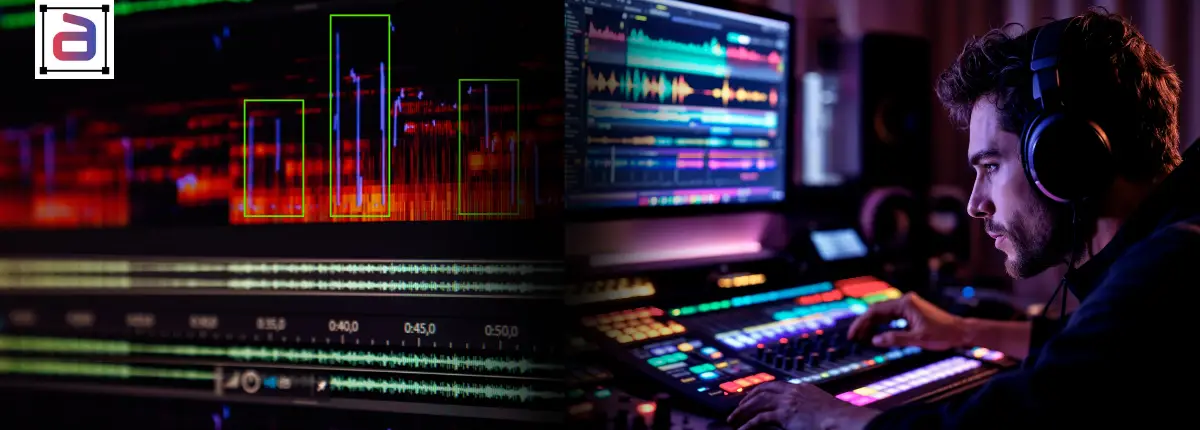
For years, content moderation has focused on what platforms can see and read. Images are scanned. Videos are flagged. Text is parsed and scored. Yet one of the most influential parts of digital content often goes under-analyzed: audio. Shouting, distress, aggression, explicit sounds, and emotional intensity are frequently conveyed through sound rather than words. When platforms rely only on transcripts or visual cues, critical context is lost. This is why audio classification guide is becoming a foundational capability for modern content filtering systems.
“If moderation only reads content, it misses what users actually hear.”
Table of Contents
Key Points
- Audio content filtering requires annotation that labels harmful acoustic events — aggression, distress, explicit content — separately from harmful speech content, as both require different detection models.
- Audio-only content filtering catches violations that text moderation misses because harmful context is often conveyed through tone, volume, and emotional intensity rather than through the words used.
- Audio content filtering annotation must cover the acoustic signatures of harmful content at different audio quality levels: a threat whispered in a low-quality recording looks very different from the same threat at broadcast quality.
- Annotation programs for audio content filtering must continuously update to cover new acoustic threat signatures, as adversarial users adapt their audio patterns to evade previously trained classifiers.
Table of Contents
Why Audio Is A Blind Spot In Content Moderation
Audio carries meaning even when language does not. A single phrase can sound playful, threatening, or distressed depending on tone and intensity. In many cases, harmful content is conveyed entirely through non-verbal sound. Audio often escapes moderation systems that excel at text and visuals. However, harmful intent frequently hides in tone, context, and background sounds. Therefore, without structured audio analysis, platforms risk missing cues to abuse, misinformation, and subtle policy violations embedded in spoken content.
Common moderation gaps caused by audio-blind systems include:
- Aggressive tone hidden behind neutral words
- Distress sounds with no explicit language
- Explicit audio masked by background noise
- Shouting or panic is not reflected in transcripts
For media platforms operating at scale, these gaps increase risk to users, advertisers, and brand trust.
What is Audio Classification In Content Filtering?
Audio classification is the process of categorizing audio segments based on the type of sound they contain. In content filtering, this means identifying whether audio includes signals that may violate policy, require review, or demand prioritization. Audio classification in content filtering refers to automatically categorizing sounds, speech, or acoustic events to assess policy compliance. For example, systems detect violence, hate speech, or distress signals; consequently, platforms can flag, prioritize, or remove harmful audio content more effectively.
Unlike speech-to-text moderation, audio classification focuses on:
- Non-verbal sounds
- Vocal intensity and aggression
- Distress and panic signals
- Environmental and contextual audio cues
Annotera provides audio classification as a service, labeling client-provided audio so moderation models can be trained to recognize these signals reliably. We do not sell datasets or pre-built audio libraries.
Common Audio Categories Used In Content Filtering: Audio Classification Guide
Effective moderation requires clearly defined audio categories that align with platform policy. Audio classification in content filtering is the automatic categorization of sounds, speech, or acoustic events to assess policy compliance. For example, systems detect violence, hate speech, or distress signals; as a result, platforms can flag, prioritize, or remove harmful audio content more effectively.
| Audio category | Example sounds | Platform risk |
| Aggression | Shouting, hostile tone | Harassment and abuse |
| Distress | Crying, panic, fear | User safety |
| Explicit audio | Sexual sounds, moaning | Policy violations |
| Violence | Impacts, screams | Harmful content |
| Alarm signals | Sirens, alerts | Contextual risk |
These categories often coexist within a single clip, making overlap-aware labeling essential. Audio classification annotation enables AI systems to identify and categorize various audio types for effective content moderation. Common categories include speech, profanity, hate speech, violence, music, background noise, alarms, animal sounds, and explicit content. Consequently, accurate annotation improves automated filtering, compliance, and user safety across digital platforms.
Audio Classification Vs Text-based Moderation
Text moderation works well for large-scale screening, but it cannot fully capture emotional or non-verbal risk signals. Audio classification and text-based moderation serve different roles; however, they complement each other. While text analysis captures written intent, audio models detect tone, emotion, and background cues. Therefore, combining both methods improves detection accuracy, context awareness, and overall content safety coverage.
| Dimension | Text-based moderation | Audio classification |
| Tone and intensity | Inferred | Directly detected |
| Non-verbal harm signals | Not visible | Clearly identifiable |
| Sarcasm and shouting | Often missed | Accurately captured |
| Distress without words | Invisible | Audible |
“A transcript can look safe while the audio is anything but.”
Why Labeled Audio Is Critical For Moderation Accuracy
Audio moderation systems rely on supervised learning. Without high-quality, labeled audio, models struggle to distinguish between acceptable and harmful content. Labeled audio provides the ground truth models rely on for reliable moderation. Moreover, precise annotations capture context, speaker intent, and acoustic nuances. As a result, systems reduce false positives, improve sensitivity to harmful signals, and deliver more consistent, policy-aligned content filtering outcomes.
Poor labeling leads to:
- High false-positive rates
- Missed harmful content
- Inconsistent enforcement
- Bias across accents and speaking styles
Professional sound classification services ensure that labels are consistent, policy-aligned, and scalable across large content volumes.
Scaling Audio Classification For Media Platforms
Media platforms face unique challenges when scaling audio moderation:
- Massive daily content volume
- Short-form and long-form audio formats
- Rapid policy updates
- Regional and cultural variation
To manage this, leading platforms use a layered approach:
- Automated pre-classification to flag risky audio
- Human-in-the-loop review for ambiguous cases
- Continuous re-labeling as policies evolve
This approach balances speed with accuracy.
Why Media Platforms Outsource Audio Classification
Building internal audio annotation teams is costly and difficult to scale. Platforms often outsource because:
- Audio annotation requires specialized training
- Consistency across reviewers is hard to maintain
- Policy-driven labeling needs frequent updates
- Enforce Security and privacy controls
| In-house moderation | Professional audio classification |
| Limited scalability | Elastic capacity |
| Reviewer drift | Consistent labeling standards |
| High operational cost | Predictable throughput |
How Annotera Supports Audio Classification For Content Filtering
Annotera helps media platforms build safer ecosystems through a scalable audio classification guide.
Our support includes:
- Policy-aligned audio taxonomies
- Multi-label and overlap-aware classification
- Human QA with agreement checks
- Secure handling of sensitive user content
- Dataset-agnostic workflows using client audio only
The result is moderation-ready labeled audio that integrates cleanly into existing trust and safety pipelines.
Business Impact: Safer Platforms And Stronger Trust
When platforms integrate an audio classification guide into content filtering, they benefit from:
- Reduced exposure to harmful content
- Faster escalation of high-risk material
- Improved advertiser confidence
- Stronger user trust and retention
| Without Audio Classification | With Audio Classification |
| Hidden risk signals | Clear audio context |
| Delayed intervention | Faster moderation |
| Inconsistent enforcement | Policy-aligned decisions |
“Trust is built when platforms understand not just what is said, but how it sounds.”
Conclusion: Content Safety Requires Listening, Not Just Reading
As media becomes more voice-driven, content moderation must evolve beyond text and visuals. Audio classification provides the missing layer of understanding, enabling platforms to detect harm, distress, and policy violations more accurately.
Audio-aware moderation is no longer optional for platforms that operate at scale.
Annotera enables media platforms to strengthen content filtering with professional audio classification services—securely labeling real-world audio so AI systems can listen responsibly.
Talk to Annotera to add reliable audio classification to your content moderation strategy.
A closely related read: Audio Classification Services: Identifying Soundscapes for Smarter IoT.