
Gesture Recognition for Gaming: Scaling Keypoint Data

Table of Contents Key Points Gaming gesture annotation must cover the full gesture vocabulary of the game, including variations in execution speed, distance from sensor, and dominant-hand versus non-dominant-hand performance. Gaming AI requires gesture annotation that includes rejection gestures — movements that are not valid commands — to train models that avoid false […]
Facial Recognition and Landmark Annotation: A Guide
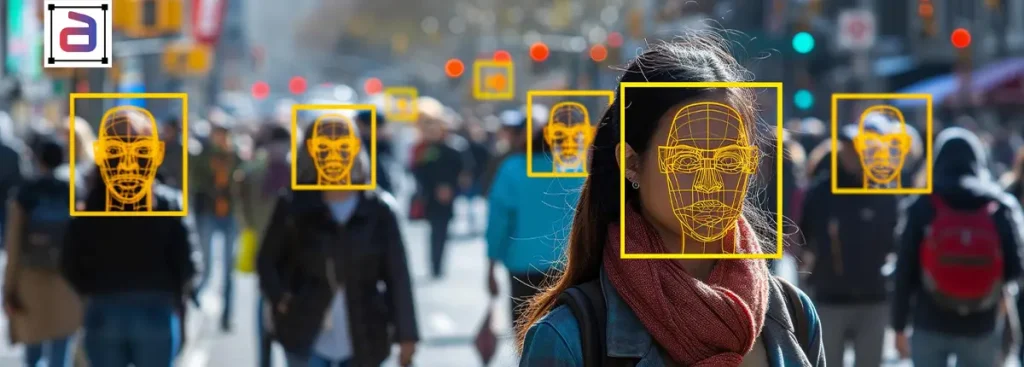
Facial recognition systems operate at the intersection of security, trust, and accuracy. Whether a system controls physical access, verifies digital identity, or supports surveillance workflows, it must distinguish individuals reliably across lighting conditions, camera angles, and expressions. However, facial recognition does not succeed solely by detecting faces. Instead, it succeeds by understanding facial structure. Table […]
Landmark Annotation for AR and Virtual Try-Ons

Key Points Landmark annotation for AR try-on must capture the three-dimensional geometry of the face or body surface, not just the 2D landmark positions, because virtual try-on requires correct surface mapping in 3D space. AR try-on annotation must cover a diverse range of face shapes, body types, skin tones, and hair colours to prevent […]
The Role of Landmarks in Virtual Reality Identity

Key Points Landmark annotation for virtual reality identity enables VR systems to track facial expression and head pose in real time, supporting avatar animation that mirrors the wearer’s emotional state and gaze direction. VR identity landmark annotation must cover the motion range of full head rotation and facial expression that VR use involves. In […]
High-Fidelity Landmark Tagging for Identity Verification

Key Points High-fidelity identity verification landmark annotation must maintain sub-pixel precision standards because identity matching accuracy degrades proportionally with landmark positioning error. Annotation programs for identity verification must include adversarial examples — look-alikes, twins, AI-generated face images — alongside genuine pairs to train systems that detect identity fraud, not just identity. Identity verification landmark […]
Emotion Detection: Training AI to Read Human Faces

Key Points Emotion detection annotation must distinguish between posed expressions (performed for the camera) and spontaneous expressions (occurring naturally), as the two represent different training signal qualities for empathetic AI. Facial action coding system (FACS) annotation is more precise than emotion label annotation for training emotion detection AI because it captures the muscle movement […]
Polygon Annotation for Complex Agricultural Imaging
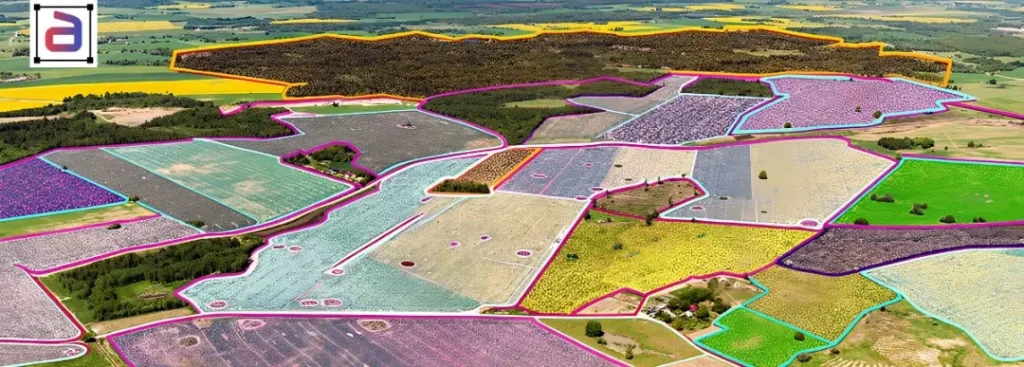
Key Points Agricultural polygon annotation must delineate field boundaries, crop rows, and individual plant instances at resolutions that vary widely depending on whether the imagery is satellite, drone, or ground-level camera data. Crop stress and disease annotation requires annotators with agricultural knowledge to distinguish visually similar conditions — nutrient deficiency, drought stress, fungal infection […]
Training AI to Recognize Irregular Shapes in Motion

Key Points Irregular shape annotation in video requires tracking boundary changes across frames as objects deform, rotate, and partially occlude, a temporal precision challenge that static polygon annotation does not address. Motion annotation for irregular shapes must define which deformation events change the annotation boundary and which are within-frame noise that the boundary should […]
E-commerce Product Video Segmentation: How to Build Accurate Product Masks

A product can look very different from one frame of an e-commerce video to the next. It may rotate, deform, pass behind a hand, reflect studio lights, move in and out of focus, or briefly disappear behind another product. That makes e-commerce product video segmentation more than a matter of tracing a clean outline. Before […]
Polyline Annotation for Infrastructure Inspection

Key Points Infrastructure inspection polyline annotation must capture crack, corrosion, and joint displacement geometry precisely enough that AI systems can distinguish measurement-significant defects from surface variations. Inspection annotation must cover the same defect type across different surface materials, lighting conditions, and camera distances to train models that generalise across infrastructure types and inspection methods. Polyline […]