
How To Label Human Actions in Video Datasets For AI Models

Artificial intelligence systems that interpret human behavior are rapidly transforming industries such as autonomous driving, smart surveillance, sports analytics, and healthcare monitoring. From detecting suspicious activities in security footage to analyzing player movements in sports, these systems rely heavily on well-annotated video datasets. However, AI models cannot interpret human actions from raw video alone. They […]
Lane Annotation for ADAS: Defining Topology and Drivable Path Ground Truth
A lane-detection dataset can contain beautifully traced road markings and still be incomplete for an ADAS system that needs to understand how lanes connect, where they merge, which direction they support, and which road space is actually navigable. That is because lane annotation for ADAS is not only a line-tracing problem. Depending on the downstream […]
Mapping the Road: Polyline Labeling for Road Safety
Key Points Road safety annotation requires polyline labels that capture the geometry, type, and regulatory meaning of road markings, not just their visual appearance. Annotation for road safety AI must cover marking degradation: faded centre lines, worn edge markings, and weathered stop lines are the conditions under which safety-critical decisions must still be made […]
Analyzing Behavior: The Power of Video Event Tracking
Key Points Video event tracking annotation must define temporal event boundaries precisely: the difference between annotating when a behaviour is first visible and when it is fully established produces systematically different model outputs. Behaviour analysis AI trained on event-level annotations must cover the transition between events — the frames between a standing still event […]
Security AI: Detecting Threats with Event Tagging

Key Points Security event annotation must capture the full temporal sequence of a threat event, including precursor behaviours, so that AI systems learn to detect threats before they fully materialise. Security AI annotation must define clear distinctions between suspicious and normal behaviour for the specific deployment environment: what counts as loitering in a car […]
Training AI to Recognize Activity and Interactions

Key Points Activity recognition annotation must capture multi-person interactions, not just individual actions, because many socially significant behaviours — cooperation, confrontation, handoff — only emerge at the interaction level. Annotation for interaction detection must define spatial proximity thresh Temporal continuity in bounding boxes is what makes multi-person interaction tracking reliable. See temporal continuity in […]
Event Tracking for Sports: Automating Highlight Clips

Key Points Sports highlight annotation must define what makes a clip a highlight for each sport separately: a goal in football, a serve ace in tennis, and a tackle in rugby require different annotation criteria. Automated highlight generation AI trained on event-level annotations must cover the crowd and broadcast response signals that accompany significant […]
Scaling Temporal Segmentation for High-Volume Video

Key Points Temporal segmentation at high video volume requires annotation tooling that supports boundary prediction, interpolation, and batch review — manual frame-by-frame segmentation cannot maintain Temporal continuity in bounding boxes is the quality property that makes tracking reliable. See temporal continuity in video bounding boxes. Manual frame-by-frame segmentation cannot maintain quality at scale. Segmentation […]
Training Self-Driving Cars with Depth-Aware 3D Cuboid Annotation
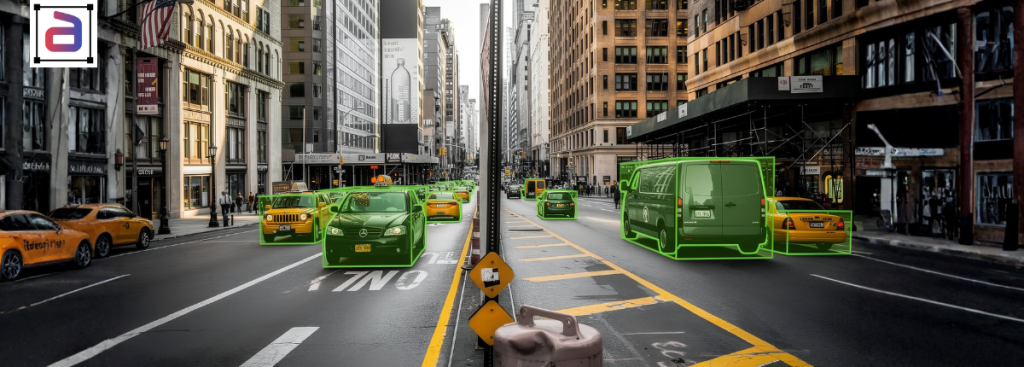
Imagine a self-driving car approaching a busy intersection. A cyclist swerves left, a delivery truck double-parks, pedestrians cross against the light, and a motorcycle weaves through traffic. The autonomous vehicle has milliseconds to understand not just what these objects are, but exactly where they exist in space, how they Precise yaw orientation in 3D cuboid […]
Mastering Pose Estimation with Keypoint Annotation

Pose estimation is transforming sports analytics. By accurately tracking athletes’ body positions and movements, AI models can deliver insights into performance optimization, injury prevention, tactical analysis, and technique improvement. At the core of effective pose estimation lies high-quality keypoint annotation — the precise labeling of anatomical landmarks (joints, limbs, and key body points) across images […]