
Keypoint Labeling for Healthcare: Patient Motion Tracking

Key Points Patient motion tracking annotation requires skeletal keypoint labels that capture the full range of clinical movement patterns, including assisted movement, compensatory gait, and pathological postures. Healthcare keypoint annotation must annotate partial and occluded body regions that clinical scenarios. For polygon-based boundary annotation in medical imaging, see polygon annotation services for medical AI. Clinical […]
Training AI to Recognize Human Gestures in Video
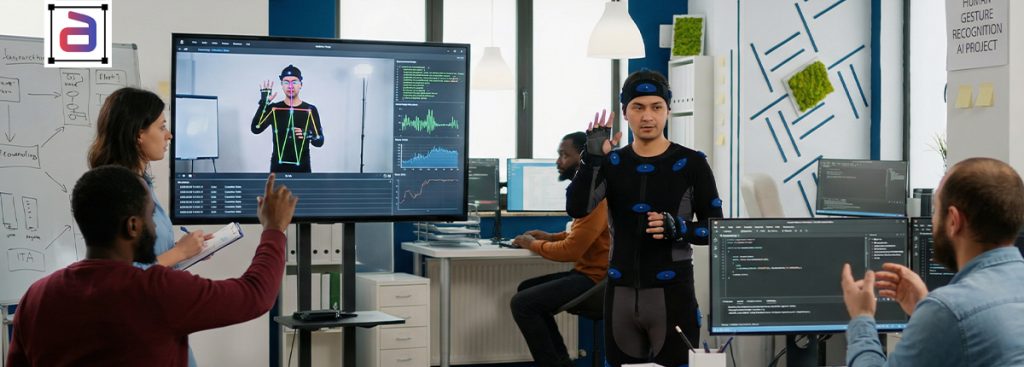
As digital experiences move beyond screens and keyboards, gestures are becoming a primary mode of interaction. From touchless kiosks and smart environments to AR/VR and accessibility tools, gesture-based interfaces allow users to communicate intent naturally through movement. Keypoint detection for AI enables models to track human joints and movements across video frames, forming the foundation […]
Keypoints vs. Skeletal Annotation: A Comparative Guide

When building computer vision systems that interpret human motion, the choice between keypoint annotation and skeletal annotation shapes everything downstream: model architecture, annotation cost, inference speed, and the types of motion the model can recognize. This is not a choice between better and worse. It is a choice between different trade-offs. Learn more about fine-grained […]
Bounding Boxes vs. Polygons: When to Choose Speed in Video Annotation
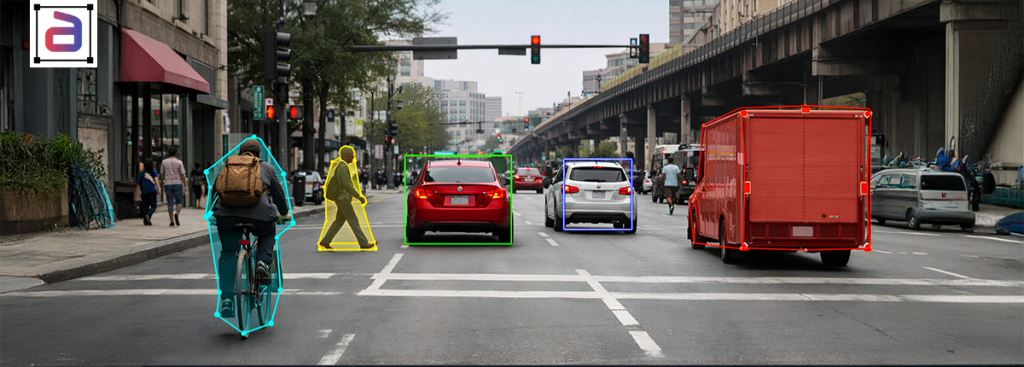
Video annotation projects rarely fail because of model architecture alone. In most cases, timelines, budgets, and scalability challenges emerge much earlier—at the annotation strategy stage. One of the most common decisions project managers face is whether to use bounding-box video labeling or polygon annotation. Both techniques have a place in video-based AI systems. However, they serve different […]
Spatial Awareness: The Role of 3D Cuboid Video Annotation in Robotics
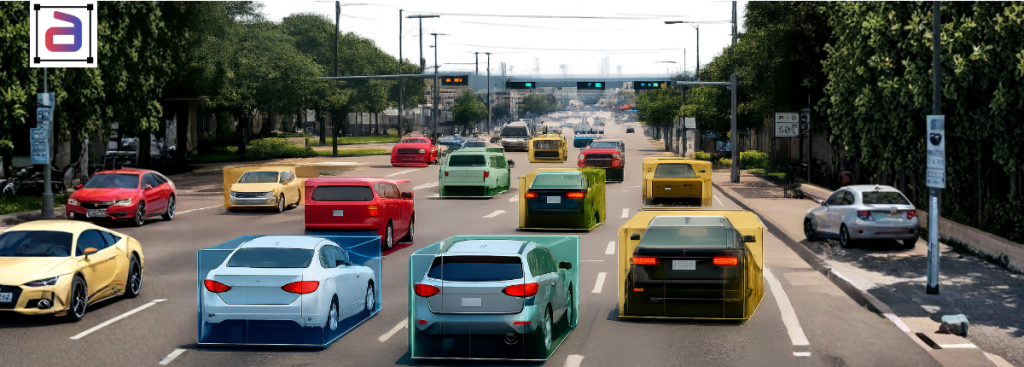
Robotic systems do not operate in flat, controlled environments. They move through dynamic, three-dimensional spaces filled with objects that vary in size, shape, distance, and orientation. For robots to navigate safely and interact intelligently with the world, they must understand depth, volume, and spatial relationships—not just pixels. Learn more about video cuboid annotation for robotic […]
The Mechanics of Temporal Continuity in Bounding Boxes
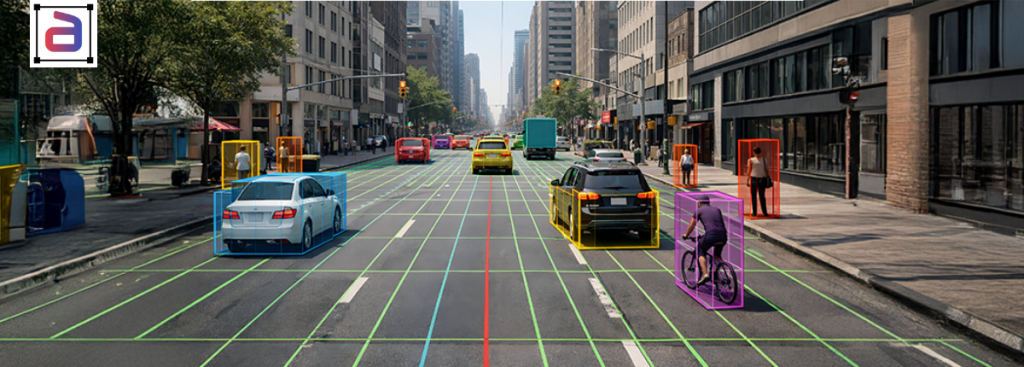
Key Points Temporal continuity in bounding box annotation means maintaining consistent object identity across video frames, even as appearance, position, and occlusion change between consecutive frames. Tracking ID assignment is the most error-prone step in temporal bounding box annotation: a track break that assigns a new ID to a continuing object contaminates all temporal training […]
Beyond 2D: Why 3D Cuboids Are Vital for Navigation
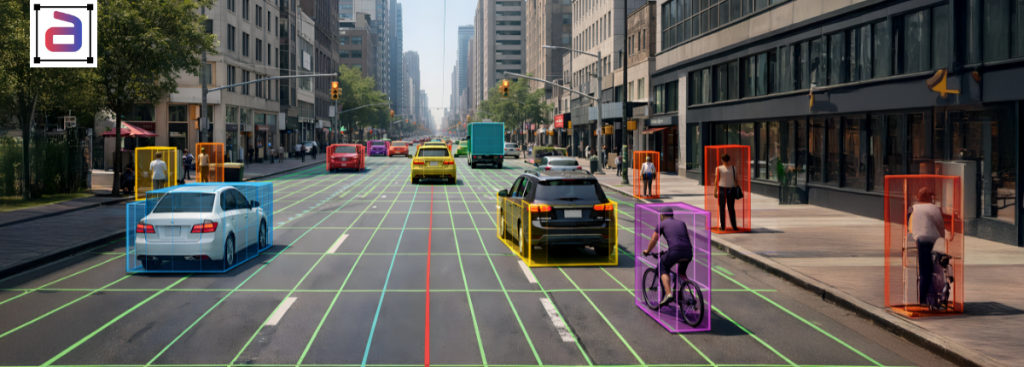
Navigation is fundamentally a spatial problem. Whether the system is a mobile robot, an autonomous vehicle, or a delivery drone, successful navigation depends on real-time understanding of distance, depth, orientation, and free space Yaw and orientation techniques in 3D cuboid annotation are the focus of 3D cuboid techniques for yaw and orientation.. While 2D perception […]
Solving the Orientation Challenge in 3D Video Labeling
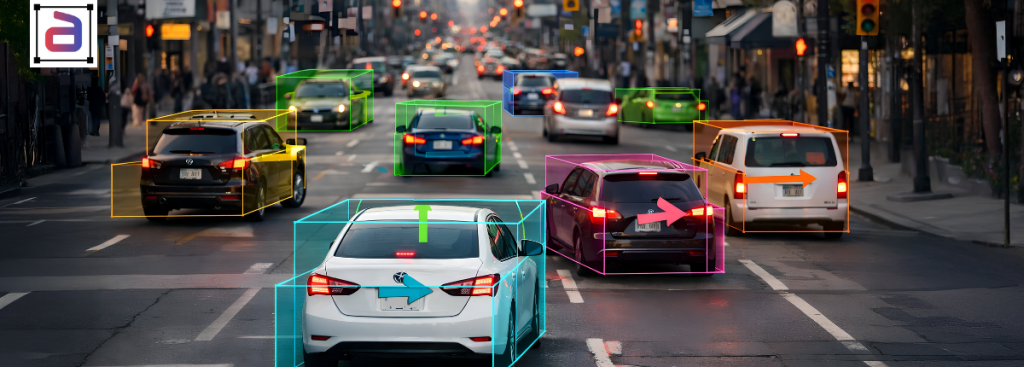
Why Orientation Is the Hardest Problem in 3D Video Annotation In 3D perception systems, detecting objects is only the first step. Understanding how those objects are oriented in space Yaw-specific 3D cuboid orientation techniques are detailed in 3D cuboid annotation techniques for yaw and orientation. Oriented in space—how they are rotated, aligned, and positioned relative […]
Medical AI Polygon Annotation: How to Build Reliable Ground Truth
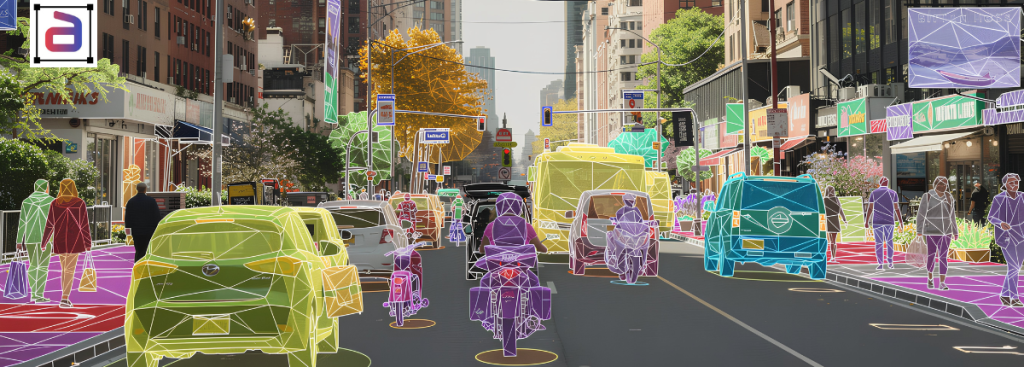
In medical AI, drawing a polygon around a tumor, organ, lesion, instrument, or tissue region is not simply an image-labeling task. The annotation becomes part of the ground truth used to train or evaluate a model. That changes the quality question. The goal is not to create the polygon with the most points. The goal […]
Polygon vs. Segmentation: Choosing the Right Mask
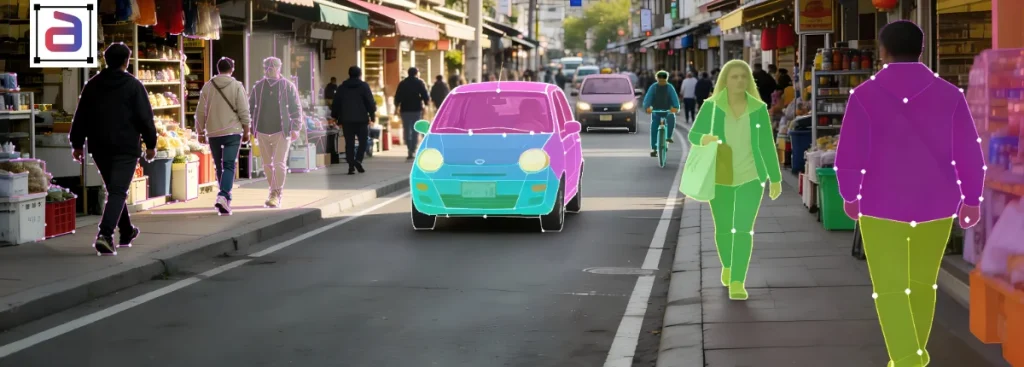
Key Points Polygon annotation captures object boundaries with arbitrary precision; instance and semantic segmentation assign class labels at the pixel level — the difference is between boundary definition and pixel classification. Polygons are the right choice when object boundaries matter but full pixel labeling would be redundant: product masking, object tracking, and fine-grained detection all […]