In the world of AI and machine learning, the terms data annotation and data labeling are often used interchangeably. While they are related, they are not the same. Understanding the real difference helps AI teams make better decisions about data preparation, tool selection, and overall project strategy.
Key Points
- Data labeling assigns a category or attribute to a data item; data annotation adds richer contextual information — spans, bounding boxes, relationships, attributes — that enables more complex AI tasks than simple classification.
- The distinction between labeling and annotation matters for tooling selection, annotator skill requirements, and quality metrics: annotation tasks require more complex guidelines and more expensive quality assurance than simple labeling.
- Many AI teams use ‘labeling’ and ‘annotation’ interchangeably in casual usage, but the distinction becomes operationally important when scoping projects that involve structured output beyond categorical assignment.
- Annotation encompasses labeling: every annotation task includes at least a labeling decision, plus additional structured information that provides context the model cannot infer from the label alone.
Table of Contents
The “Garbage In, Garbage Out” Principle
High-performing AI models depend heavily on the quality of training data. Poorly prepared data leads to unreliable predictions, regardless of how advanced the algorithm is. This is why the distinction between data labeling and data annotation becomes important as projects move from experimentation to production.
Data Labeling vs Data Annotation: Key Differences
What is Data Labeling?
Data labeling is the process of assigning one or more tags or categories to an entire piece of data. It answers the basic question: “What is this?”
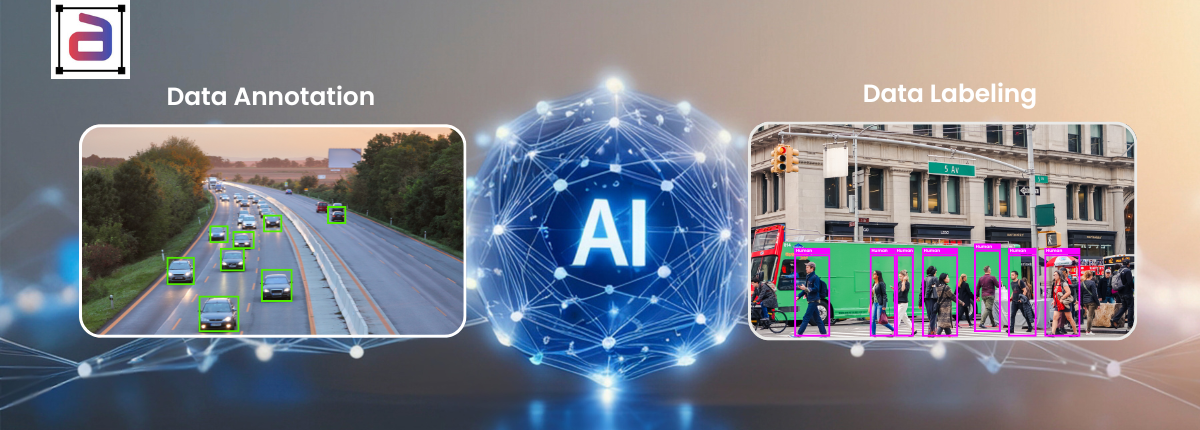
Examples: – Tagging an email as “Spam” or “Not Spam” – Classifying an image as “Cat” or “Dog” – Labeling a customer review as “Positive”, “Negative”, or “Neutral.”
What is Data Annotation?
Data annotation is more detailed and contextual. It involves adding rich metadata, marking specific parts of the data, and providing deeper information about structure, relationships, and attributes.
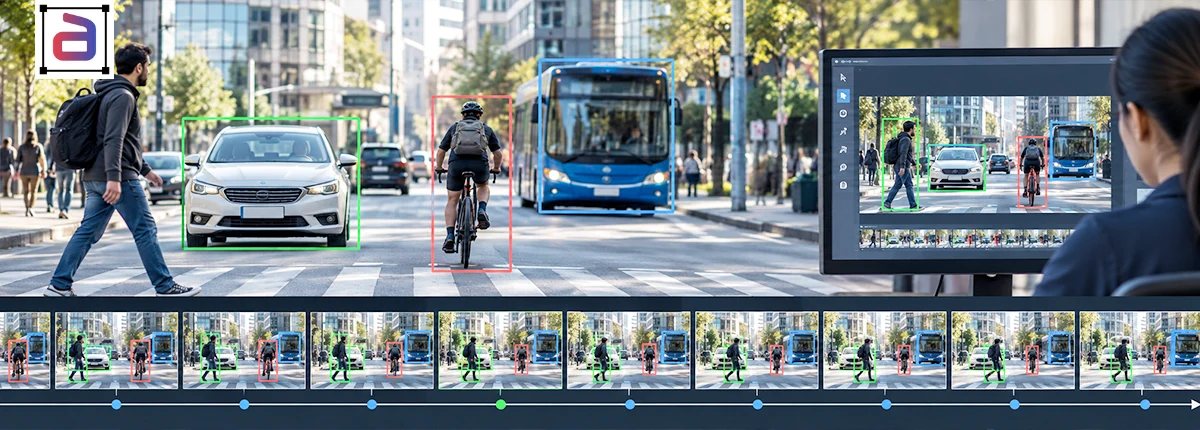
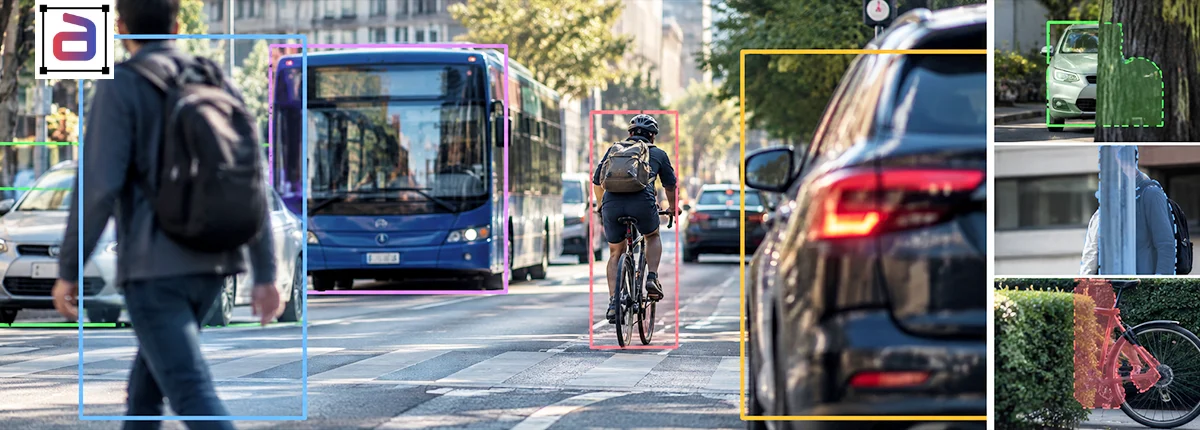
Examples: – Drawing bounding boxes around objects in an image – Creating pixel-level segmentation masks – Marking named entities (person, organization, location) in text – Adding timestamps, speaker identification, and emotion tags to audio
Side-by-Side Comparison
| Aspect | Data Labeling | Data Annotation |
|---|---|---|
| Purpose | Basic categorization | Detailed understanding and context |
| Complexity | Simpler and faster | More precise and time-intensive |
| Use Cases | Classification tasks | Object detection, segmentation, NLP, speech AI |
| Output | Single or few tags per item | Rich, structured metadata |
| Skill Level | General annotators sufficient | Often requires domain expertise |
When to Use Labeling vs Annotation
Use data labeling for: – Early-stage experiments – Simple classification problems – Sentiment analysis at a high level
Use data annotation for: – Computer vision (object detection, segmentation) – Autonomous vehicles – Medical imaging – Advanced NLP and speech recognition – Any project requiring spatial or contextual understanding
Conclusion
The difference between data annotation and data labeling is more than just a matter of terminology. It affects project cost, timeline, model performance, and scalability. As AI systems become more sophisticated, the depth and quality of data preparation become critical success factors.
If you’re building AI models and need expert support with data labeling, annotation, or full dataset preparation, feel free to reach out to Annotera.
Where Data Annotation and Data Labeling Diverge in Practice
The clearest way to see the difference between annotation and labeling is to look at what the ML engineer receives at the end of each process. With labeling, the output is a classification: this email is spam, this image contains a cat, this review is negative. The label is a single value attached to a data point. With annotation, the output is structured metadata that describes internal properties of the content: the bounding box coordinates around the cat, the segmentation mask that traces its outline, the keypoints marking its joints, the attribute tags indicating it is sleeping. An annotated dataset contains enough spatial and semantic detail that a model can learn not just to recognize a category but to locate, segment, and understand the properties of what it sees.
Why the Distinction Matters for Project Scoping
Treating annotation and labeling as interchangeable leads to common scoping mistakes. A team that thinks they are labeling images for object detection will be surprised when the actual task requires bounding boxes, class labels, occlusion flags, and truncation flags per object per frame — a task that is 5–10× more labor-intensive than simple classification labeling. Accurate terminology at the project kickoff stage drives accurate cost estimation, tooling selection, and annotator skill requirements. Annotera scopes every project with a task taxonomy review that distinguishes classification from localization from semantic annotation, so clients receive accurate turnaround and cost estimates before work begins.
Choosing the Right Approach for Your AI Use Case
The choice between labeling and annotation is determined entirely by your model architecture and its inference output. If your model outputs a single class score per input, you need labels. If it outputs spatial coordinates, pixel masks, keypoint arrays, or structured entity graphs, you need annotation. Most production AI systems combine both: a classification label that names the scene, plus annotation that describes its contents. Annotera delivers both as part of a unified data pipeline, with quality controls applied at the label level and the annotation level independently.
A closely related read: The Future Of Work: How Data Annotation Is Evolving Into A Hybrid Human-AI Process.
A closely related read: From Pixels to Predictions: How Data Annotation Fuels Computer Vision With Deep Learning.