
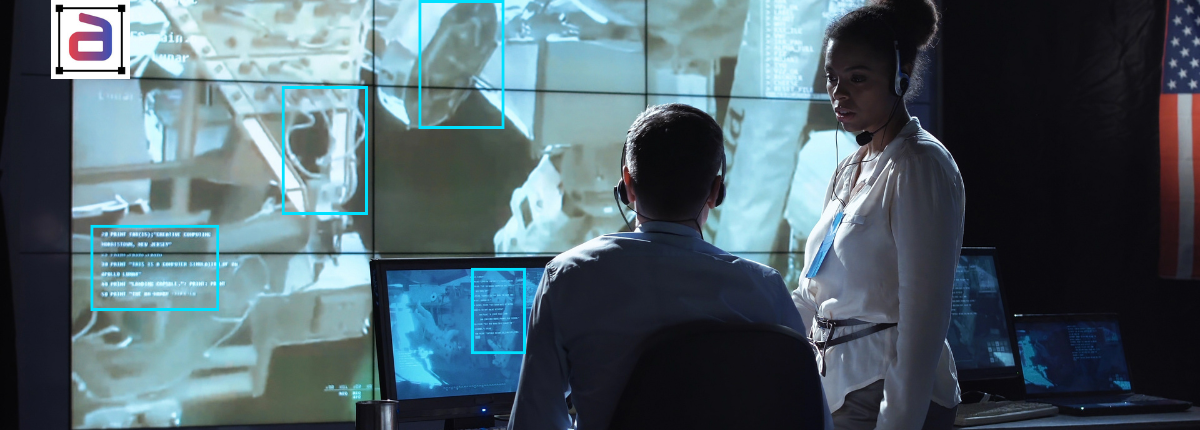
Computer vision is transforming industries — from autonomous vehicles and medical imaging to retail analytics and industrial inspection. At the heart of every successful computer vision system is high-quality training data. Raw images and videos must be carefully labeled before models can learn to detect objects, recognize patterns, or make accurate predictions.
Key Points
- Computer vision with deep learning depends on pixel-accurate labels at scale: the model learns to detect and classify from the patterns in the annotated pixels, so annotation error is model error.
- Deep learning for computer vision requires annotation programs that cover the full data distribution of the deployment environment: a model trained on sunny daytime images will fail on overcast or nighttime footage regardless of its architecture.
- Annotation for deep learning computer vision must include hard negative examples — images that visually resemble the target class but are not it — to train models that distinguish true positives from visually similar distractors.
- The data curation decisions in a computer vision annotation program — which images to include, which to exclude, how to handle ambiguous cases — shape model behaviour as much as the labeling decisions do.
Table of Contents
Why Data Annotation Matters for Computer Vision
Deep learning models learn from examples. The quality, consistency, and richness of annotations directly determine how well a model performs in real-world conditions. Poor annotations introduce noise and bias, while high-quality annotations enable models to generalize across varied lighting, angles, occlusions, and environments.
Key Benefits of High-Quality Annotation
- Improved object detection and classification accuracy
- Better handling of complex scenes and edge cases
- Reduced false positives and false negatives
- Stronger model generalization across domains
- Faster and more reliable deployment in production
Common Types of Annotation in Computer Vision
- Bounding Boxes — Quick object localization
- Polygons & Instance Segmentation — Precise object boundaries
- Semantic Segmentation — Pixel-level scene understanding
- Keypoints & Pose Estimation — For human or object posture analysis
- Video Annotation & Tracking — Temporal consistency across frames
Market Trends Driving Demand
The demand for high-quality annotated data is growing rapidly as companies move computer vision from pilots to production. Industries such as automotive, healthcare, retail, manufacturing, and security are investing heavily in annotation to improve model performance and accelerate time-to-market.
Best Practices for Computer Vision Annotation
- Develop clear, detailed annotation guidelines with examples and edge cases
- Use domain-experienced annotators for specialized applications
- Implement multi-stage quality assurance and consensus reviews
- Combine AI pre-labeling with human validation for scale
- Prioritize edge cases and rare scenarios
- Maintain consistency through ontology governance
Conclusion
Data annotation is the foundation of successful computer vision systems. The quality and precision of your labeled datasets often determine whether your AI models succeed or fail in real-world applications. As computer vision projects grow in complexity and scale, investing in professional annotation becomes increasingly strategic.
If you’re building or scaling computer vision solutions and need reliable, high-quality data annotation support, feel free to reach out to Annotera.
How Annotation Quality Determines Deep Learning CV Performance
Computer vision models trained with deep learning are exceptionally sensitive to annotation quality at the boundary level. Unlike classical CV algorithms that operate on engineered features, deep learning models learn directly from the labeled pixels in training data — which means annotation errors are not filtered by a feature extraction step. They are learned.
Annotation Requirements by CV Task Type
- Image classification: Lowest annotation complexity. Single label per image. Quality failure mode is incorrect label assignment on ambiguous or multi-object images. Requires clear class definition guidelines with negative examples.
- Object detection: Bounding box accuracy (IoU ≥0.85 against ground truth) and class correctness. Tight-fit bounding boxes reduce background inclusion that confuses the model on object texture vs. context.
- Semantic segmentation: Pixel-level boundary accuracy determines model performance on thin structures (poles, wires, pedestrian outlines). Boundary erosion or dilation of 3–5 pixels degrades mIoU by 2–4 points on thin-class categories.
- Instance segmentation: Combines object detection and segmentation quality requirements. Annotation must correctly separate touching or overlapping instances — the primary failure mode in crowd scenes and densely packed shelf images.
- Keypoint detection: Anatomical consistency across annotators. IAA on keypoint placement must be measured in pixel distance, not just presence/absence.
Scaling Annotation for Large-Scale CV Datasets
Production CV datasets for deep learning typically require 100,000–1,000,000+ labeled images. At this scale, annotation quality must be monitored continuously, not just verified at delivery. Annotera embeds gold-standard samples throughout production batches to detect annotator drift, applies statistical sampling QA at 5–10% of output, and provides rolling IAA dashboards so ML teams can identify quality trends before they compound across large annotation runs.
Annotation Tooling for Deep Learning CV Pipelines
The annotation tool layer matters more for deep learning CV datasets than for NLP tasks because spatial precision is enforced (or not enforced) at the tool level. Polygon snapping, edge-detection-assisted boundary placement, and zoom controls for sub-pixel accuracy are not cosmetic features — they are quality infrastructure. Annotera’s annotation tooling is calibrated per task type, with tool configuration reviewed during schema design rather than left to annotator discretion.
Quality Benchmarks for CV Annotation at Scale
For teams building large-scale CV datasets, Annotera targets the following quality benchmarks as standard: ≥0.90 IoU on bounding box tasks, ≥0.85 mIoU on semantic segmentation boundary pixels, ≥0.80 Kappa on multi-class classification tasks, and ≤4px RMS error on keypoint placement. These benchmarks are measured per batch and reported with every delivery, not assessed only at project end.
A closely related read: Why Human Judgment Is More Critical Than Ever For AI’s Edge Cases .
A closely related read: The Ultimate Roadmap To Successful Data Annotation Outsourcing.