
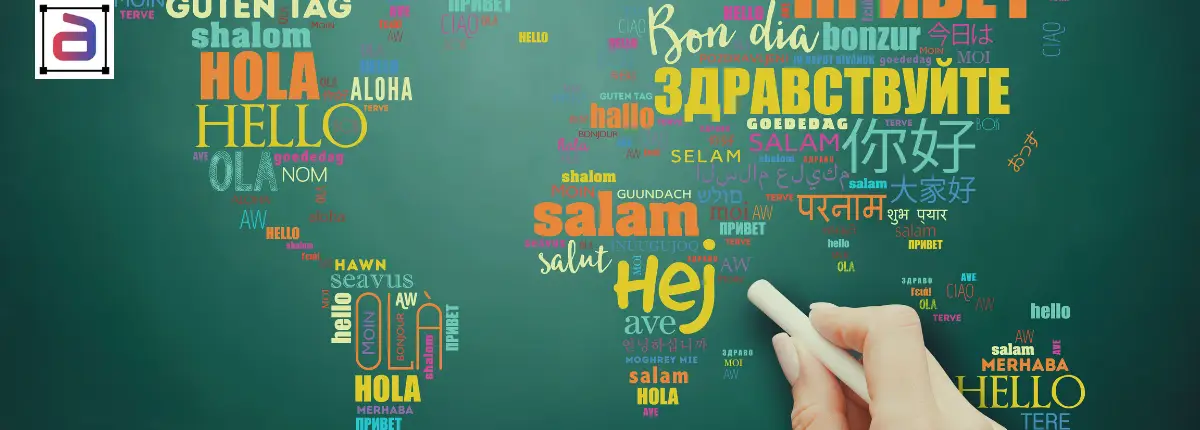
As enterprises expand across regions, languages become part of their operational infrastructure. Customer conversations, compliance recordings, meetings, and voice data now arrive in dozens of languages, accents, and dialects. For multinational organizations, global audio transcription is no longer a back-office task. It is a strategic capability that directly affects accuracy, brand trust, regulatory compliance, and AI performance. Speech transcription converts spoken language into accurate, structured text that powers voice AI, analytics, and accessibility. Using native linguists ensures dialect precision, contextual understanding, and high-quality datasets essential for scalable multilingual transcription and reliable speech technology performance.
“Global transcription fails when language is treated as interchangeable.”
Table of Contents
Key Points
- Global audio transcription requires native speaker annotators for each language because accent, dialect, and idiomatic variation within a language exceeds what non-native transcribers can consistently handle at production quality.
- Dialect coverage within a language is the most common underestimated requirement in global transcription programs: an annotator fluent in Brazilian Portuguese does not reliably transcribe European Portuguese medical dictations.
- Transcription annotation for multilingual AI must define language identification protocols for code-switching utterances where speakers shift between languages mid-sentence.
- Global transcription programs that use machine translation to create multilingual training data from English annotation produce systematically lower ASR performance on the target languages than programs that annotate natively.
Table of Contents
Why Global Transcription Is Harder Than It Looks
Many organizations assume transcription can be scaled simply by adding more languages. In reality, global transcription introduces layers of complexity that generic vendors often miss. Modern speech technology transforms spoken communication into actionable data using ASR, NLP, and voice analytics. Reliable transcription and native-language expertise improve accuracy across accents and dialects, supporting scalable voice AI systems, customer interactions, and multilingual digital experiences.
Key challenges include:
- Regional accents within the same language
- Local idioms and colloquial expressions
- Cultural context that changes meaning
- Code-switching within conversations
- Regulatory differences across countries
When these factors are ignored, transcripts may be technically complete but operationally unusable.
What Is Global Audio Transcription?
Global audio transcription is the process of converting speech from multiple languages and regions into accurate, consistent text using native-language expertise. Global audio transcription is the process of converting spoken content from multiple languages and dialects into accurate, structured text. It supports voice AI, analytics, and accessibility, while ensuring linguistic nuance, cultural context, and consistency across diverse regions, speakers, and real-world audio environments. In AI development, transcription training transforms audio into ground truth datasets. Consequently, models gain precise language exposure. Moreover, consistent labeling enhances learning efficiency; therefore, accurate transcription directly strengthens speech recognition, voice assistants, and other speech-driven technologies.
Unlike basic multilingual transcription, true global transcription requires:
- Native linguists for each target locale
- Centralized quality and style standards
- Consistent normalization across languages
- Secure, compliant handling of sensitive audio
Annotera provides global audio transcription services using client-provided audio only. We do not sell datasets or reuse customer transcripts.
Why Native Linguists Matter
Language proficiency alone is not enough. Native linguists understand how people actually speak in real contexts. Native linguists enhance audio transcription quality because they understand dialects, idioms, and cultural context that automated systems often miss. As a result, accuracy improves, ambiguity decreases, and multilingual datasets become more reliable, ultimately supporting scalable global speech solutions without compromising linguistic integrity.
Native expertise enables accurate handling of:
- Regional pronunciation and slang
- Industry-specific terminology
- Cultural references and tone
- Informal speech patterns
| Approach | Result |
|---|---|
| Non-native transcription | Literal but inaccurate |
| Native-linguist transcription | Contextually correct |
“Accents don’t just change pronunciation—they change meaning.”
Challenges Of Scaling Transcription Across Regions
Scaling global transcription introduces operational risks if not designed carefully. Scaling transcription across regions introduces linguistic diversity, accent variation, and inconsistent audio quality. Moreover, cultural nuances and domain-specific terminology complicate standardization. Therefore, without native expertise and robust quality control, accuracy declines, turnaround slows, and multilingual transcription pipelines struggle to maintain consistency at scale.
| Challenge | Business risk |
|---|---|
| Inconsistent quality | Unreliable data |
| Fragmented vendors | High coordination cost |
| Locale drift | Brand and compliance issues |
| Limited QA | Undetected errors |
Without centralized governance, quality varies by region, making transcripts difficult to use at scale.
Centralized Standards With Localized Execution
Centralized standards ensure consistent guidelines, quality metrics, and data security across transcription projects. Meanwhile, localized execution by native linguists adapts to regional accents, terminology, and cultural context; consequently, organizations achieve scalable operations while maintaining accuracy, compliance, and linguistic relevance in global workflows. Successful global transcription programs balance two forces:
- Central standards for formatting, normalization, and QA
- Local execution by native linguists who understand regional nuance
This model ensures transcripts are both globally consistent and locally accurate.
Use Cases For Global Audio Transcription
Global audio transcription supports voice AI training, customer service analytics, media localization, and accessibility compliance. Additionally, it enables multilingual research, legal documentation, and healthcare records processing; therefore, organizations can extract structured insights from speech while ensuring accuracy across languages, accents, and regional contexts. Multinational organizations rely on global transcription for:
- Customer experience analytics
- Compliance monitoring
- Multilingual AI training
- Market and voice-of-customer research
- Internal communications and meetings
In each case, accuracy across languages directly impacts business decisions.
Why Enterprises Outsource Global Transcription
Enterprises outsource global transcription to reduce operational complexity and access native linguistic expertise. Additionally, outsourcing improves scalability, turnaround time, and quality control; therefore, organizations can manage multilingual audio volumes efficiently while maintaining accuracy, compliance, and cost-effectiveness across diverse markets and use cases. Most enterprises outsource global audio transcription because:
- Building native teams in every market is impractical
- Volume fluctuates by region and time
- Compliance and security requirements are strict
- Speed and scalability are essential
| In-house approach | Professional global transcription |
|---|---|
| High fixed costs | Flexible capacity |
| Limited language coverage | Broad locale support |
| Inconsistent QA | Unified quality controls |
How Annotera Supports Global Transcription At Scale
Annotera delivers global audio transcription services designed for multinational operations. Annotera supports global transcription at scale by combining centralized quality standards with native linguist expertise. Moreover, advanced workflows, rigorous validation, and secure data handling ensure accuracy and consistency; therefore, enterprises can process multilingual audio efficiently while maintaining linguistic precision and operational scalability.
Our approach includes:
- Native linguists across multiple languages and regions
- Centralized transcription guidelines
- Multi-stage QA and consistency checks
- Secure, access-controlled workflows
- Dataset-agnostic delivery using your audio only
We help enterprises scale transcription without sacrificing accuracy or governance.
Business impact: Consistency Across Borders
Consistency across borders ensures uniform data quality, terminology alignment, and brand voice in multilingual transcription. As a result, enterprises gain reliable insights, smoother global operations, and reduced rework; therefore, decision-making improves while communication remains accurate and culturally appropriate across diverse regional markets. High-quality global transcription enables:
- Reliable cross-region analytics
- Reduced compliance risk
- Better AI model performance
- Faster decision-making
- Stronger brand trust
| Poor global transcription | High-quality global transcription |
|---|---|
| Fragmented insight | Unified understanding |
| Local errors | Global consistency |
| Rework and delays | Predictable delivery |
“Global scale only works when local accuracy is preserved.”
Conclusion: Global Transcription Is A Governance Problem
Scaling transcription globally is not about adding languages. It is about designing systems that respect linguistic, cultural, and regulatory differences—while delivering consistent outputs.
For multinationals, global audio transcription becomes a competitive advantage when accuracy, scale, and governance work together. Moreover, Annotera helps enterprises scale global transcription with native linguists, centralized standards, and secure workflows—using your audio and tailored to your markets.
Talk to Annotera to build a global transcription program that works everywhere you operate.
A closely related read: Medical Transcription for AI: Handling Complex Jargon in Healthcare Data.