What Is World Model Data Curation?
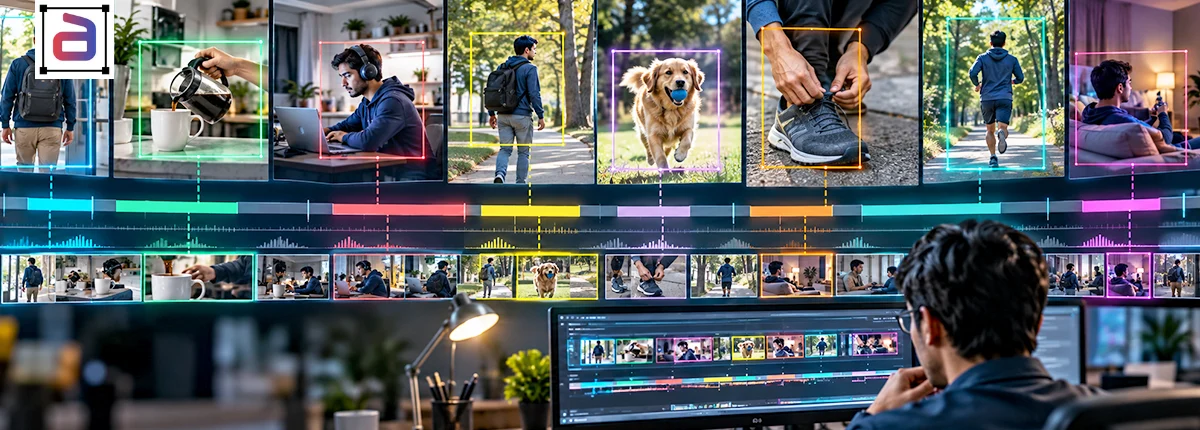
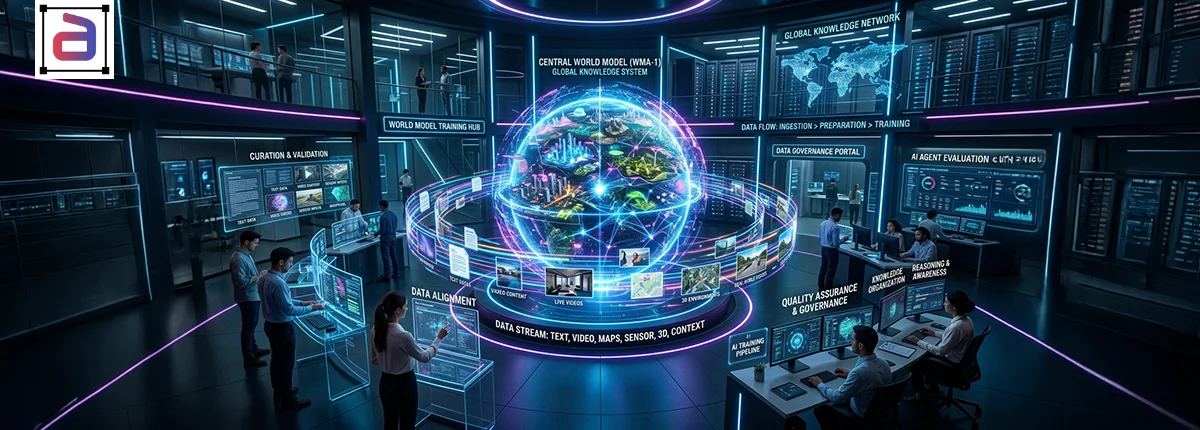
World model data curation is the process of collecting, organizing, annotating, validating, and enriching multimodal datasets that enable AI systems to build an internal representation of how the world works. World model data curation is the process of collecting, organizing, annotating, and refining multimodal datasets that help AI understand real-world environments. As a result, AI agents can reason, predict outcomes, and make context-aware decisions more effectively. Unlike traditional datasets designed for image classification or object detection, world model datasets capture relationships between:- Objects and environments
- Actions and consequences
- Temporal sequences
- Human intentions
- Spatial awareness
- Language and visual perception
- What is happening?
- Why is it happening?
- What is likely to happen next?
- What action should be taken?
“The next generation of AI systems will need world models that understand how the world works.”— Yann LeCun, Chief AI Scientist, Meta
Why World Models Represent the Future of AI
Unlike conventional AI models, world models enable machines to understand context, predict future events, and plan actions. Consequently, they are becoming essential for building intelligent AI agents that can interact with complex, real-world environments more effectively. Large Language Models have transformed how machines process language, but future AI systems must do much more than predict the next word. They must understand environments, anticipate changes, and interact safely with people and objects. World models provide this deeper understanding by learning patterns across multiple data modalities, including:- Images
- Videos
- LiDAR point clouds
- Audio
- Sensor fusion data
- Text instructions
- Human demonstrations
Why High-Quality Data Curation Matters
Building world models requires significantly richer datasets than conventional supervised learning tasks. High-quality data curation ensures AI models learn from accurate, diverse, and context-rich datasets. As a result, they achieve better reasoning, improved decision-making, and greater reliability while minimizing bias and enhancing real-world performance across AI applications. AI systems must learn:Temporal Understanding
Events unfold over time. AI must recognize sequences rather than isolated snapshots.Spatial Relationships
Objects interact within three-dimensional environments. Distance, orientation, and motion all influence decision-making.Human Intent
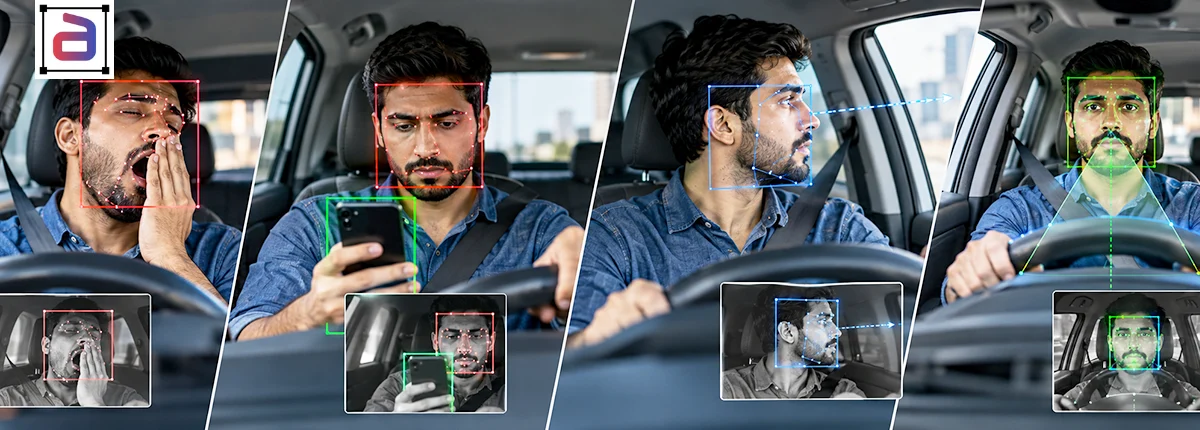
Future AI agents need to interpret goals, behaviors, and contextual cues rather than simply detecting objects.Cross-Modal Reasoning
Visual information, language, audio, and sensor inputs must remain synchronized to create meaningful training experiences. This level of complexity requires carefully curated datasets that combine technical precision with contextual understanding.The Growing Importance of Human Expertise
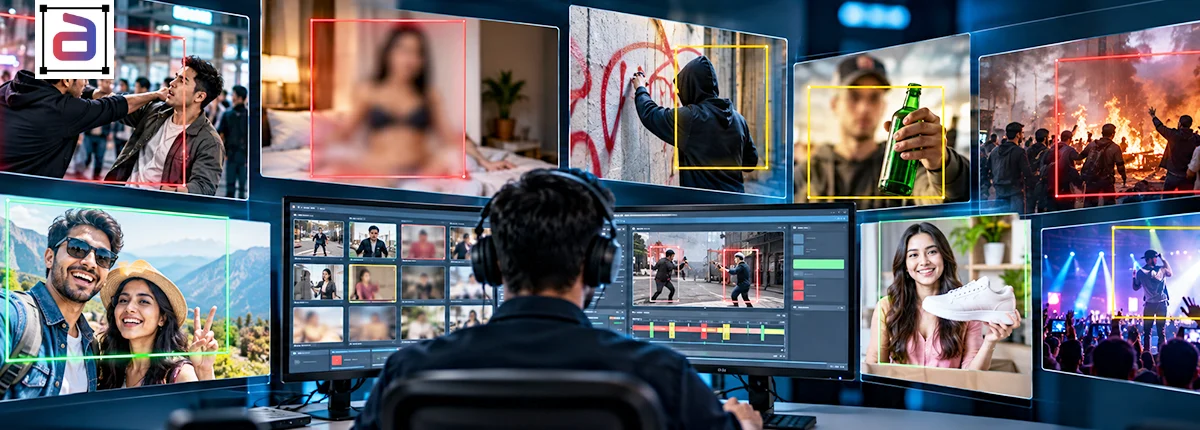
While AI-assisted labeling tools have dramatically improved annotation speed, automation alone cannot create the nuanced datasets required for world models. Although AI-assisted annotation improves efficiency, human expertise remains indispensable for interpreting complex scenarios and edge cases. Consequently, expert reviewers enhance data quality, reduce errors, and ensure AI models learn from accurate, context-aware, and trustworthy training data. Human annotators remain essential for interpreting:- Ambiguous scenarios
- Rare edge cases
- Behavioral intent
- Safety-critical decisions
- Complex interactions
“AI is the new electricity.”— Andrew NgJust as electricity transformed every industry, AI will power future innovations—but only when trained on high-quality, representative data. Human evaluation of AI models helps refine how systems understand, respond, and make decisions. Through RLHF, human reviewers assess model outputs for accuracy, relevance, safety, and usefulness, providing feedback that guides AI toward more reliable and human-aligned behavior.
RLHF: Teaching AI Better Decision-Making
One of the most important developments in modern AI training is Reinforcement Learning from Human Feedback (RLHF). RLHF enables AI models to learn from human preferences rather than data alone. Consequently, expert feedback improves reasoning, response quality, and safety, helping AI agents make more accurate, reliable, and human-aligned decisions in real-world applications. Rather than simply labeling data, human reviewers evaluate AI-generated responses, compare outputs, rank preferences, and provide corrective feedback. This process aligns AI behavior with human expectations. At Annotera, our RLHF annotation services help enterprises improve model reasoning, response quality, safety, and factual accuracy across Large Language Models, conversational AI, and intelligent agents. RLHF has become a critical component for building trustworthy AI systems capable of making reliable decisions in real-world environments.How GenAI Annotation Services Accelerate World Model Development
Generative AI is transforming annotation workflows by automating repetitive tasks while allowing human experts to focus on quality assurance and complex decision-making. Modern GenAI annotation services enable organizations to:- Generate intelligent pre-labels
- Accelerate dataset preparation
- Identify annotation inconsistencies
- Create synthetic training data
- Support active learning pipelines
- Improve annotation consistency across large datasets
Why Businesses Choose Data Annotation Outsourcing
Building an in-house annotation team with expertise in multimodal AI is resource-intensive and difficult to scale. As AI initiatives expand, organizations increasingly rely on data annotation outsourcing to access skilled professionals, standardized quality assurance processes, and flexible delivery models. Partnering with an experienced annotation provider enables businesses to:- Reduce operational costs
- Accelerate AI development cycles
- Scale annotation teams on demand
- Improve dataset quality and consistency
- Focus internal resources on model innovation
Why Choose Annotera?
As a trusted data annotation company, Annotera empowers enterprises with high-quality, scalable, and AI-ready data curation services designed for next-generation AI applications. Our expertise spans:- Multimodal data annotation
- Vision-language dataset preparation
- RLHF annotation services
- GenAI annotation services
- Image, video, LiDAR, and sensor fusion annotation
- Human-in-the-loop quality assurance
- Continuous dataset refinement
Conclusion
The future of AI belongs to systems capable of understanding, reasoning, and interacting with the world in meaningful ways. Achieving this vision requires more than advanced algorithms—it demands meticulously curated, context-rich, and continuously refined training data. World model data curation is emerging as one of the most critical disciplines in AI development, bridging the gap between raw data and intelligent decision-making. Organizations that invest in high-quality data today will be best positioned to develop the autonomous systems and AI agents of tomorrow.Partner with Annotera to Build Smarter AI
Whether you’re developing autonomous systems, foundation models, robotics platforms, or enterprise AI solutions, Annotera provides the expertise, scalability, and precision needed to create world-class training datasets. Our team combines human intelligence, AI-assisted workflows, and rigorous quality assurance to deliver datasets that improve model performance, reduce time-to-market, and accelerate AI innovation. Ready to build the next generation of AI agents? Contact Annotera today to discover how our data annotation, RLHF annotation services, and GenAI annotation services can power your AI initiatives with confidence.Related reading: one of the biggest annotation trends for 2026.
For more on this, evaluation frameworks for autonomous agents.
A closely related read: Training the Next Generation of AI Annotators in the Philippines.
A closely related read: operator demonstration data