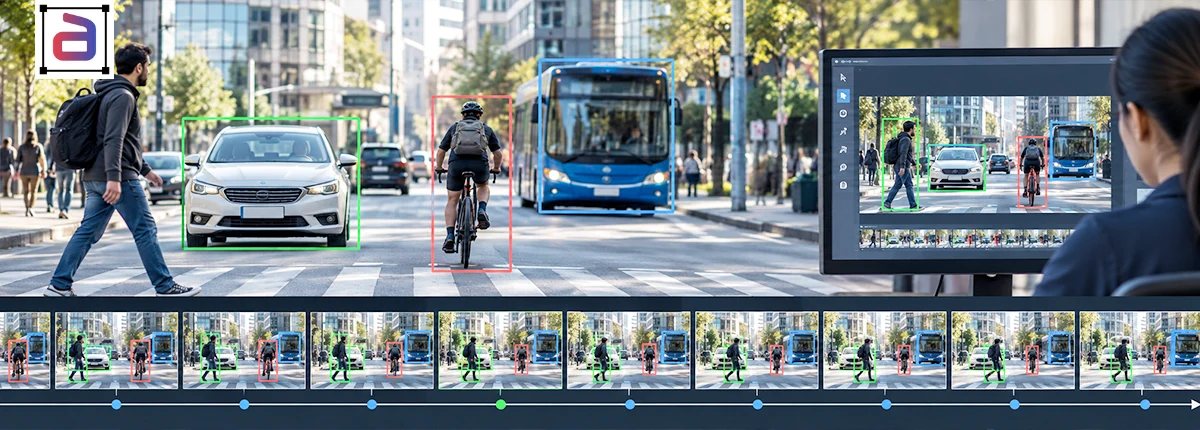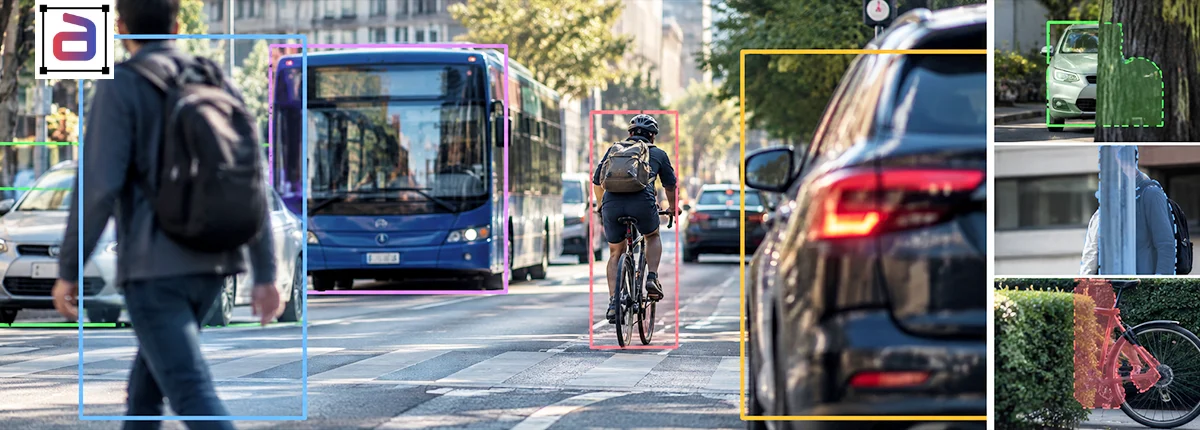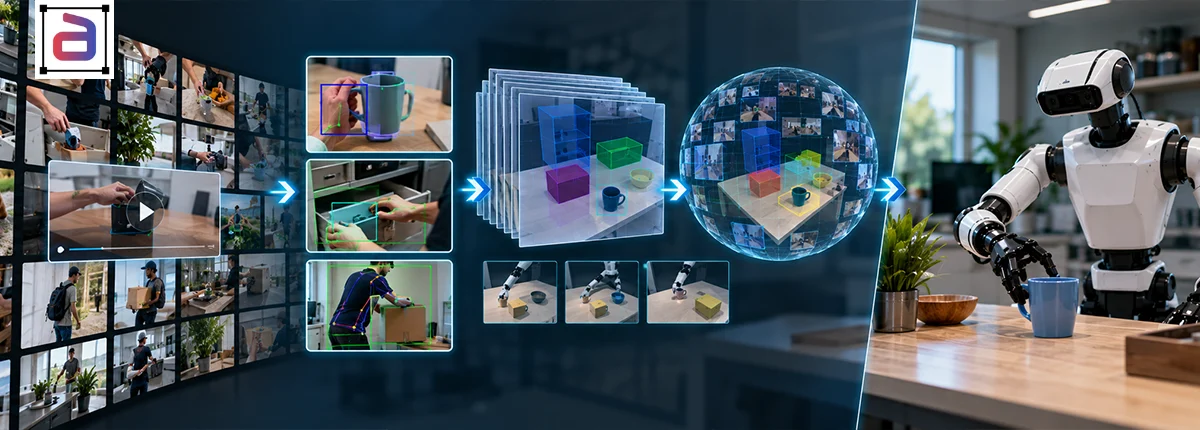
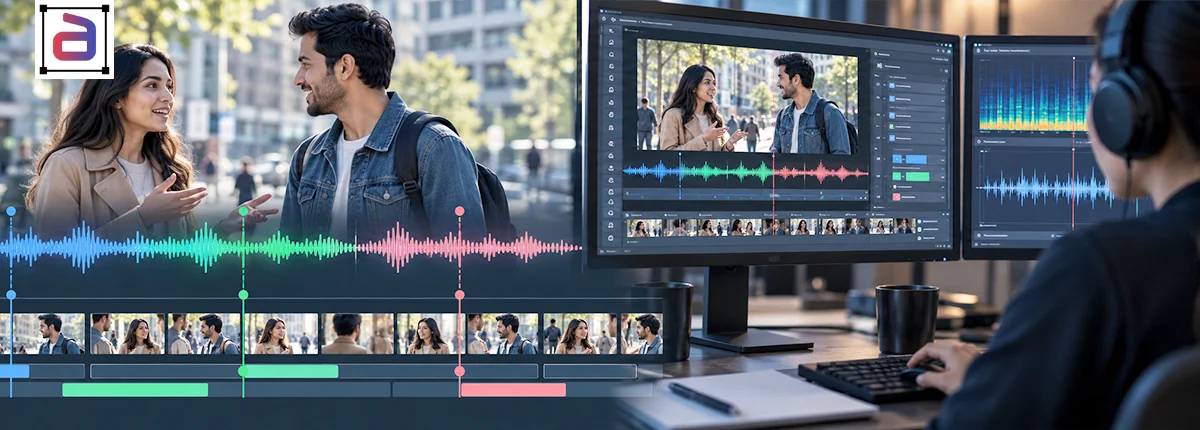
Artificial intelligence is moving beyond systems that understand a single type of data. Modern AI models increasingly need to interpret speech, video, sound, gestures, objects, facial expressions, and environmental context simultaneously. This shift toward multimodal AI is creating a new challenge for organizations: collecting and preparing datasets in which different data streams are accurately connected in time. Consider a simple example. A person says, “Stop,” while simultaneously raising their hand. The audio contains the spoken command, while the video captures the gesture.
For an AI model to correctly understand the event, it must know that the speech and gesture occurred together. This is the purpose of audio-video sync annotation. By assigning precise timestamps and relationships to events across audio and video streams, annotation teams create structured datasets that enable multimodal AI models to learn how different signals interact. As multimodal applications expand across conversational AI, robotics, autonomous systems, media intelligence, and computer vision, time-aligned data is becoming an increasingly important component of AI training.
“The world is multimodal. We need AI systems that can understand and reason across multiple modalities.”
This principle is reflected in the rapid development of multimodal foundation models that combine language, vision, and audio to create richer representations of real-world events.
Key Points
- Audio-video sync annotation creates precise temporal relationships between audio and visual events, helping multimodal AI models understand what happened and when.
- Time-aligned training data improves multimodal AI by connecting speech, gestures, objects, facial movements, and environmental sounds within the same timeline.
- Human-in-the-loop annotation and quality assurance help identify synchronization errors caused by background noise, overlapping speakers, occlusion, and variable frame rates.
- Annotera’s video annotation outsourcing services help AI teams build scalable, high-quality multimodal datasets through structured workflows, trained annotators, and rigorous quality control.
What Is Audio-Video Sync Annotation?
Audio-video sync annotation is the process of identifying events within audio and video streams and assigning accurate temporal labels that connect corresponding events across modalities. For example, an annotation workflow may identify:
- When a speaker begins and stops talking
- Which person is speaking
- When a specific word or phrase is spoken
- When a person’s lips begin moving
- When an object enters or leaves a scene
- When a physical action occurs
- When a sound event begins and ends
- Whether an audio event corresponds to a visible action
- Whether multiple events overlap
The objective is not simply to label what appears in a video or what is heard in an audio file. The objective is to establish when each event occurs and how it relates to events in another modality. This temporal relationship provides valuable training information for multimodal AI systems.
Why Time-Aligned Data Matters for Multimodal AI
AI models learn patterns from relationships within their training data. When audio and video are incorrectly synchronized, those relationships can become misleading. Imagine a training sample in which a person closes a door at 8.5 seconds, but the corresponding door-closing sound is incorrectly labeled at 9.2 seconds. The model may learn an inaccurate relationship between the visual action and the acoustic event. At scale, small inconsistencies can become significant sources of dataset noise. Time-aligned annotation helps models understand: What happened + where it happened + when it happened + what other signals occurred at the same time. This is particularly important for applications that depend on fine-grained temporal understanding. Research into audio-visual learning has demonstrated the importance of synchronizing information from different modalities. In one influential line of research, models learn to determine whether audio and visual streams are temporally aligned, highlighting the importance of synchronization as a meaningful cross-modal signal.
“Audio-visual correspondence is a fundamental cue for learning representations from unlabeled videos.”
This concept illustrates why synchronized datasets can provide valuable information beyond conventional frame-level labeling.
Key Components of Audio-Video Sync Annotation
1. Precise Timestamping
Timestamping establishes the temporal boundaries of events. Annotators may record the beginning and end of speech, object movement, gestures, environmental sounds, or other relevant activities. Depending on the application, timestamps may need to be accurate at the second, millisecond, or frame level.
2. Speech and Lip-Movement Alignment
Speech-related applications often require a relationship between what is spoken and what is visually observed. Annotators may connect speech segments with:
- Lip movements
- Facial expressions
- Speaker identity
- Spoken phrases
- Pauses
- Overlapping speech
Such annotations can support speech recognition, lip-reading, talking-avatar systems, audiovisual assistants, and other multimodal applications.
3. Sound-Event Alignment
Audio contains much more than speech. A recording may include footsteps, vehicle horns, alarms, machinery, music, doors closing, applause, or other environmental sounds. Annotators can identify these sounds and determine whether a corresponding visual event is present. For example, a vehicle horn can be linked to a visible vehicle, or the sound of an object falling can be connected to the corresponding movement in the video.
4. Overlapping Events
Real-world environments are rarely clean. A person may speak while another person talks in the background. A vehicle may pass while music plays. A machine may operate while someone gives instructions. Annotation systems therefore need to support overlapping events rather than forcing every event into a single sequence. This produces a more realistic representation of the environment for multimodal model training.
Human Annotation Still Matters
Automation can significantly accelerate annotation. Speech recognition systems can generate transcripts, computer vision models can identify objects, and algorithms can propose timestamps. But automatically generated labels are not always accurate. Background noise, accents, overlapping speech, camera movement, poor lighting, variable frame rates, audio delays, and unusual events can create errors. Human reviewers provide an essential layer of contextual judgment. A robust workflow can combine automated preprocessing with human verification: Raw Data → Automated Detection → Temporal Annotation → Human Review → Quality Assurance → Final Dataset This human-in-the-loop approach allows AI-assisted annotation to deliver efficiency without sacrificing the precision required for high-value datasets.
Where Audio-Video Sync Annotation Is Used
Conversational AI
Multimodal assistants can combine speech, facial expressions, gestures, and environmental context to better interpret human interactions.
Video Intelligence
Time-aligned audio and video can help models understand complex events occurring within long-form content.
Robotics and Physical AI
Robots operating in real-world environments may need to associate sounds with visual events. A synchronized dataset can help models understand relationships between actions, environmental sounds, and visual observations.
Autonomous Systems
Vehicles and intelligent machines increasingly process multiple sensor streams. Temporal alignment helps establish relationships between events detected by different sensors.
Media and Entertainment
Synchronized datasets can support automated subtitling, content indexing, dubbing, audiovisual search, sound-event detection, and video understanding.
Human-Computer Interaction
AI systems designed to understand people can benefit from datasets connecting speech, facial movements, gestures, and behavioral cues.
Challenges in Creating Time-Aligned Datasets
Producing high-quality synchronized datasets at scale requires careful planning.
- Synchronization errors: Even small timing discrepancies can create incorrect relationships between modalities.
- Variable frame rates: Different recording formats can complicate frame-to-audio alignment.
- Background noise: Environmental sounds may make event boundaries difficult to identify.
- Multiple speakers: Speaker diarization and overlapping conversations can increase annotation complexity.
- Occlusion: Objects or people may temporarily disappear from view while corresponding audio remains available.
- Large-scale quality control: Maintaining consistent annotation standards across thousands or millions of samples requires systematic review and quality assurance.
These challenges make clear annotation guidelines and trained teams critical to dataset quality.
How Annotera Helps Build Multimodal AI Training Data
At Annotera, we recognize that high-quality AI training data is about more than volume. It is about creating structured, consistent, and contextually meaningful datasets that reflect the requirements of the model being developed. Our annotation workflows can be designed around project-specific requirements, including temporal event labeling, video segmentation, object tracking, speech-related labeling, and multimodal data relationships. Through video annotation outsourcing services, organizations can scale annotation operations while maintaining defined quality-control procedures and annotation standards. For companies working on multimodal AI, video annotation outsourcing can also provide access to trained annotation resources without requiring internal teams to manage every stage of a large-scale labeling operation. Annotera’s approach combines scalable workflows, human expertise, quality assurance, and project-specific annotation guidelines to help AI teams transform complex raw media into structured training data.
The Future of AI Depends on Better Temporal Understanding
Multimodal AI is ultimately about understanding relationships. A word is connected to a speaker’s voice. A gesture is connected to an action. A sound can correspond to an object. A facial expression can occur alongside speech. All of these signals unfold over time. If those relationships are poorly represented in training data, even sophisticated AI models can struggle to interpret real-world situations accurately. Audio-video sync annotation provides the temporal structure that allows these relationships to become machine-readable.
“Data is the new oil.”
The frequently cited phrase is imperfect as an analogy, but one principle remains relevant: raw data becomes valuable only when it can be transformed into something useful. For multimodal AI, that transformation increasingly depends on accurate, context-rich, time-aligned annotation.
Build Better Multimodal AI Data With Annotera
Developing a multimodal AI system? Don’t let poorly aligned data become a bottleneck. Partner with Annotera to build scalable, high-quality video and multimodal annotation workflows tailored to your AI application’s requirements. From temporal event labeling to complex video annotation, our experienced teams can help transform raw media into structured training data. Contact Annotera today to discuss your annotation requirements and build a stronger data foundation for your next-generation AI model.