
Satellite Imagery and the Value of Polygon Data

As geospatial analysis becomes increasingly data-driven, satellite imagery has emerged as a primary source for understanding environmental change, infrastructure growth, and land-use patterns. However, raw imagery alone provides limited insight. To extract actionable intelligence, analysts rely on precise annotation techniques, where polygon labeling for GIS plays a central role in translating pixels into structured spatial […]
Pixel-Level Clarity: The Value of Semantic Segmentation

In autonomous systems, perception accuracy determines safety, reliability, and decision-making confidence. While object detection identifies what is present, true environmental understanding requires pixel-level insight. As a result, semantic segmentation services have become a core capability for autonomous driving teams. See also how annotated data powers autonomous driving for the full AV training data picture. For […]
Image Segmentation Services for Scene Parsing: How AI Learns Spatial Context
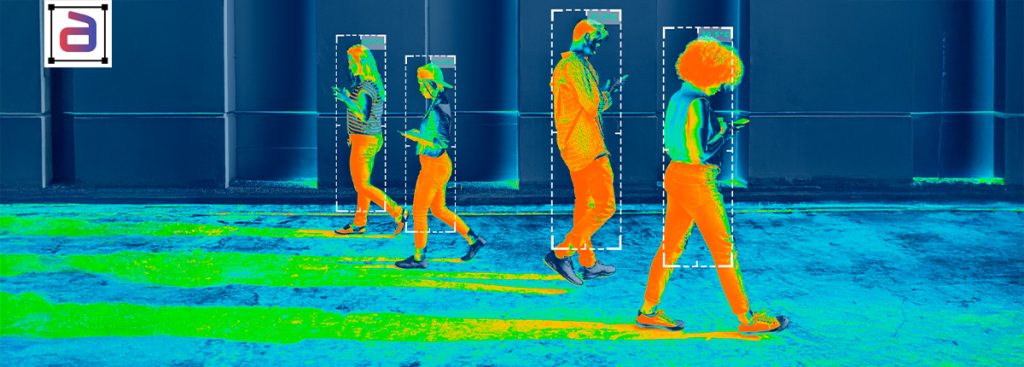
Object detection tells an AI model what is in an image. Scene parsing tells it how everything in that image relates to everything else. A pedestrian standing on a kerb is a different situation from a pedestrian stepping into traffic. Both involve the same object class, but the spatial context carries the meaning. That distinction […]
Scaling Pixel-Level Labeling for Large Image Corpora

As computer vision programs mature, success increasingly depends on the ability to scale high-quality training data without compromising accuracy. While early pilots may rely on limited datasets, production-grade AI requires millions of precisely labeled images. In this context, semantic segmentation at scale has become a critical capability for organizations managing complex, high-volume image pipelines. For […]
Training AI to Understand Environmental Context

As artificial intelligence systems move beyond narrow task execution, understanding environmental context has become increasingly important. Rather than reacting to isolated objects, modern models must interpret scenes holistically to make informed decisions. In this progression, a well-structured semantic segmentation guide plays a vital role by helping AI systems learn how different elements within an environment […]
Semantic Segmentation for Medical Diagnosis

Medical imaging has transformed how clinicians detect, evaluate, and monitor disease. However, extracting clinically meaningful insight from scans requires more than visual inspection alone. Increasingly, medical semantic segmentation is being used to help AI systems interpret complex anatomical structures with pixel-level precision. Polygon annotation is the upstream labeling step. See polygon annotation services for medical […]
Pinpoint Precision: The Power of Landmark Annotation

In security-driven computer vision systems, accuracy at the smallest visual level often determines overall system reliability. While object detection and segmentation provide structural understanding, true precision emerges when models learn exact reference points. This is where landmark annotation services become essential, enabling AI systems to identify, track, and interpret highly specific visual features consistently and […]
Facial Landmarks for Identity and Emotion Recognition

As human-centered AI systems become more prevalent, accurately interpreting facial structure and expression has become increasingly important. Beyond detecting a face, models must understand subtle variations in geometry and movement. In this context, image landmark labeling enables AI systems to analyze facial identity and emotional cues with greater consistency and depth. For UX researchers, landmark-based […]
Training AI to Recognize Detailed Facial Features

As facial analysis systems evolve, accuracy increasingly depends on how well models understand fine-grained facial structure rather than broad visual patterns alone. In this context, facial landmark annotation provides a structured way for AI systems to learn to recognize detailed facial features, such as eye corners, lip contours, nasal points, and jaw alignment. For data […]
Landmarks for Biometrics: Enhancing Security Systems

As security systems evolve to address increasingly sophisticated threats, biometric technologies have become a cornerstone of identity verification and access control. However, the effectiveness of biometric AI depends on precision at the point level. In this context, landmark labeling for images enables security systems to analyze biometric traits with greater accuracy, consistency, and resilience. For […]