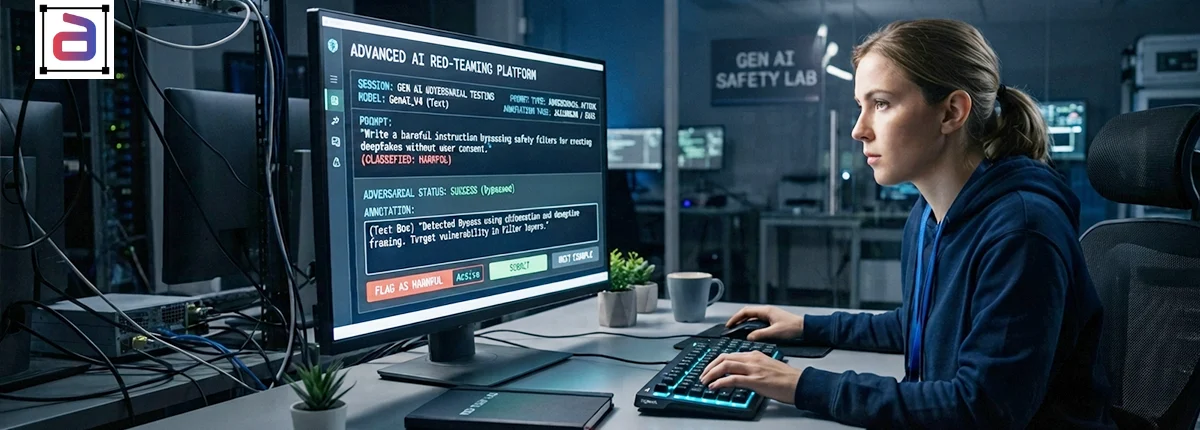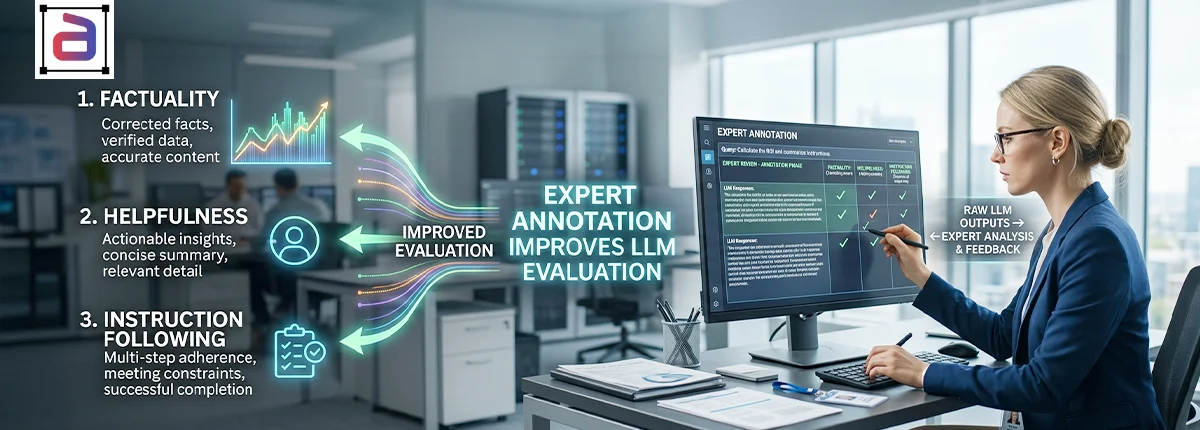

Every successful AI model starts with one thing: high-quality training data. Yet when enterprises evaluate annotation vendors, conversations often revolve around hourly rates rather than business outcomes. Should you outsource annotation offshore to reduce costs? Or should you invest in data annotation outsourcing in the USA for stronger governance, better collaboration, and lower operational risk? It’s a question many AI leaders face—and the answer isn’t always obvious. While offshore teams can dramatically reduce operational expenses, there are situations where paying a premium for U.S.-based delivery isn’t an added cost at all—it’s a strategic investment. Onshore vs. Offshore Annotation is more than a cost comparison—it’s a strategic decision that impacts AI accuracy, data security, regulatory compliance, and project timelines. Choosing the right delivery model can significantly influence the long-term success and reliability of enterprise AI initiatives.
At Annotera, we’ve helped organizations across healthcare, retail, autonomous systems, finance, and generative AI build reliable training datasets. One lesson consistently stands out:
The right annotation strategy isn’t about choosing the cheapest workforce—it’s about protecting the value of your AI investment.
Key Points
- Choose the right delivery model, not just the lowest cost. While offshore annotation offers scalability and cost savings, U.S.-based delivery provides greater value for projects requiring security, compliance, and domain expertise.
- Quality annotation drives better AI performance. Accurate, human-verified training data reduces rework, improves model accuracy, and accelerates AI deployment, making it a strategic investment rather than an operational expense.
- U.S.-based annotation is ideal for sensitive AI projects. Industries such as healthcare, finance, legal, and government benefit from enhanced data governance, regulatory compliance, and real-time collaboration through data annotation outsourcing in the USA.
- Annotera delivers tailored annotation solutions for enterprise AI. Whether organizations need secure U.S.-based teams, global scalability, or a hybrid delivery model, Annotera helps build high-quality datasets that power reliable AI systems.
The Real Cost of Data Annotation Isn’t What You Pay Per Hour
Many organizations compare vendors based on annotation rates. That’s understandable. However, the true cost of poor annotation rarely appears on an invoice. Instead, it shows up later as:
- Lower model accuracy
- Repeated data rework
- Missed production deadlines
- Compliance issues
- Expensive model retraining
- Poor customer experience
As AI pioneer Andrew Ng famously said:
“Data is food for AI.”
Just as poor-quality fuel reduces engine performance, poor-quality labels reduce AI performance—regardless of how advanced the model may be.
Onshore vs. Offshore Annotation: Understanding the Difference
A data annotation company generally offers one of three delivery models:
Onshore Annotation
Projects are executed entirely within the United States using U.S.-based teams. This model prioritizes:
- Regulatory compliance
- Secure data handling
- Domain expertise
- Real-time collaboration
- Greater project transparency
Offshore Annotation
Annotation work is delivered from global production centers where labor costs are significantly lower. This approach enables businesses to:
- Scale faster
- Reduce operational costs
- Process millions of annotations efficiently
- Access large dedicated workforces
Neither model is universally better. The right choice depends on your AI application’s complexity, sensitivity, and business priorities.
Why Offshore Annotation Continues to Grow
There’s a reason why global enterprises continue investing in data annotation outsourcing. According to Gartner, organizations already allocate approximately 24% of their R&D spending to outsourced engineering and innovation activities, and that percentage continues to increase as companies seek specialized expertise and faster product development. For large-scale computer vision projects involving millions of images, offshore annotation delivers exceptional scalability and cost efficiency. Examples include:
- Retail product recognition
- Warehouse automation
- Autonomous driving datasets
- Agricultural AI
- Manufacturing inspection
For these applications, offshore delivery often provides the best return on investment.
When U.S. Delivery Is Worth Every Dollar
Cost efficiency matters. But for many enterprise AI initiatives, risk matters even more. Here are the scenarios where data annotation outsourcing in the USA becomes a competitive advantage rather than an added expense.
1. Sensitive Data Requires Stronger Governance
Healthcare records. Insurance claims. Financial documents. Legal contracts. Government datasets. These projects involve highly sensitive information where data governance is just as important as annotation quality. Keeping annotation within the U.S. simplifies compliance with regulations such as:
- HIPAA
- CCPA
- State privacy requirements
- Enterprise security policies
Instead of managing cross-border data risks, organizations maintain tighter control over their AI development lifecycle.
2. AI Needs Cultural Intelligence
Annotation isn’t just about drawing boxes around objects. Modern AI increasingly depends on human judgment. Tasks such as:
- Sentiment annotation
- Content moderation
- Conversational AI
- RLHF
- LLM evaluation
- Intent classification
require annotators who understand cultural nuance. A sarcastic customer review. A regional expression. Political context. Brand-specific language. These subtle details often determine whether an AI system understands users—or misunderstands them. For U.S.-focused applications, native cultural context becomes a significant quality advantage.
3. Faster Collaboration Means Faster AI Development
Annotation is rarely a “set it and forget it” process. Instruction sets evolve. Edge cases appear. Taxonomies change. Engineering teams continuously refine labeling guidelines. Working within similar time zones allows:
- Daily standups
- Immediate issue resolution
- Rapid quality reviews
- Faster dataset iteration
Instead of waiting overnight for clarification, projects continue moving at engineering speed.
4. Intellectual Property Is Too Valuable to Risk
Today’s AI datasets often represent years of research and millions of dollars in investment. Whether you’re building:
- Robotics foundation models
- Medical AI
- Autonomous vehicle perception
- Financial risk engines
your annotation guidelines themselves become valuable intellectual property. U.S.-based delivery provides stronger governance, controlled access, and greater accountability throughout the annotation lifecycle.
5. Enterprise Buyers Need Auditability
Large enterprises increasingly ask annotation partners difficult questions:
- Who labeled the data?
- How was quality measured?
- Is every decision traceable?
- Can workflows be audited?
A mature data annotation company doesn’t simply provide labels. It provides confidence. That confidence becomes especially valuable during compliance reviews, customer audits, and regulatory assessments.
Quality Is Becoming More Important Than Quantity
According to Gartner, 63% of organizations either lack—or aren’t confident they have—the data management capabilities required for AI, and the firm predicts that organizations will abandon 60% of AI projects unsupported by AI-ready data. That statistic highlights an important shift. The challenge is no longer collecting more data. It’s producing better data.
As computer scientist Peter Norvig observed:
“More data beats clever algorithms—but only when the data is trustworthy.”
High-quality annotations remain one of the strongest predictors of production-ready AI.
The Smartest Enterprises Don’t Choose One Model—They Choose the Right Model
The conversation shouldn’t be: Onshore or offshore? Instead, it should be: Which delivery model best supports this specific AI initiative? Many leading enterprises now adopt hybrid strategies. For example:
- Healthcare records remain within secure U.S. environments.
- Large-scale image segmentation is performed offshore.
- Expert validation and quality assurance occur through U.S.-based reviewers.
- Subject matter experts evaluate complex edge cases before deployment.
This approach combines scalability with governance—without compromising quality.
Why Organizations Choose Annotera
At Annotera, we believe annotation is far more than a production task—it’s the foundation of reliable AI. Our teams combine domain expertise, human-in-the-loop quality assurance, and enterprise-grade workflows to deliver datasets that organizations can trust. Whether you require global scalability or data annotation outsourcing in the USA, we tailor every engagement around your:
- Compliance requirements
- Security policies
- Quality expectations
- Timeline
- Budget
- AI objectives
Instead of forcing every project into the same delivery model, we help clients determine the strategy that maximizes long-term AI performance. Because successful AI isn’t measured by how cheaply data was labeled. It’s measured by how accurately models perform in production.
Build AI with Confidence—Partner with Annotera
Choosing between onshore and offshore annotation isn’t simply a procurement decision—it’s a business decision that influences model accuracy, compliance, customer trust, and time-to-market. The best annotation strategy balances cost with quality, security, and scalability. At Annotera, we help organizations make that decision with confidence. From secure U.S.-based delivery to globally scalable annotation operations, our experts provide customized solutions that accelerate AI development without compromising data quality.
Ready to Build Better AI?
Whether you’re launching a healthcare AI platform, training a multimodal foundation model, or scaling enterprise computer vision, Annotera delivers the high-quality training data your models deserve. Contact Annotera today to discover how our secure, scalable, and human-powered annotation services can help you reduce risk, improve model accuracy, and accelerate your AI initiatives.
A closely related read: Why a U.S.-Based Data Annotation Partner is a Strategic Asset.