
From Internet Video to Robot Intelligence: How World Model Data Curation Enables Physical AI
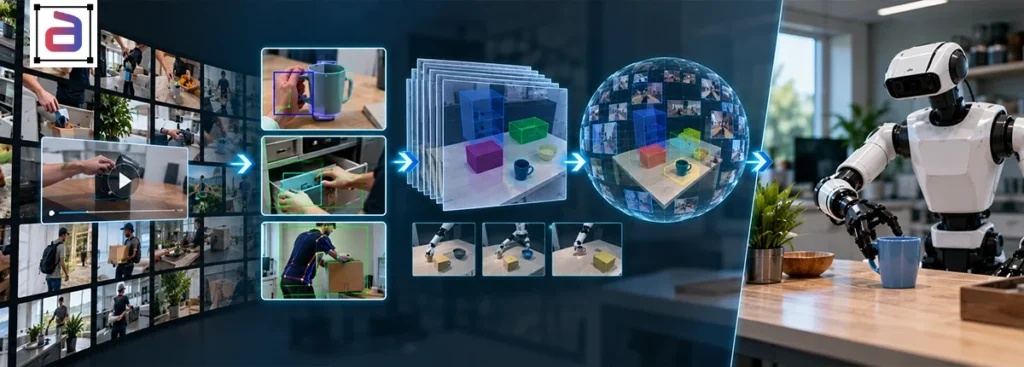
Artificial intelligence has become remarkably good at understanding digital information. It can interpret text, recognize images, generate code, and analyze enormous volumes of data. But the physical world presents a fundamentally different challenge. A robot cannot simply recognize a cup. It needs to understand that the cup is an object that can be grasped, that […]
Teaching Robots to Understand Human Actions: The Role of Egocentric Video Annotation in Physical AI
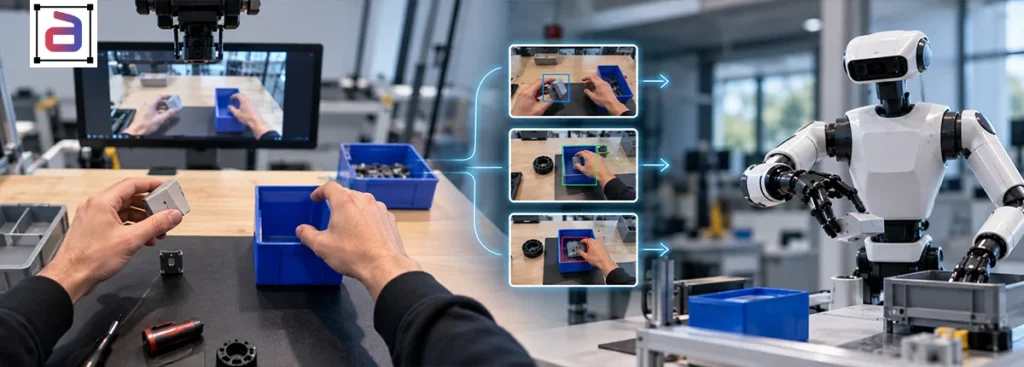
Physical AI is changing what robots are expected to do. Tomorrow’s robots will not simply execute a fixed sequence of programmed commands. They will need to observe people, interpret their actions, understand object interactions, learn from demonstrations, and respond appropriately to constantly changing environments. That requires a fundamental shift in how robots are trained. Instead […]
Teaching Humanoid Robots to Navigate Human Spaces: Annotation Strategies for Perception and Interaction
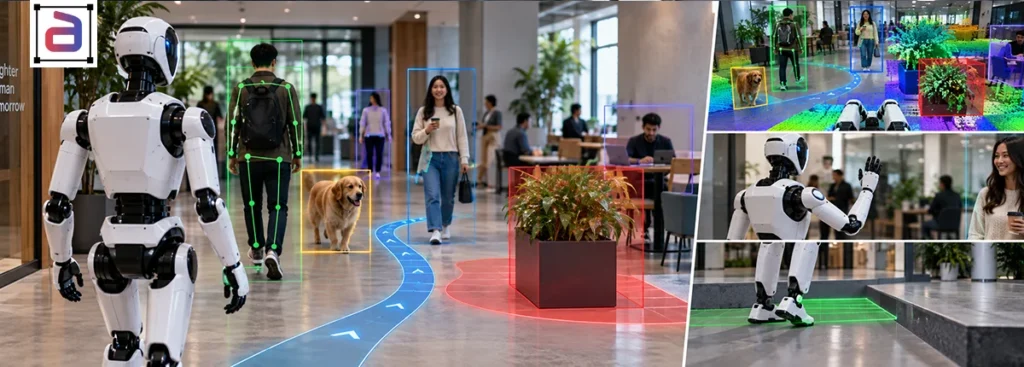
Humanoid robots are entering a world that was built for humans—not machines. A robot walking through a warehouse can often operate within predictable routes and clearly defined zones. A robot working in a home, hospital, office, hotel, or retail environment faces an entirely different challenge. People move unpredictably. Objects are constantly repositioned. Conversations, gestures, obstacles, […]
Annotating Robot Failures: Turning Deployment Edge Cases Into High-Value Training Data
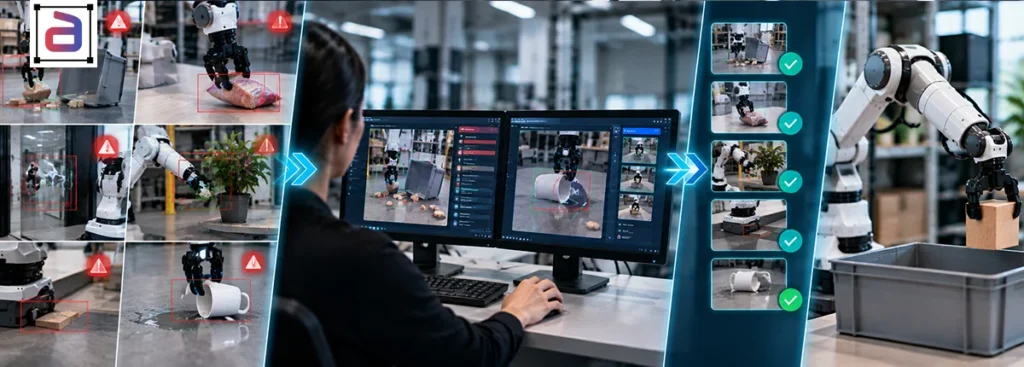
A robot failure is rarely just a failure. A misplaced grasp, an unexpected collision, a missed object, an incorrect trajectory, or a poor response to a human instruction can reveal exactly where a robotic system struggles to generalize. In an industry increasingly focused on Physical AI, these moments represent something far more valuable than operational […]
Synchronizing Sight, Motion, and Force: The Data Annotation Challenge Behind Multimodal Robotics
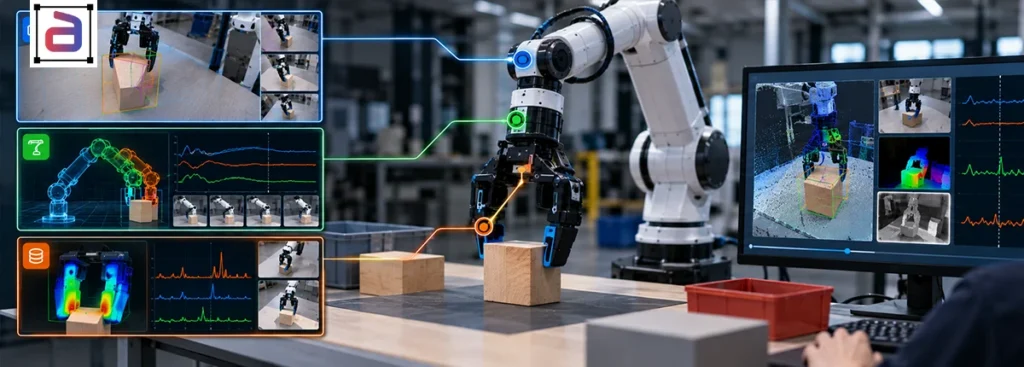
A robot can see an object. It can move toward it. It can sense contact. But can it understand how all three events are connected? That is the central challenge behind modern multimodal robotics. As robots evolve from task-specific machines into intelligent physical agents, they increasingly rely on multiple streams of information at once: RGB […]
Training Robots to Make Better Decisions: How Preference Annotation Supports Robotic RLHF
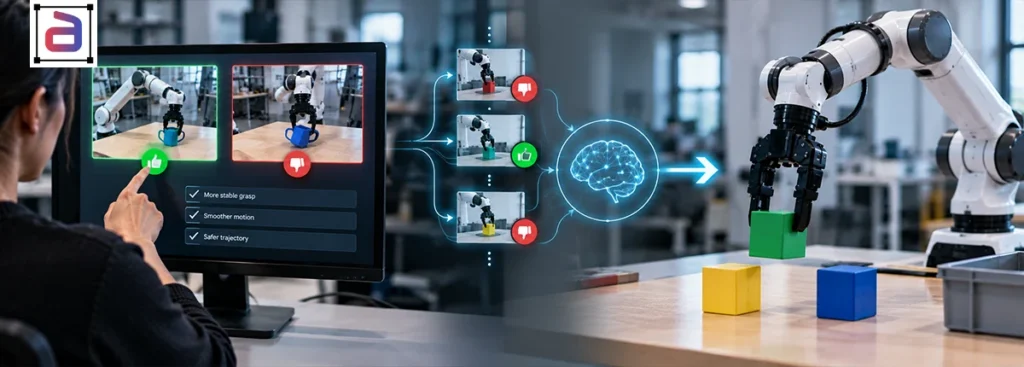
Robots are moving beyond controlled industrial environments and entering warehouses, hospitals, homes, retail spaces, and other human-centric settings. In these environments, simply completing a task is no longer enough. Robots must understand context, evaluate alternatives, respond safely, and choose actions that align with human expectations. Consider a robot asked to deliver an object across a […]
Teaching Robots the Physics of Interaction: Annotating Contact, Grasp, and Object Affordances
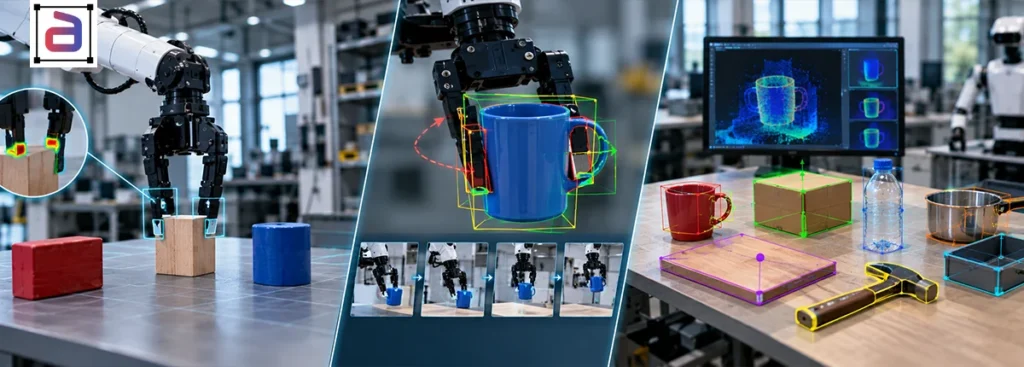
Robots can now recognize objects, interpret scenes, navigate environments, and execute increasingly complex tasks. But seeing an object is fundamentally different from understanding how to interact with it. A robot may identify a coffee mug with high confidence, yet still need to determine where to grasp it, how much force to apply, whether its grip […]
Closing the Sim-to-Real Gap: Why Human-Validated Annotation Matters Before Robot Deployment
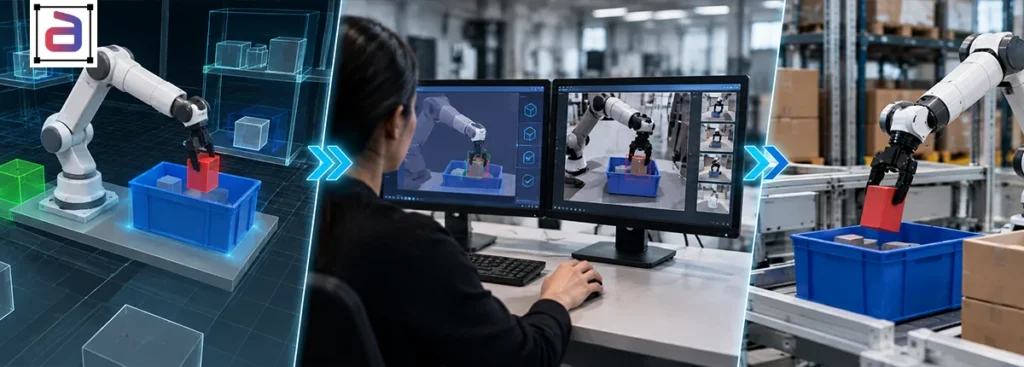
Simulation has transformed the way robots are trained. Instead of collecting every training example on expensive physical hardware, robotics teams can generate enormous volumes of synthetic data, test thousands of scenarios, and train models in controlled virtual environments. But there is a fundamental problem: the real world is not a simulation. A robot that performs […]
Beyond Object Detection: How Multi-Sensor Annotation Builds Spatial Awareness in Intelligent Robots
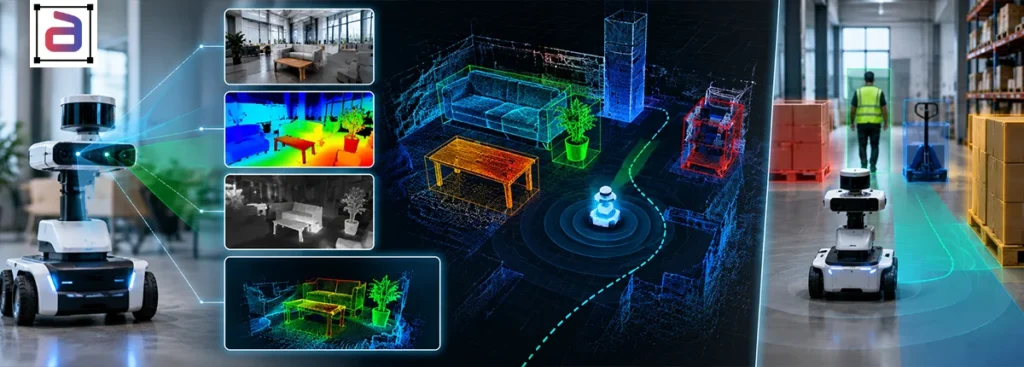
A robot can detect a chair. It can identify a person. It can recognize a package sitting on a conveyor belt. But recognition alone does not create intelligence. For robots to operate reliably in warehouses, factories, homes, hospitals, and other dynamic environments, they must understand far more than the objects around them. They need to […]
From Demonstration to Dexterity: How Teleoperation Data Annotation Improves Robot Manipulation
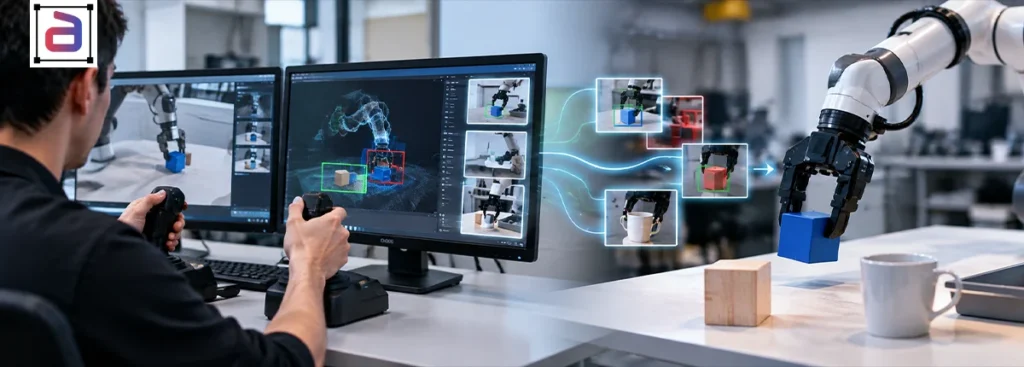
Robots can move with remarkable precision. But precision is not the same as dexterity. A robot may successfully execute a programmed trajectory in a controlled environment, yet struggle when an object shifts, a grasp becomes unstable, or the task requires a sequence of subtle physical interactions. Teaching robots to handle these situations requires more than […]